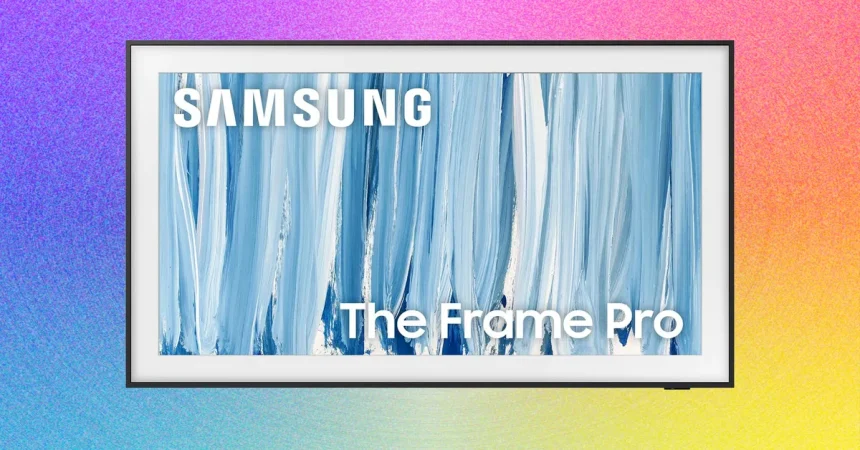
Here is a humanized summary of the review, expanded into six cohesive paragraphs:
The 2026 iteration of Samsung’s The Frame Pro represents a fascinating intersection where high-end home cinema meets cutting-edge machine learning. In daily use, the AI-driven image processing is far more than just a marketing buzzword; it performs remarkably well in challenging lighting conditions. Whether it was the somber, dimly lit offices in Netflix’s Legends or the pervasive nighttime gloom of Awake, the AI dynamically adjusted contrast and shadow detail, ensuring that characters remained visible without compromising the scene’s intentional atmosphere. This stands in stark contrast to budget-friendly televisions, which often struggle to balance dark scenes, leading them to mimic the harsh, flat look of an amateur computer monitor rather than a cinematic experience.
Audio performance has also received a significant, albeit imperfect, AI injection. For sports fans, Samsung’s real-time audio processing creates a much more focused experience by intelligently scrubbing away the chaotic drone of stadium crowds to highlight the broadcaster’s commentary. While the AI Sound Controller Pro offers a suite of sliders intended to let users fine-tune the balance between dialogue and background scores, the software is currently plagued by persistence issues, consistently resetting to default after adjustments. Nevertheless, when the system works—paired with the crisp, surround-sound capability of Dolby Atmos—the immersion is undeniable, turning flat audio into a truly spatial, room-filling soundscape.
However, it is clear that the software ecosystem, known as Tizen, is still dealing with some growing pains. While basic connectivity features like AirPlay function without a hitch, deeper integrations feel less polished. Testing revealed frustrating friction when using Google Cast for high-profile streaming services like HBO Max, and cloud-based gaming services like GeForce NOW struggled with authentication loops. While Samsung is actively investigating these bugs, they serve as a reminder that even the most advanced hardware can be momentarily kneecapped by unfinished backend software. These are hurdles that, while not dealbreakers for everyone, definitely warrant a mention for those who expect a plug-and-play experience.
When the software cooperates, the television justifies its premium billing through gaming performance that is nothing short of exceptional. With support for refresh rates up to 240 Hz, both via the physical Mini HDMI input and the innovative wireless One Connect box, the screen handles high-fidelity assets with ease. The visual clarity in taxing titles like Crimson Desert was a revelation; the color reproduction felt deep and nuanced, and the input latency was near-invisible, even when navigating the complexities of an Xbox controller. It provides a level of responsiveness that would satisfy even the most discerning hardware enthusiast.
Moving away from high-powered PC rigs, the integrated Xbox Cloud Gaming app offers a glimpse into a potential future of console-free play. While there were occasional, minor stutters inherent to the nature of cloud streaming, the visual fidelity remained impressive. I was particularly struck by how the panel handled Senua’s Saga: Hellblade II, a game notorious for looking washed out or gray on inferior displays. The Frame Pro managed to keep the colors vibrant and the blacks deep, proving that the display’s anti-glare, matte coating is perhaps the most underrated feature for maintaining color integrity in an era of poorly optimized display tech.
Ultimately, picking up a 2026 Frame Pro is an investment in pure, aesthetic-driven performance. While the price point is ambitious—especially when challengers like the Amazon Ember Artline offer similar wall-art aesthetics for hundreds of dollars less—the gap in build quality and visual realism is evident. The combination of a refined Tizen OS, effective AI-upscaling, and a truly superior matte aesthetic makes this the gold standard for those who want their television to be a piece of gallery art without sacrificing the punchy, vivid depth of a top-tier gaming monitor. If your priority is absolute visual fidelity, the premium is well worth the cost.