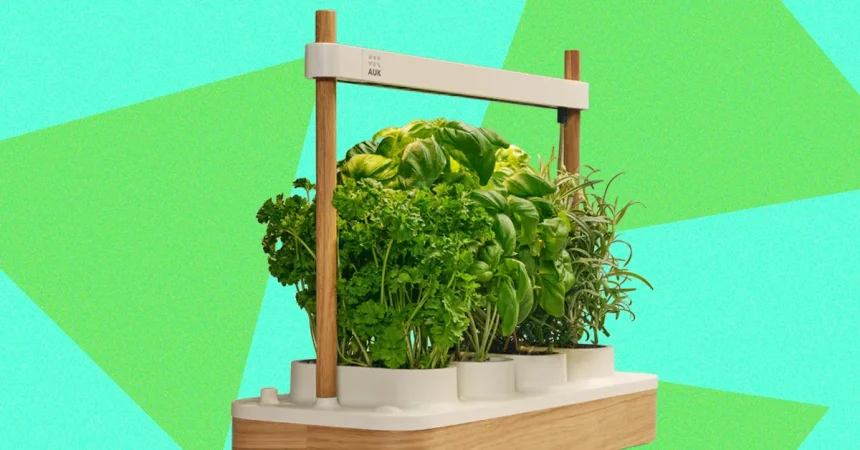
I have a confession to make: I didn’t expect to like the Auk Mini 1 as much as I did. Indoor gardening is full of complicated contraptions that promise fresh herbs all year long, then deliver a tangle of tubing, a phone full of notifications, and a guilty-looking basil plant that never quite takes off. The Mini 1 was different. It was a simplified version of Auk’s larger system, and it seemed to have been designed by people who understood what most of us actually do with a countertop garden. We want to open a seed packet, press a few pellets into some soft growing medium, add water, and watch something green appear without turning into a horticultural scientist. The Mini 1 did exactly that. Four oval pots sat neatly over a 3-liter reservoir, and each pot was filled with coco coir, a fluffy, forgiving natural medium that held moisture just long enough to keep things simple. You could plant the included herb seeds, or you could ignore the whole starter pack and use whatever seeds you already had in your drawer. That freedom made the little garden feel far more personal. It wasn’t a locked-down appliance with a subscription plan; it was a planter with a light over it, small enough for a counter and handsome enough to leave out even when guests came over. The herbs grew. The water lasted. The whole thing felt friendly, unintimidating, and quietly effective. I remember thinking, “This is the rare gadget that doesn’t make me feel stupid.”
The Auk Mini 2 is not a radical departure, and I don’t think it needs to be. What’s immediately different is visual. The original came in safe, predictable black and white. The Mini 2, by contrast, has personality. The top shell is now available in espresso, sage, and terra-cotta, and those color names matter more than you might expect. A dark espresso top makes the garden look almost like an old piece of kitchen equipment; a sage top blends softly with houseplants; a terra-cotta top brings a bit of Mediterranean warmth to the counter. The wood bases have changed too. The Mini 1 had a cork base, which was charming but a little soft and prone to scuffs. The Mini 2 still offers oak and walnut options for people who want richer, more traditional wood tones, but beech and ash join the lineup as paler, more contemporary alternatives. The result is a family of looks rather than a single product. That might sound superficial, but for a device that lives permanently on the counter, appearance is practical. If a garden is supposed to encourage you to grow food often, it should look like something you’re happy to see every morning. The Mini 2 feels less like a black-box appliance and more like a home object that happens to grow plants. It’s not a redesign from the ground up; it’s a thoughtful refresh that softens the edges and gives you room to choose a version that fits your kitchen.
The thing that gave me the most pause is also the thing that sounds the least important: the app. When I heard the Mini 2 had an app, I admit I had mixed feelings. The Mini 1 didn’t need one, and I liked that. It had a button on the light bar, and you pressed it when you wanted to turn the light on or off. That was it. The app, I worried, would be a bloated portal that asked for an account, demanded a firmware update, and monitored my watering habits like I was a houseplant in trouble. But the Auk Connect app is not that. It’s completely optional, and the Mini 2 still has the same physical button on the light bar, so if you never want to open the app, you never have to. And if you do open it, the setup is refreshingly painless. You don’t even need to create an account. You download the app, open it, and it recognizes the garden sitting on your counter. From there, you can turn the light on or off, dim it, set a scheduling routine, or switch the growing mode between “Herbs & Salads” and “Fruits & Veggies.” It doesn’t add a huge amount of value, but it also doesn’t add a single ounce of friction. To its credit, the app feels like an afterthought in the best possible way: it’s there if you want it, and it never gets in the way if you don’t.
The more meaningful changes are hidden underneath the styling. The Mini 2 gives you bigger plant pots, which sounds like a tiny detail until you try planting something with a real root system. The larger pots make the difference between timid little seedlings and confident plants that actually fill out. The water capacity is 25 percent larger than the Mini 1’s, which means you can go noticeably longer between refills. That’s one of those quiet improvements that you don’t appreciate until you’ve been away for a weekend, then come home to find everything still alive. And here’s the part I still don’t quite understand: the overall footprint of the Mini 2 is 12 percent smaller than the original. It takes up less counter space, yet it gives the plants more room and holds more water. That feels like the kind of engineering trick that should be impossible, but it’s exactly what a second-generation product should do. There is, however, one thing that hasn’t changed. The stock dowels for the light bar still max out at around 15 inches, which is perfectly fine for herbs and leafy greens but too short for taller fruiting plants like peppers. If you try to grow a chili pepper on the standard Mini 2, it will eventually get too close to the light, the leaves may start to curl or scorch, and you’ll find yourself wishing the whole thing was a few inches taller.
Fortunately, Auk has acknowledged that limitation with a purpose-built accessory called the Chili & Tomato Kit. It costs $39 and comes with longer dowels, so the light bar can sit higher, plus a tray with two larger pots instead of the usual three. I have not tried it myself yet, but I would be genuinely surprised if it didn’t lead to substantially better results for anyone who wants to grow tall, fruiting plants. Giving a tomato or pepper more root space and more headroom is exactly what those plants need to thrive indoors. The two-pot setup makes sense, too: instead of scattering your energy across three small pots, you focus on one or two plants that can become genuinely productive. The $39 price is a little steep, but compared with the cost of buying a separate grow light or a second, larger indoor garden, it’s a reasonable way to expand the Mini 2’s range. It turns a mostly herb-oriented machine into a more versatile mini greenhouse. You can start with easy basil and lettuce, build confidence, then switch over to something ambitious like a chili plant without having to purchase an entirely new system. That flexibility is a big part of the Mini 2’s appeal.
At the end of the day, the Auk Mini 2 is exactly what a second version of a good product should be. It doesn’t reinvent the concept, and it doesn’t try to fix something that wasn’t broken. Instead, it refines everything around the edges: better color options, richer wood finishes, bigger pots, a larger reservoir, a smaller footprint, and an app that is genuinely optional and pleasantly easy. It keeps the original’s most important quality, too. The Mini 2 still feels simple, stylish, and effective. It’s the kind of gadget you buy not because you’re a serious gardener, but because you want to snip fresh basil into your pasta without paying three dollars for a plastic packet at the grocery store. It’s forgiving enough for someone who has never grown anything, and satisfying enough for someone who has given up on more complicated systems. The new colors let it fit into a kitchen instead of dominating it. The extra water capacity means fewer little chores. The light bar is still a bit short for tall plants out of the box, but the Chili & Tomato Kit offers a sensible way forward without abandoning the device altogether. If you already own a Mini 1 and you’re perfectly happy with it, you don’t need to rush to upgrade. But if you’re starting fresh, or if you’ve been wrestling with a bigger, fussier setup, the Auk Mini 2 is a lovely place to land. It earns a spot on your counter, grows a surprising amount of food in a tiny footprint, and reminds you that technology doesn’t have to complicate everything. Sometimes it can just keep things simple—and that is exactly what this little garden does.