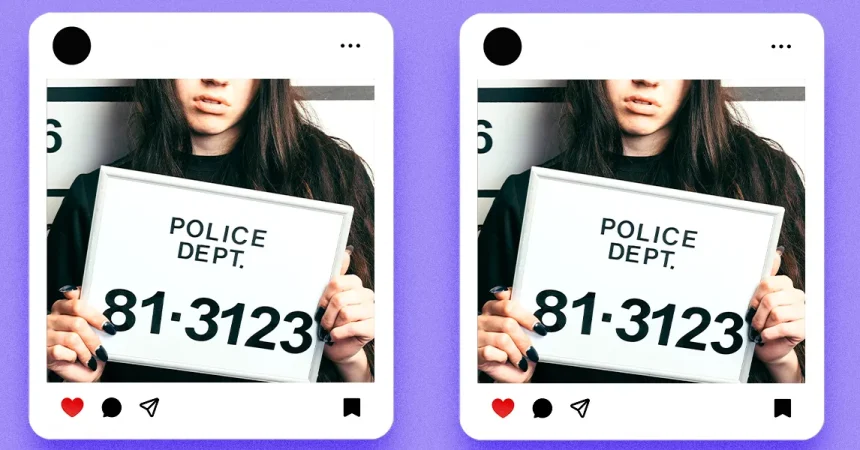
In the wake of a profound personal tragedy—the loss of her mother to a drug overdose in the summer of 2025—23-year-old Megan Davis found herself navigating a dark chapter of grief that culminated in a momentary lapse of judgment. While out at a bar in College Station, Texas, a night of drinking spiraled into a heated altercation, leading to her arrest for public intoxication. That night, spent in a holding cell and punctuated by a panic attack before her mugshot was taken, was intended to be a private wake-up call, a painful mistake she was prepared to pay for and move past. However, what began as a routine legal incident quickly morphed into a permanent digital nightmare, as her face was harvested by opportunistic social media accounts that profit from the public humiliation of others.
The viralization of Davis’s arrest was swift and cruel. Her mugshot did not just linger in local law enforcement databases; it was hijacked by pages like “SayCheese Brazos County,” then twisted into a malicious hoax—a false story about an Olive Garden waitress throwing breadsticks—before finally landing on “Mugshawtys,” a massive Instagram account that curates photos of young women for the entertainment of a largely male audience. For the thousands of strangers who consumed these images, Davis was not a grieving daughter but a prop for their entertainment. Comment sections quickly became breeding grounds for vitriol, where men felt emboldened to judge her worth, pick apart her appearance, and cast moral aspersions on her character without any knowledge of the sorrowful context surrounding her life.
This phenomenon of “mugshot shaming” is driven by accounts like Mugshawtys, an enterprise founded by California electrician Josh Jeffery that amassed nearly two million followers. By rebranding arrest bookings as “thirst traps” or spectacles for mockery, these platforms have turned private misfortune into public currency. While Jeffery claims his intent is benign—sometimes suggesting he helps these women build followings or collects bail money—the reality of his comment sections tells a much darker story. They are spaces teeming with misogynistic abuse, sexual objectification, and violent rhetoric, where women in vulnerable states are ranked, belittled, and sometimes even subjected to threats. Even worse, these accounts often disregard the fundamental legal principle that a mugshot is not a badge of guilt, effectively labeling the accused as permanent outcasts for the amusement of the internet.
The psychological toll on women like Davis is immeasurable. A year later, she is still trying to clean up the wreckage caused by a single, distorted photograph that has followed her across the internet like a digital shadow. The experience of being “dragged through the mud” by strangers has left her disillusioned with the lack of boundaries in the modern digital age. She, like many others caught in the machinery of these “mugshot influencer” networks, is forced to confront the fact that her personal tragedy has been weaponized for clicks, turning a legal lesson into a public character assassination that she may never fully outrun.
Recently, the tide has begun to turn against such accounts, signaling a long-overdue reckoning with the ethics of online harassment. After inquiries from journalists, platforms including Meta and TikTok finally moved to disable the Mugshawtys accounts, citing clear breaches of community standards regarding safety and harassment. While the removal of these pages is a necessary step, it does little to mend the damage already inflicted upon the subjects of these posts. The rapid growth of the page—bolstered by endorsements from high-profile figures like Joe Rogan—demonstrates how easily harmful, predatory content can be legitimized and mainstreamed under the thin veil of “entertainment.”
Ultimately, the story of Megan Davis serves as a somber reflection on the loss of privacy and empathy in the age of viral justice. We have created a culture where the worst moment of a person’s life is preserved in high-definition, commodified by nameless moderators, and consumed by an audience that views the suffering of others as mere content. As society continues to grapple with the power of these platforms, we must ask ourselves where the line of accountability lies. Until we view the humans behind these mugshots with the complexity and compassion they deserve, the internet will remain a place where one mistake can be stretched into a lifetime of public humiliation.