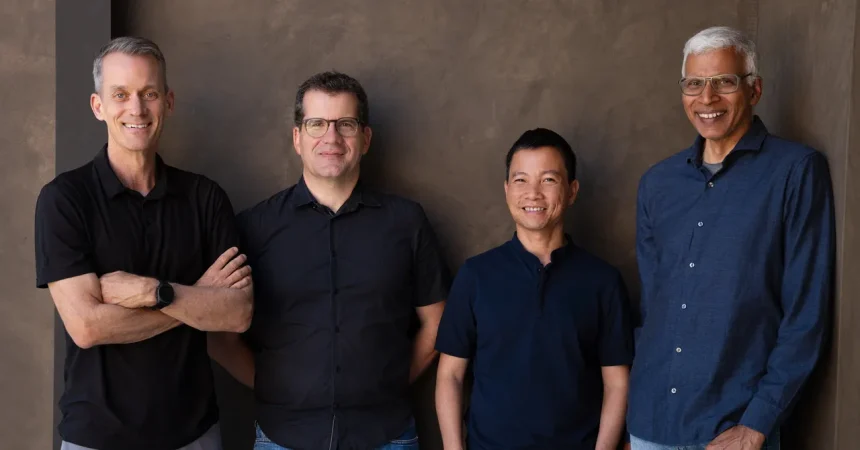
The formation of Discovery Loop represents a pivotal moment in the evolution of artificial intelligence, marking the departure of some of the most influential minds from the halls of Google to pursue a radical new vision. Led by engineering icons like Jeff Dean, this team isn’t just looking to build another incremental tool for data analysis; they are setting their sights on full-scale automation of the scientific research process itself. By envisioning a future where small, agile teams can out-innovate the world’s most massive research institutions, the founders are betting that the next great scientific breakthroughs won’t necessarily come from corporate behemoths, but from highly focused, AI-driven loops. It is a bold play to shift the paradigm from using AI as a passive assistant to empowering AI as an autonomous, lead researcher.
The transition from the security of a tech giant to the uncertainty of a startup began with a quiet, grassroots approach. Eschewing the typical reliance on AI-generated pitch decks, the founders relied on their own reputations and a rough, conceptual sketch of their goals to secure funding. Their credibility was so immense that venture capitalists like Vinod Khosla were willing to meet in secret, on weekends, just to ensure they could back this “superstar team.” The enthusiasm from investors like Khosla Ventures and Radical Ventures underscores a shared belief that the group possesses the rare, high-level expertise required to turn such a grand ambition into a tangible reality, effectively validating the idea that the era of “AI as the researcher” has finally arrived.
Leaving Google was, by all accounts, a deeply personal and difficult negotiation. Alphabet CEO Sundar Pichai spent months attempting to convince the team to stay, acknowledging their monumental contributions to search infrastructure and the modern neural network revolution. For the founders, however, the allure of a clean slate outweighed the comforts of their previous home. They cited the inevitable inertia that plagues large, established organizations—the bureaucratic drag that makes radical innovation feel like pushing a boulder uphill. Choosing the freedom and speed of a startup, the team sought an environment where they could build something fundamentally different, unfettered by the constraints of legacy internal processes.
In a rare move, Google did not treat this departure as a hostile exit; instead, they opted for a partnership. By becoming a founding investor and providing the necessary compute power for the startup’s first year, Google is effectively keeping one foot in the door of this new venture. This strategic arrangement acknowledges the reality that while these engineers have left, their work remains integral to the infrastructure of the future. It is a testament to the founders’ stature that even in leaving, they managed to secure the resources of their former employer, ensuring that they have the massive computational runway required to test their theories on large-scale machine learning systems.
Despite the heavy press attention, the team is remarkably grounded, maintaining a sense of “stealth” that borders on humble. They haven’t rushed to hire a massive staff or secure an expensive headquarters, preferring to keep their circle tight while they refine their core technology. The internal dynamics are refreshingly informal, characterized by a lack of ego that contrasts sharply with the magnitude of their professional reputations. Even the selection of a CEO—which landed on Jeff Dean—was treated with a modest, almost sheepish sense of consensus. This reluctance to embrace traditional corporate hierarchies suggests that Discovery Loop is intended to be a lean, high-output engine rather than a traditional company built on layers of management.
Ultimately, Discovery Loop enters a crowded field of AI firms claiming that they will unlock the mysteries of science. While names like Sam Altman and Dario Amodei have made similar promises, the success of this team rests on their unique pedigree and their ability to execute where others have only theorized. They face a significant burden of proof: not only must they build a system that actually produces scientific breakthroughs that humans could never achieve on their own, but they must also justify the massive void they have left behind at Google. If they succeed, they will have redefined the process of discovery itself; if they fail, the industry will have to grapple with the loss of some of its brightest lights for a venture that, in hindsight, may have been too difficult to pull off.