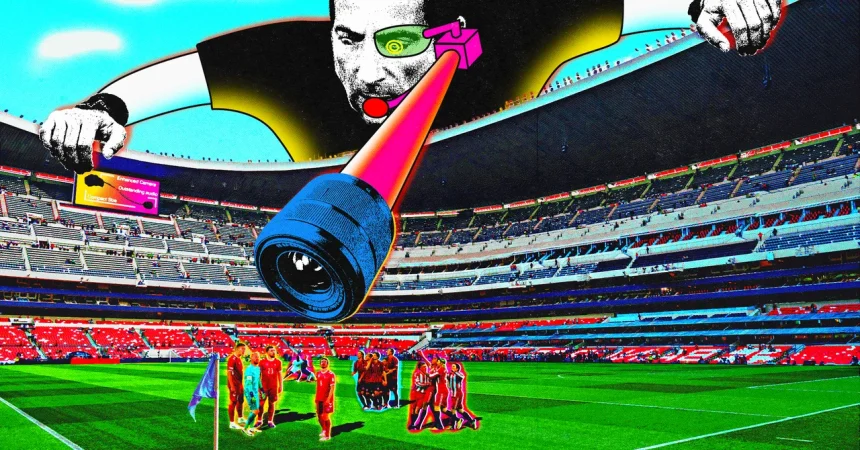
When the 2026 World Cup kicks off, fans around the globe are in for a transformative viewing experience that promises to bridge the gap between the screen and the pitch. For the first time, broadcasts will integrate live, first-person footage captured directly from the referee’s perspective via a discreet camera mounted on their headset. While the concept of a “ref cam” has been toyed with in sports like baseball, football, and hockey as a tool for replays or post-game analysis, soccer is turning this into a live, real-time spectacle. This innovation isn’t just about showing off fancy technology; it’s about finally giving spectators the opportunity to stand inches away from the world’s greatest athletes, witnessing the raw speed and intensity of the game from the very heartbeat of the action.
The motivation behind this shift is simple: soccer broadcasts have historically relied on expansive, wide-angle shots that often leave the viewer feeling disconnected from the nuances of the play. While these angles are perfect for tactical analysis, they lack the visceral “in-the-trenches” energy that makes sports so compelling. By placing a camera at a referee’s temple, FIFA is effectively handing the viewer a front-row seat to the competition. Whether you’re a fan dying to analyze a striker’s complex footwork or an armchair critic eager to judge a officiating decision in real-time, this technology promises an unprecedented level of intimacy that will fundamentally change how we consume the “beautiful game.”
The road to making this possible was far from straightforward. While earlier trials in English developmental leagues and the German Bundesliga successfully tested the equipment, those feeds were mostly recorded and delayed for training purposes. The watershed moment arrived in March 2025, when the International Football Association Board officially greenlit the use of ref cam footage for live broadcasts, a milestone first achieved at the 2025 Club World Cup. Transitioning from recorded developmental footage to a live, seamless broadcast stream required a gargantuan leap in technical coordination, as FIFA had to overcome hurdles that would have seemed impossible just a few years ago.
One of the most daunting technical obstacles was latency. To stream high-quality, glitch-free video from a moving referee in the middle of a massive stadium—an environment already choked with wireless interference from thousands of fan devices—is a massive undertaking. FIFA’s lead innovators worked closely with partners like Verizon to deploy a high-frequency 5G solution specifically designed to handle this data load. It wasn’t just about getting the signal from the ref’s head to the broadcast booth; it was about doing it in near-instantaneous time, ensuring that the live action the audience sees on their televisions matches the reality on the field without a distracting time lag.
Perhaps the most human-centric challenge, however, was physics. A camera attached to the head of a referee sprinting, pivoting, or abruptly slamming on the brakes produces nauseatingly shaky footage that is virtually unwatchable for long stretches. FIFA recognized early on that raw, “uncut” video would be a total failure for a broadcast audience. To solve this, they enlisted Lenovo to develop AI-aided software specifically designed to dampen the jitter. The goal wasn’t to turn the broadcast into a smooth, artificial video game effect, but to find a delicate equilibrium—a “sweet spot” that keeps the cinematic feel of the movement while protecting the viewer from the disorienting, rapid-fire shakes that come with the referee’s duty.
Defining that balance between authenticity and watchability was a complex intellectual exercise. The team had to teach the software how to distinguish between “natural” motion—the slight bob of a ref running—and “shaky” motion that would ruin the viewing experience. As we look ahead to 2026, this integration serves as a perfect metaphor for the future of sports broadcasting: a place where cutting-edge technology exists not to replace the human element, but to enhance and clarify it. By blending artificial intelligence with human perspective, FIFA is not just upgrading its camera rigs; they are inviting the entire world to step onto the field and experience the sport exactly as the official sees it, right at the moment the whistle blows.