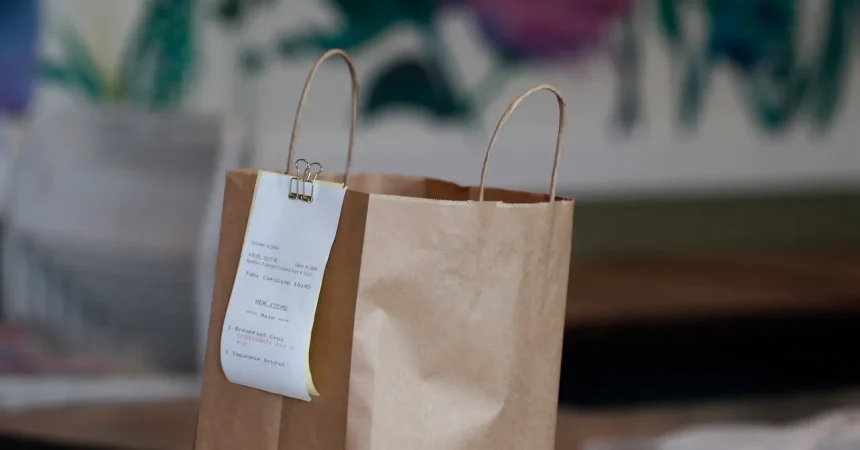
There was a moment, not all that long ago, when ordering dinner through a phone app felt like a small miracle. You could lie on your couch, scroll through a dozen restaurant menus, and have a warm meal show up at your door without ever having to participate in a phone call. But somewhere along the way, that magic curdled. These days, opening a delivery app often feels less like ordering food and more like bracing for a financial hit. I know the exact feeling: I’m hungry, I open my favorite app, I see the chicken Caesar salad wrap I want, and then I notice the price has somehow crept up a few dollars since I last checked. There’s a delivery fee, a service fee, maybe a “regulatory charge” or a “small order fee,” and then I’m expected to tip on top of all of it. By the time I reach checkout, the meal that should cost twelve dollars is climbing toward twenty, and I’m left wondering whether the convenience is worth it or whether I’m just being exploited by an algorithm. What I didn’t fully understand for a long time is that the problem isn’t just the obvious fees. The menu prices themselves are often marked up, silently inflated by the restaurants themselves because the delivery platforms charge them enormous commissions on every order. Those commissions—often twenty to thirty percent—don’t come out of the platform’s generosity. They come out of my wallet, hidden in the cost of that wrap, long before I ever see the service fee.
That’s the problem Olo, a new food-delivery app launching nationwide today on Android and iOS, is trying to solve. Olo’s core pitch is refreshingly simple: no menu markups. If a restaurant charges twelve dollars for a chicken Caesar salad wrap in its physical store, it charges the same twelve dollars on Olo. The app itself takes a flat five percent service fee, and that’s it. You still have to pay for delivery, because drivers still need to be paid and food still needs to travel, but you won’t be hit with those chaotic, shifting fees that seem to multiply like gremlins the moment you try to check out. There’s something almost radical about this in the current landscape. We’ve been trained to expect that ordering food through an app will always be more expensive than going to the restaurant, and we’ve learned to accept it as the cost of laziness. But Olo’s model suggests that convenience doesn’t have to mean getting fleeced. The company is launching with 250 restaurant brands already on board, which isn’t an endless catalog, but it’s enough to be useful, and the plan is to keep expanding. Glass, Olo’s founder and CEO, acknowledges that you could theoretically save even more by skipping delivery apps entirely and ordering directly from the restaurant’s own website or by calling them. But he sees Olo as a middle ground for people like me, who want the ease of a streamlined app without the anxiety of wondering whether the price on the menu is a lie or a trap.
Another thing that makes Olo feel different is its approach to advertising. If there’s one thing I hate more than surprise fees, it’s the feeling of being marketed to while I’m just trying to decide what to eat. Modern delivery apps are absolutely terrible about this. I can’t search for a restaurant without being ambushed by sponsored listings, banner ads for meal deals, pop-up notifications about “starred restaurants,” and endless featured placements that are clearly paid for, not organically relevant to what I actually want. It’s exhausting. It turns a simple craving into a barrage of commercial manipulation. Olo, by contrast, keeps things clean. The app shows a fairly straightforward list of restaurants near you that happen to be available on the platform, along with past orders that might make it easy to reorder the thing you already know you like. There’s no sponsored content, no algorithm trying to convince you to buy a different kind of cuisine, no emotional manipulation disguised as personalization. It’s just a list, and that simplicity feels almost luxurious in 2024. This is a small thing, but it matters more than people might think. We all experience so much noise throughout the day, and the last place you want to encounter more noise is in an app that’s supposed to be making your life easier. Olo seems to understand that the best thing an interface can do for a hungry person is get out of the way.
The name Olo might be new to consumers, but the company has actually been living in the background of your digital food life for a long time. Noah Glass, the founder and CEO, has been working in the digital ordering space for more than two decades, long before ordering food online was a given. Back in 2005, before the iPhone existed, he started a company called Mobo that let people order coffee shop drinks through text messages. That concept sounds quaint now, but in its day it was genuinely innovative. The company eventually changed its name to Olo and slowly transformed into something more behind-the-scenes: a software facilitator for restaurants, handling their digital menus and processing orders that come from desktop websites, smartphone browsers, and even kiosk touchscreens. The consumer-facing app we’re seeing now is really just the newest face of a company that has already been helping restaurants for years. Olo says it assists customers placing more than 3.5 million orders every day, which is a staggering number when you stop to think about it. That means every day, millions of people already interact with Olo’s underlying technology without ever knowing its name. So while the launch of a consumer app might look like a newcomer trying to break into an already crowded space, it’s actually more like a seasoned veteran finally stepping into the spotlight. There’s credibility here. This isn’t a well-funded startup with a clever marketing team and no idea how restaurants actually work. This is a company that has spent years learning the quirks, challenges, and economics of the industry from the inside.
But even with that pedigree, getting people to switch delivery apps is going to be an uphill battle. Habits are powerful, especially when it comes to food. Most of us have already chosen our delivery app of choice, the one with our payment information saved, our saved addresses, and our entire history of late-night indulgences. We may complain about the fees, but we keep going back because it feels easier than breaking in a new app. It’s like a toxic relationship that we can’t quite leave because we know the best takeout places are already there. Olo is aware of this, and it’s positioning itself carefully. It’s not trying to outspend Uber Eats or DoorDash on television commercials or promotional deals. Instead, Glass is leveraging what he has spent decades building: deep relationships with restaurants. That matters because restaurants are the real victims in the current system. They’re the ones losing margins to high commissions, and they’re the ones who have to quietly raise prices to survive. If a restaurant is given a platform that charges them a lower commission, they have a real incentive to nudge their customers toward it. It’s entirely possible that you’ll walk into your favorite restaurant, see a little sign or a coaster encouraging you to order through Olo, and realize that the people who actually cook your food are asking you to try something different. That kind of word-of-mouth might be slower than a big marketing blitz, but it’s also more trustworthy. And while Olo might not have every restaurant right now, it only takes a few of your favorites to make an app indispensable.
I’ll be the first to admit that I’m skeptical. I’ve been burned too many times by delivery apps that promised transparency and then hit me with a strange new fee on a rainy night. But Olo’s pitch is genuinely appealing, especially to someone like me who is tired of feeling nickel-and-dimed just for wanting a meal without leaving the house. The next time I get a chicken Caesar salad wrap delivered for dinner, I’m going to check Olo first. I want to see if the price is actually the same as it would be in the store. I want to know if the flat five percent fee really means no surprises at checkout. And I want to experience what it feels like to scroll through a restaurant list without sponsored nonsense jumping out at me from every corner of the screen. Because a deal is a deal, even when I’m being lazy on my couch. I still want convenience—I don’t think anyone is going back to the days of phone calls and paper menus—but I want it without the constant feeling that I’m being taken advantage of. I want to feel like the person delivering my food and the restaurant cooking it are both getting a fair shake, without me having to pay $22 for a $12 wrap. Maybe Olo is the beginning of a real shift in how food delivery works, or maybe it’s just a nice alternative that a small group of people will swear by. Either way, the fact that someone is finally trying to do delivery differently is a good thing. It reminds us that the way things are isn’t the way things have to be.