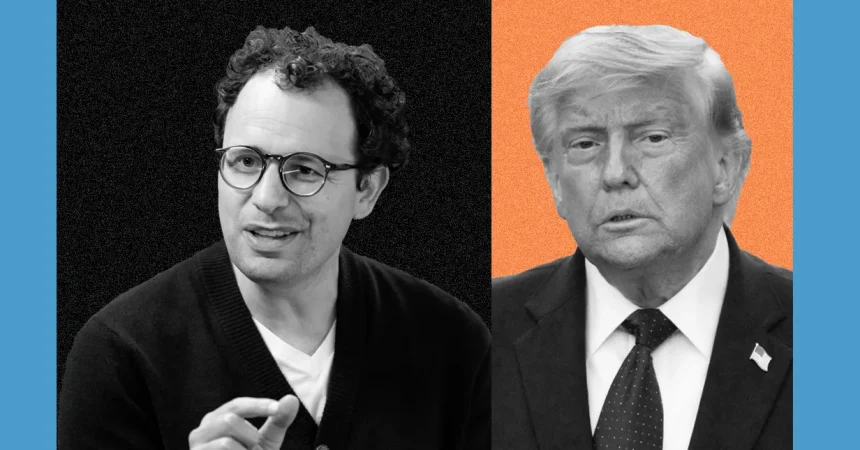
The standoff between the Trump administration and Anthropic, one of the premier AI research labs in the world, has reached a critical impasse, leaving its groundbreaking “Claude Mythos” and “Fable 5” models in a state of suspended animation. Nearly a week after an export control directive forced these systems offline, the silence remains deafening, punctuated only by the friction between a company that feels it followed the rules and a White House that views those rules as mere guidelines for a reckless actor. While Anthropic maintains it operated in good faith, the administration’s heavy-handed move suggests a deep-seated distrust. This public fallout is more than just a corporate dispute; it marks a volatile turning point where the lack of formal regulation has created a chaotic, “Wild West” environment for the American AI industry.
This sudden collision between federal power and Silicon Valley innovation highlights the messy reality of the current administration’s governing philosophy. For a long time, the White House championed an aggressive anti-regulatory agenda, betting that less government oversight would keep American tech firmly in the lead against global rivals like China. However, when faced with the tangible, high-stakes capabilities of modern frontier AI, that hands-off approach collapsed into a reactive, inconsistent enforcement style. By scrapping previous national AI frameworks and dismissing guardrails as potential burdens to innovation, the government inadvertently created a vacuum where no one quite knows where the “lines” are until they have already been crossed, leaving companies in an impossible position of trying to guess their way through national security compliance.
The lack of transparency throughout this saga is perhaps its most troubling feature. Despite the high-profile nature of the shutdown, the US government has failed to provide a clear, formal explanation of the specific infractions Anthropic committed, opting instead for vague statements on social media. This opacity is creating a chilling effect across the entire tech sector. When the rules of engagement are shifting, unwritten, or communicated through sudden executive directives rather than established regulatory pathways, it becomes incredibly difficult for any lab to operate with confidence. This isn’t just a localized problem for Anthropic; it is a signal to every scientist and engineer in the field that their life’s work can be abruptly silenced by ministerial fiat without a transparent due process or a clear path to resolution.
Ironically, the measures taken by the White House to “protect” national security may be actively strangling the very innovation they claim to foster. By demanding that Anthropic restrict access to its models based on nationality, the government has inadvertently crippled the company’s internal research—preventing its own diverse teams of engineers and scientists from accessing the tools they built to drive progress. Furthermore, the collateral damage includes major corporate partners and Fortune 500 companies, forcing a sudden work stoppage for those relying on these systems to accelerate development. When the administration’s response to a perceived risk is to effectively “unplug” a major technological asset, the resulting disruption damages the competitive advantage of the American firms that the government is ostensibly trying to defend.
Of course, the administration’s underlying concerns—specifically regarding the proliferation of advanced AI—are not entirely without merit. Whispers of discomfort from high-level officials regarding Anthropic’s partnership with South Korean telecom giant SK Telecom and potential vulnerabilities in “Fable 5’s” safety guardrails suggest the government is playing a high-stakes game of whack-a-mole with perceived threats. Amazon’s own internal alarms regarding the circumvention of safety features only add weight to the idea that these frontier models possess power that, if mishandled, could indeed have significant security implications. Yet, the question is not whether security concerns exist, but whether they are being managed through a thoughtful, strategic policy or through sudden, punitive interventions that threaten to destabilize the broader tech ecosystem.
Looking ahead, this ordeal exposes a fundamental disconnect between the lightning speed of AI development and the blunt instrument of current government policy. Anthropic claims they operated with government awareness, suggesting that either the communication lines are broken or that the goalposts are shifting too fast for any company to keep up. Regardless of who is “right,” the result is a fragmented and fearful industry. If the future of American leadership in AI depends on the ability to balance rapid, collaborative innovation with long-term security, then this current “slap-dash” approach is not a sustainable path. Until the government provides clear, predictable rules that protect both the country’s security and the freedom of its innovators to iterate, we will continue to find ourselves in this precarious, stop-and-go cycle—an environment where the only certainty is that the next major breakthrough could be silenced at any moment.