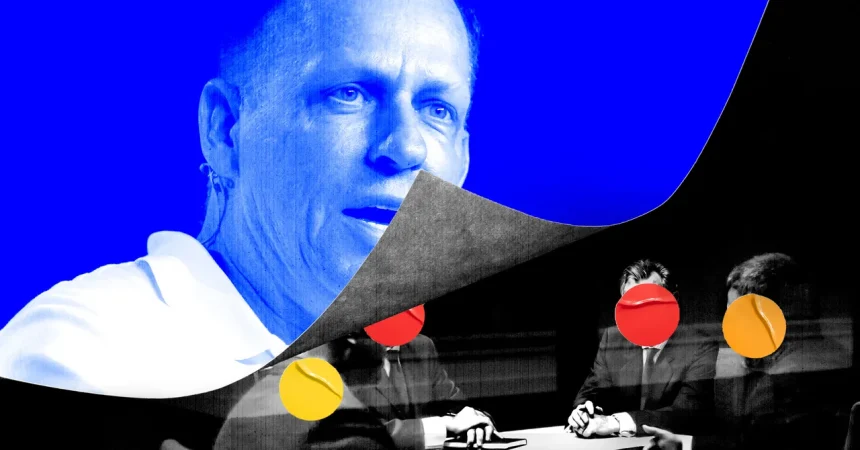
Imagine a high-stakes, shadow-filled ecosystem where the world’s elite—titans of industry, political heavyweights, and military strategists—gather under the veil of absolute secrecy. This is the inner sanctum of Dialog, an invitation-only “club” co-founded by billionaire Peter Thiel and data broker Auren Hoffman. While the public often views these exclusive retreats as think tanks for high-level discussion, internal documents leaked to WIRED reveal something far more clinical: it is essentially a high-end human experiment in social engineering. Far from just a networking mixer, Dialog functions like an algorithmic matchmaking engine, meticulously cataloging the lives of its members and prospects while assigning them rankings that determine their worth, their seating arrangements, and ultimately, whether they have outlived their utility to the organization.
The extent of the surveillance inside this group is startling. We aren’t just talking about a contact list; the trove of data includes granular, intimate details on nearly 200 high-profile individuals, ranging from home addresses and personal phone numbers to medical information and even self-disclosed political leanings. This level of data harvesting, usually reserved for intelligence agencies or invasive corporate marketing departments, is being applied here against some of the most influential people on the planet. Whether they are attendees or “prospects,” every individual is caught in a digital net, their lives curated and dissected to ensure the retreat keeps the powerful in proximity to the right people, and the uninteresting at arm’s length.
At the heart of the “Dialoger” experience is a cold, calculated grading system that reduces human achievement to a simple letter score: A, B, or C. Surprisingly, the highest status—the “C” rank—is reserved for the most renowned, household-name celebrities and power players. It is a cynical inversion of traditional status, where the “C” does not mean common, but rather the most “capital-worthy” according to the organization’s fame-centric metrics. The majority of the group sits at “B,” while the “A” tier appears to be a graveyard for the elder guard—established members who, while respected, are no longer considered the “it” people by the group’s cold machine. It’s a ranking system that treats people like stock options, constantly fluctuating in value based on their current reach and relevance.
The involvement of artificial intelligence in these appraisals adds a layer of dystopian unease to the process. Internal records show that Dialog staff have experimented with using AI tools to analyze and grade potential invitees, weighing them based on their fame, net worth, and whether they reach the average person’s radar. In one instance, a renowned economist was initially denied a top-tier rating because the AI deemed him too niche, despite his profound intellectual influence. While human staffers occasionally overrule these machines, the fact that an algorithm is tasked with deciding who is “valuable” enough to sit at the table at a private retreat speaks to a sterile, transactional view of human connection that is as impressive as it is unsettling.
The discovery of these records has caught many participants off guard, leading to some visceral reactions. When informed that an organization had compiled a deep dossier on him—including an analysis of his box-office success and social media following—actor Josh Brolin’s representative offered a blunt, human response: “He wants to know what the fuck he got himself into.” It’s an understandable sentiment. For many, these retreats were likely viewed as private, sophisticated forums for intellectual growth. To find out that they were being secretly indexed, graded, and treated like assets in a social portfolio is a jarring violation of that trust. It highlights the dissonance between the high-minded, intellectual topics discussed at these retreats—like modern warfare or geopolitics—and the petty, data-obsessed culture of the organization managing them.
Ultimately, Dialog presents a microcosm of how the ultra-wealthy manage their private lives: they do it with the same efficiency and clinical detachment they apply to their businesses. By stripping away the nuance of professional relationships and replacing them with algorithms and letter grades, the founders of Dialog have created a system that prioritizes social performance over human connection. It serves as a reminder that even among the world’s most powerful elite, nobody is exempt from being commodified. The question left for those who have passed through this orbit isn’t just about what they learned at these retreats, but whether the price of admission—their privacy and their data—was worth being a pawn in Peter Thiel’s grand social engineering project.