The Battle for Privacy at Madison Square Garden: A Human Story of Surveillance, Power, and Resistance
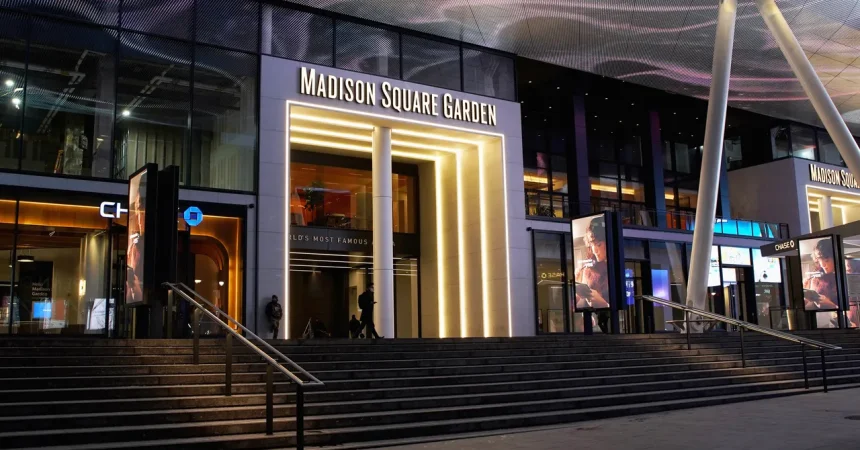
On a chilly Friday afternoon, a remarkable coalition gathered outside the gleaming glass facade of Madison Square Garden, one of the most iconic entertainment venues in the world. Musicians with guitars slung across their backs stood shoulder to shoulder with digital rights activists, city council members, and everyday New Yorkers who had come to demand something that might seem almost quaint in our hyper-connected age: the right to attend a concert or basketball game without being secretly catalogued, tracked, and judged by a facial recognition system. The rally was loud, passionate, and deeply personal for many who attended, driven by the growing realization that the same technology that can unlock your phone or tag your friends in photos is being wielded in increasingly aggressive ways by powerful private entities. At the center of this protest was City Council member Shahana Hanif, who led the crowd in a defiant chant of “ban the scan,” her voice carrying above the honking taxis and the rumble of subway trains beneath the streets of Manhattan. For Hanif and the dozens of supporters who braved the cold, this was not merely a technical debate about privacy rights or data collection protocols, but a fundamental question about what it means to be a human being moving through public space in an era of unprecedented surveillance.
The backstory behind this protest reads like something from a dystopian novel, except every detail is real and documented. Madison Square Garden, under the leadership of its CEO James Dolan, has built one of the most sophisticated facial recognition systems of any private venue in America, and they have used it in ways that many find deeply troubling. As investigative reporting has revealed, fans who dare to criticize Dolan or his struggling New York Knicks team can find themselves placed on secret watch lists, their facial data permanently stored in MSG’s vast biometric databases. One particularly disturbing case involved a fan whose every movement at a Knicks game was tracked down to the individual minute – security personnel recorded when he arrived, where he walked, who he spoke to, when he ate his hot dog, and exactly which seat he occupied. But the surveillance extends far beyond casual fans. Hundreds of lawyers who have found themselves on the opposing side of legal disputes involving Dolan or any of his properties have been systematically banned from all Dolan-owned venues. Perhaps most heartbreaking was the case of a mother who was physically blocked from taking her young daughter to see a show at Radio City Music Hall, simply because her law firm had once represented someone in a case against a Dolan business. This is not abstract corporate policy; this is a mother denied the simple joy of watching her child’s face light up at a live performance, all because her face was flagged as a threat to corporate interests.
The scope of this surveillance operation is staggering in both its breadth and its invasiveness. Recent reporting has uncovered that MSG maintains an extensive database tracking approximately 400 celebrities and VIPs, complete with risk scores assigned to each individual. Even more alarming, some of these dossiers include personal information that has nothing to do with security threats, such as an individual’s race and sexual orientation. The existence of such databases raises profound questions about privacy, discrimination, and the potential for abuse when private corporations amass this level of personal data without meaningful oversight or consent. When confronted with these revelations, MSG did not apologize or promise reform. Instead, they filed a defamation lawsuit against the journalists who exposed their practices, an aggressive legal move that critics say is designed to intimidate reporters and discourage further investigation. The company’s official response to the controversy has been characteristically dismissive, with a spokesperson offering the oddly philosophical defense that “people have been recognizing each other’s faces since the beginning of time—we just do it electronically.” This glib comparison conveniently ignores the enormous power imbalance between a corporation with unlimited resources and the individuals who simply want to enjoy a show without being catalogued in a permanent surveillance database.
For Council Member Hanif, this fight is intensely personal and rooted in her own lived experience as a Muslim woman who came of age in New York City after the September 11th attacks. She knows intimately what it feels like to be treated as a potential threat simply because of who you are, to have your movements watched and catalogued, to be judged by systems that claim objectivity while embedding the prejudices of their creators. But what concerns her most is that many New Yorkers simply do not understand the extent to which they are being watched, tracked, and analyzed when they walk through the doors of Madison Square Garden or any of the other venues under Dolan’s control. The technology works silently, invisibly, capturing your face the moment you enter, checking it against watch lists, recording your location throughout the event, and storing all of this information indefinitely in databases that exist beyond any meaningful public oversight. And the fact that James Dolan, who maintains close personal and political ties to President Donald Trump, is the one collecting and controlling this data adds an additional layer of concern for those who worry about how such powerful surveillance tools might be used in the future. This is not about any particular political party or ideology, Hanif insists; it is about the fundamental principle that people should be able to attend public events without being subjected to warrantless biometric surveillance by private entities.
The proposed legislation, known as the “Ban the Scan” bill, represents a concrete attempt to push back against what many see as the creeping normalization of biometric surveillance in everyday life. The bill has already gained remarkable momentum, with 27 endorsements from city council members – more than half the entire council – and ongoing discussions with speaker Julie Menin about bringing it to a vote. If passed, it would prohibit public venues from using facial recognition technology to identify and track individuals, effectively forcing Madison Square Garden and other similar establishments to dismantle their surveillance systems or face legal consequences. But the bill is about more than just one venue or one CEO. It is a statement about the kind of city New York wants to be, and the kind of society we want to create. In an era when artificial intelligence and biometric tools are being sold to the public as necessary for safety and convenience, Hanif and her allies are asking uncomfortable questions about who really benefits from these systems and who bears their costs. When a corporation can build a permanent record of your every public movement based on nothing more than a disagreement with a billionaire owner, when a mother can be banned from watching her daughter’s first Radio City Music Hall show because of her employer, when your race and sexual orientation can be noted in a corporate security dossier without your knowledge or consent – these are not hypothetical concerns about a distant technological future. They are happening right now, in one of the most famous venues in the world, in the heart of New York City.
As the rally wound down and protesters began to pack up their signs and instruments, a sense of cautious optimism mixed with determination hung in the cold winter air. The fight is far from over, and Madison Square Garden has both the resources and the legal firepower to resist any attempt to curtail their surveillance operations. But something has shifted. The stories of ordinary people caught in MSG’s biometric web have resonated far beyond the usual circles of privacy advocates and digital rights activists. Musicians like Paisley Fields, who performed at the rally, understand intuitively that something is wrong when the places where art and culture are meant to flourish become spaces of surveillance and intimidation. The democratic-socialist working group NYC DSA Tech Action sees this as part of a larger battle against the concentration of power in the hands of the few. And ordinary New Yorkers, many of whom had never thought much about facial recognition technology before, are beginning to ask the same questions: Who is watching me? Why are they watching me? What do they know about me? And most importantly, how can I stop them? The human story behind this legislative fight is not really about technology at all. It is about power, dignity, and the right to move through the world without being reduced to a data point in someone else’s database. It is about a mother and her daughter, a fan and his team, a musician and her audience. It is about the fundamental human experience of gathering together to share a moment of joy, wonder, or excitement, and the creeping fear that even these most basic human connections are being monitored, catalogued, and weaponized by those who hold power. The “Ban the Scan” bill may be introduced in the New York City Council, but its deepest implications reach far beyond one city, one venue, or one billionaire CEO. It asks us to decide what kind of world we want to live in, and what we are willing to do to protect the simple, precious, increasingly endangered right to be seen without being watched.