For better or for worse, romance lovers have never been hornier for hockey. You can hardly scroll through BookTok, that gloriously chaotic corner of the internet where readers gather to swoon, scream, and annotate their favorite novels, without tripping over a chiseled-jawed hockey player clutching a romance interest on a book cover. The genre has exploded, and with it, a certain cultural crossover has happened: hockey is no longer just a sport to watch; it is a fantasy to consume, a world of brooding captains, soft-hearted enforcers, and ice-cold men who melt only for the right person. And now, the National Hockey League has noticed. It has noticed the thirst, the fan fiction, the endless chatter about fictional defensemen with trauma and a talent for cunnilingus. It has noticed, and it has decided to cash in. The result is “Hot for Hockey,” the NHL’s new campaign that trades in romance novel-inspired short stories starring actual NHL players, delivered through audiobook platforms, promoted through BookTok influencers, and designed to feel as if the league is finally, playfully acknowledging the elephant in the rink. It is a strange, fascinating, and deeply twenty-first-century marketing move—one that has romance authors raising eyebrows, readers raising questions, and the internet raising a collective, complicated eyebrow.
The campaign’s first batch of stories dropped this week, and the premise is as seductive as a back-cover blurb—and about as substantial. Featured players include Trevor Zegras of the Philadelphia Flyers, Sebastian Aho of the Carolina Hurricanes, and Jack Eichel of the Las Vegas Golden Knights. The stories, written by authors like C.R. Jane, who found fame with Pucking Wrong, are short—sixty to ninety seconds long—and they sound less like actual romance narratives and more like the teaser copy you might find on the back of a book, the breathless setup before the real story begins. The NHL contacted popular hockey romance writers to write and narrate these mini-tales, and tapped BookTok creators to promote them. The goal, according to the Sports Business Journal, is straightforward: harness the massive cultural appeal of hockey romance, convert it into marketing momentum, and ultimately, get more people to watch actual hockey games. And while the stories nod to genre tropes—the fresh start, the rivalry, the gritty transformation—the players themselves are not paired with romantic partners. There are no steamy scenes, no longing gazes, no emotional confessions. Instead, there is something far more innocuous: a sports league dipping its toe into a genre that has long worshipped it from afar, hoping no one looks too closely at the lack of actual romance.
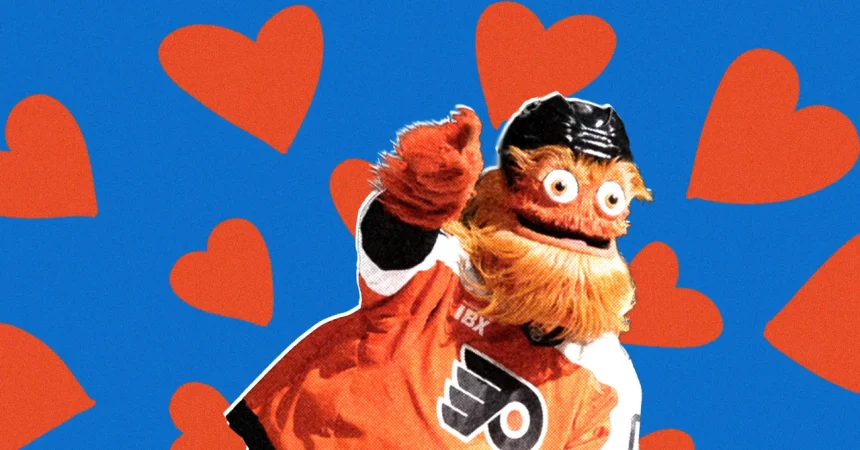
Take, for example, the entirety of Trevor Zegras’s story, “The Summer I Turned Gritty.” It reads as follows: “Trevor Zegras came to Philly looking for a fresh start. But after battling with Pittsburgh in the playoffs last year, he found out how gritty things could get. One heated summer later, Philly’s pretty boy is looking a whole lot grittier.” That’s it. That’s the whole story. There is no emotional arc, no meet-cute, no slow-burn tension. There is just a hockey player, a city, and a pun on the word “gritty.” If this is meant to be a love letter to romance readers, it’s a postcard, not a novel. And yet, the campaign’s existence is itself revealing. It tells us that the NHL is paying attention to the cultural moment, that it knows romance readers are a powerful and passionate demographic, and that it understands the genre’s ability to transform athletes into objects of desire and narrative. But it also tells us that the league’s understanding of romance is superficial, almost embarrassingly so. It reduces a rich, emotional, often sexually and politically complex genre to a series of winks and nods, a marketing gimmick designed to capitalize on a trend without ever really engaging with why that trend exists in the first place. And not everyone is thrilled about that.
In fact, the campaign has drawn sharp criticism from the very community it seeks to court. Some romance authors and readers have argued that the stories make players targets for sexual harassment, turning real, living, breathing athletes into characters in a fantasy game without their full context or consent—or at least, without the nuance of separating on-ice personas from off-ice reality. Others see it as cheap pandering, a shallow attempt to engage with female and LGBTQ hockey fans while ignoring the sport’s deeper problems with homophobia, toxic masculinity, and exclusion. “I cannot begin to describe the depths of my rage that this is actually happening,” best-selling hockey romance novelist Emily Rath posted on Threads. “Yes, the NHL contacted me to participate. And I have never turned down an offer so fast.” Her frustration is telling. Rath and authors like her built the genre on something more than thirst. They built it on emotional stakes, on the pain of identity, on the fantasy of redemption, on the idea that hockey could be a stage for love and growth. The NHL’s campaign, by contrast, offers none of that. It offers a player’s name, a city, and a playful adjective. It is, as critics have pointed out, a transparent attempt to capitalize on the very women and queer readers who have been the genre’s most devoted audience, without giving them anything real in return. They see dollar signs, not genuine inclusion.
To understand why this stings, you have to understand the history of hockey romance and what it has meant to its readers. Romance novels focused on hockey players have been on the rise for years—the New York Public Library first highlighted the trend back in 2019. But it exploded into the mainstream with the massive success of Heated Rivalry, a novel that was originally self-published and later adapted into a streaming series, followed by the Off Campus series, which became a cultural touchstone on BookTok. These books aren’t just about hockey; they’re about identity, vulnerability, found family, and the slow, careful dismantling of emotional walls. They give readers permission to love complicated men, to imagine tenderness in a hypermasculine world, and to find themselves in stories that center on the emotional labor of connection. For many fans, hockey romance is a way to reclaim the sport, to see themselves in it, to imagine a space where the ice belongs to everyone. And so, when the NHL enters that space with a shallow marketing campaign, it can feel like a betrayal—like a popular kid who suddenly remembers you exist when they need something from you, but refuses to actually sit with you at lunch. The players become props, the genre becomes a vehicle, and the fans become customers. And in the process, the very real issues that romance readers have been trying to address—homophobia in the league, the toxic culture of hockey, the pressure on players to be silent, to be hard, to be anything but fully human—are conveniently pushed aside.
Of course, it would be unfair to suggest that the NHL’s campaign is purely malicious or that everyone who participates is somehow doing harm. There is something almost endearing about a multimillion-dollar sports league trying to tap into the same energy that fuels fan fiction and shipping culture. In a way, the campaign is a “playful nod to something that’s clearly going on in the cultural zeitgeist,” as Jon Weinstein, the NHL’s spokesperson, told WIRED. He also emphasized that the league was proud to partner with real hockey authors, illustrators, and voice actors, and that the players were willing to have a little fun with it too. And that matters. The players themselves are not victims—they are grown men who agreed to participate, who are used to being objectified, admired, and turned into public figures, and who, in many cases, probably genuinely enjoy the idea of being seen as romantic leads. But the issue is deeper than individual participation. The issue is about what happens when a genre rooted in emotional and often feminist traditions is flattened into a marketing gimmick. It’s about what happens when the league that has historically ignored, marginalized, or even silenced its female and LGBTQ fans suddenly wants to be part of the conversation when there’s money to be made. It’s about whether the campaign is actually opening the door to deeper inclusion or just propping it open long enough to sell some tickets, some merch, some digital audio clips.
At its best, the “Hot for Hockey” campaign could be a starting point. It could be a gateway, bringing new fans into the sport and into the genre, inviting them to explore the rich, complex novels that first inspired this strange cultural moment. It could lead to a more inclusive NHL, one that takes romance readers seriously, that listens to the concerns of its queer and female fans, and that works to make the sport safer and more welcoming for everyone. At its worst, it’s a hollow echo, a cynical attempt to co-opt a community’s passion without offering anything real in return. And the truth is, both of those things can be true at once. The campaign can be fun and frustrating, lighthearted and revealing, a genuine gesture and a calculated business decision all rolled into one. What it isn’t, at least not yet, is a genuine engagement with the genre that inspired it. It’s a marketing team’s version of a romance novel—the cover art without the story, the blurb without the book. And for the readers who have spent years loving hockey with all its flaws and all its possibilities, that might be the most painful part of all. Because hockey romance was never just about hockey, and it was never just about romance. It was about imagining a world where the game could be different, where the players could be vulnerable, where the fans could feel seen. And when the NHL shows up with nothing more than a pun and a player’s name, it reminds them just how far that world still is from reality.