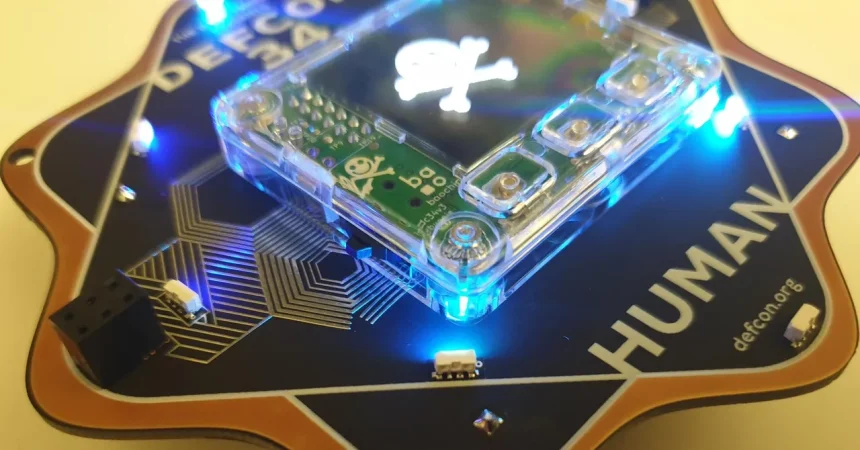
For decades, the annual Defcon hacker conference has been defined by more than just high-level discussions on cybersecurity; it has become a proving ground for the most creative, complex, and downright beautiful hardware badges in the world. Attendees have come to expect gadgets that function as intricate puzzles, mechanical marvels, and cryptographic treasure hunts. However, this year marks a dramatic shift in philosophy. Instead of focusing solely on the external “wow” factor, the organizers decided to pivot toward something far more profound: the future of hardware integrity. By tasking legendary hardware hacker Andrew “bunnie” Huang with the design, Defcon has moved the spotlight from mere flair to the very foundations of how we trust our technology.
The result of this collaboration is the Baochip-1x, a groundbreaking microcontroller that is poised to change the way we think about the “black box” reality of modern computing. For three years, Huang has been working toward a singular, audacious goal: creating a chip that is fully verifiable from the silicon up. Unlike typical microchips, which hide their inner workings beneath layers of opaque, impenetrable plastic, the Baochip offers total transparency. Huang has released the source code for the firmware, processor core, and cryptographic engines on GitHub, effectively inviting the global community of researchers to audit every piece of the puzzle. This isn’t just about open-source software; it is about open-source hardware that finally bridges the gap between digital intent and physical reality.
The brilliance of the Baochip lies in its physical design, which addresses the “supply chain” paranoia that often keeps security professionals up at night. In the traditional world of hardware, users are forced to take it on faith that a chip has not been tampered with or backdoored during the manufacturing process. The Baochip dismantles this barrier by being packaged in a way that allows for visual inspection. Using infrared light, researchers can literally see through the silicon to verify that the internal physical structures align perfectly with the published designs. At this year’s conference, Huang will demonstrate this technique, allowing attendees to confirm with their own eyes that the silicon they are holding matches the code they have been analyzing.
Equally impressive is the secondary life these badges have been granted. Huang designed the core module of the badge to be detached once the conference concludes, transforming it from a souvenir into a functional, high-security hardware token. This design choice signals a pragmatic shift for the hacker community, moving away from “e-waste” badges and toward useful, utilitarian tools that continue to secure a user’s digital life long after the technical sessions have ended. By turning the badge into an active security device, Defcon is encouraging participants to engage with the technology in a way that is both educational and deeply practical.
The path to creating the Baochip was not without its hurdles, particularly the massive financial cost associated with chip fabrication. Developing a custom chip from scratch is usually a multi-million-dollar endeavor, far beyond the reach of most individual projects. Huang circumvented this by forming a unique partnership with a company called Crossbar. By “piggybacking” his CPU design onto the same wafer as Crossbar’s products, he was able to share the massive overhead of manufacturing costs. This clever approach, while rarely discussed in the sanitized boardrooms of the semiconductor industry, highlights the kind of creative, collaborative ingenuity that hackers are famous for. It is a testament to the idea that innovation doesn’t always require massive capital; sometimes, it just requires a bit of clever engineering and the right alliance.
Ultimately, this project represents the culmination of a years-long “story arc” for Huang, one dedicated to achieving transparency at the transistor level. By peeling back the layers of the hardware we rely on every day, the Baochip project serves as a wake-up call to the tech industry. It challenges the status quo of opaque production and invites us to demand more accountability from the hardware that forms the backbone of our society. As attendees walk away from Defcon with their badges in hand, they aren’t just taking home a piece of conference memorabilia—they are carrying a vision of a more transparent, verifiable, and trustworthy digital future.