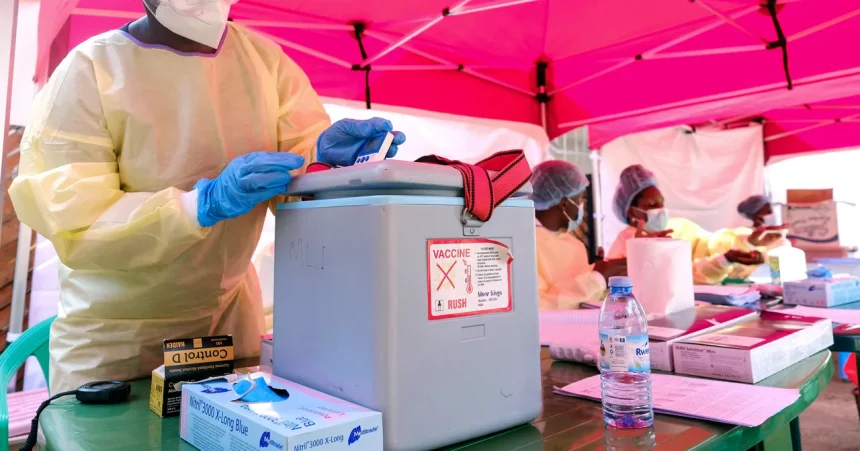
The quest to combat the Bundibugyo strain of Ebola serves as a sobering reminder of how unpredictable viruses can be. Thomas Geisbert, a leading researcher in the field, once candidly admitted that his team underestimated the threat this particular strain posed, believing it to be the least likely to trigger a major crisis. They guessed wrong. Driven by a desire to rectify that blind spot, Geisbert began modifying vaccines as early as 2011, yet even then, the existing solutions fell short of providing the absolute, 100-percent protection needed to stop the virus in its tracks. It is a classic narrative of medical science: the urgency of a public health threat often outpaces our ability to prepare, leaving researchers playing a high-stakes game of catch-up while the virus continues to circulate.
The indifference of the pharmaceutical market remains a recurring character in this story. Because outbreaks of specific, lesser-known strains historically have not promised a return on investment, the commercial sector has largely stayed on the sidelines. According to Geisbert, if the 2012 outbreak had occurred in the shadow of a larger, global catastrophe, companies might have felt the pressure to monetize a vaccine. Instead, research has languished, relegated to the margins of public interest. This leaves academic researchers and small, mission-driven nonprofits to shoulder the burden, working against limited budgets and the frustrating reality that “nobody makes money” off vaccines for diseases that primarily affect vulnerable or isolated populations.
Despite these hurdles, there is renewed momentum. The current, large-scale outbreak has forced a pivot toward action, with the World Health Organization (WHO) showing a keen interest in Geisbert’s “Bundibugyo Ervebo.” This candidate leverages the rVSV technology that proved successful with the Zaire and Sudan strains, offering a familiar, reliable platform that developers and regulators already understand. Recent studies involving macaques have bolstered this hope, demonstrating that even post-exposure vaccination can be effective. While that specific experimental setting was remarkably fast-paced—vaccinating subjects just 20 minutes after exposure—it provides a crucial proof of concept that distinguishes Geisbert’s work from other candidates currently in development.
The journey from a laboratory success to a human-ready vaccine is fraught with logistical nightmares. The team currently faces a frustrating barrier: they cannot obtain a live, local sample of the current circulating virus due to the intense bureaucratic and transport challenges of working in the Democratic Republic of the Congo. They are moving forward with a vaccine based on genetic sequences that are 98-percent similar to past strains, banking on the theory that the remaining two percent won’t cause a failure. As Geisbert notes, while the science looks promising, biology is rarely foolproof. This missing piece of the puzzle represents a lingering, quiet anxiety that keeps researchers up at night as they gamble on the hope that nature won’t throw another unexpected curveball.
However, the tide is beginning to turn thanks to the intervention of global health organizations. The Coalition for Epidemic Preparedness Innovations (CEPI) has stepped in with up to $3.2 million in funding, providing the literal fuel needed to manufacture the vaccine for human trials. Meanwhile, the International AIDS Vaccine Initiative (IAVI) has taken up the mantle, preparing the candidate for production. This collaboration represents a vital, non-commercial ecosystem where the goal isn’t profit, but the protection of human life. By repurposing the safety data and manufacturing pipelines already established for previous Ebola vaccines, the team is hoping to shave years off the typical development timeline, potentially creating a stockpile that can be ready before the next surge.
Ultimately, Geisbert views his work with a mixture of professional stoicism and guarded optimism. He has done all he can, passing the proverbial baton to the manufacturing teams, and now must wait for the data to speak for itself. He is not tethered to his own ego; he simply wants an effective solution, whether it is his vaccine or someone else’s. As he reflects on the future, he knows with near-certainty that this virus will surface again. Whether it is used to stop the current outbreak or to serve as a shield for the next one, the effort to produce this vaccine is a necessary investment in global preparedness, ensuring we are no longer left scrambling when the next, long-feared outbreak finally hits.