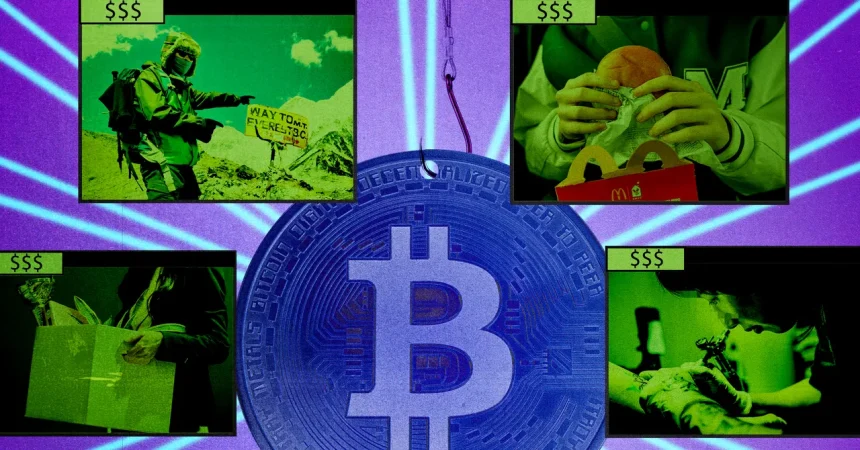
The emergence of Pump.Fun’s new “GO” feature marks a disturbing evolution in the intersection of cryptocurrency and social media, transforming the internet’s worst habits into a gamified, monetized spectacle. At its core, the platform allows users to post “bounties”—crowdfunded pots of money—for people to perform specific tasks, ranging from the harmlessly irreverent to the deeply exploitative. By offering rewards in volatile meme-coins for stunts performed in public, the platform is effectively incentivizing real-world chaos for digital clout. It turns unsuspecting strangers and public spaces into props for a viral performance, creating an ecosystem where humiliation is a transactable commodity.
The platform operates under a thin veil of moderation that appears both fragile and opaque. While Pump.Fun claims to oversee the submission process, the reality of what spills onto the site reveals a darker truth. From requests for offensive, race-based caricatures to elaborate public disturbances, the “GO” feature has quickly become a magnet for content that borders on the sociopathic. The internal guidelines are vague, leaving the creators of these bounties to exploit loopholes in the platform’s terms of service, which conveniently shift all legal and moral responsibility onto the users themselves. This creates a “wild west” environment where the platform profits from the traffic generated by these stunts while distancing itself from the inevitable fallout.
Perhaps most unsettling is the socio-economic undertone of these transactions. As tech analyst Andrew Ford Lyons points out, platforms like these are increasingly leveraging global inequality to turn human desperation into a form of entertainment. Many of the most degrading tasks, such as getting permanent body modifications or enduring public harassment, are being completed by individuals in impoverished regions who view these small crypto payouts as life-changing sums. The platform is essentially weaponizing financial vulnerability, compelling people to trade their dignity or physical safety for a handful of digital tokens that may not even have stable value by the time they are cashed out.
The technical and functional landscape of the “GO” feature is equally chaotic. The platform is currently struggling with falling user engagement, and this desperate bid for relevance has led to a digital environment overflowing with AI-generated frauds and “proof” videos of tasks that were never actually performed in good faith. Because there is no transparent mechanism for verifying these stunts, the community is plagued by scams and infighting over who actually “won” a bounty. Worse, the fine print often reveals that the payout—once split among multiple participants—is insultingly low, sometimes failing to cover even the basic costs incurred by the person performing the task.
This environment is far from the decentralized, democratic vision often promised by the crypto industry; instead, it looks like a dystopian feedback loop of exploitation. By encouraging users to quit their jobs on camera, badger vulnerable populations, or vandalize their own bodies for “bonus points for chaos,” Pump.Fun has lowered the bar for what constitutes acceptable social behavior. It transforms the real world into an adversarial game, where the audience is encouraged to cheer for the destruction of the performer’s well-being. It’s an acceleration of the “attention economy” taken to its most extreme and toxic logical conclusion.
Ultimately, we are left with a sobering look at how far the digital economy has strayed from the concept of community. When we monetize the act of badgering a homeless person or making a scene in a lecture hall, we aren’t just engaging in a “stunt”—we are eroding the social contract. This trend suggests that unless we demand more ethical accountability from these developers, our online existence will continue to devolve into a landscape where the only values that matter are “clout” and “coin.” The “GO” feature isn’t just an app update; it is a mirror reflecting a culture that has replaced empathy with a megaphone and a ledger of meme-coin rewards.