The night was a blanket of black, a heavy, suffocating shroud that seemed to press in through the windshield of Hattab’s car. The headlights carved a weak, wavering tunnel through the darkness, illuminating a narrow ribbon of asphalt that wound through the grey, skeletal hills of the West Bank. It was a drive he had made a hundred times, but the familiarity was a false comfort. Each bend in the road, each olive grove that bordered the asphalt, held a silent, unspoken threat. The engine’s low hum was the only sound, a steady drone that did nothing to quiet the anxieties ricocheting inside his head. He drove with a taut vigilance, his hands gripping the steering wheel at ten and two, his eyes scanning the blackness beyond the light, looking for the tell-tale shimmer of metal or the shadowy shapes of a sudden checkpoint. The fear was not a sudden, sharp spike of adrenaline; it was a constant, gnawing hum that lived in his bones, a low-level static of unease that never quite disappeared. The roads were the arteries of his world, but they were also the front lines of a slow, grinding occupation, and every night was a negotiation with that brutal reality.
He was not alone in this nightly ritual. The same fear that coiled in his gut was a shared ghost, a specter that haunted the entire Palestinian population. In the crowded refugee camps and sprawling cities, in the villages clinging to the hillsides, the same terror echoed. “People were scared to leave their governorates,” he would later recall, his voice a low rumble of memory. The fear was a tangible thing, a miasma that hung over everything. But the most potent poison, the thing that truly crippled people, was uncertainty. What was happening at the Huwwara checkpoint today? Were the soldiers letting people through, or were they conducting a snap inspection? Was there violence on the road to Nablus? Was it safe to take the shortcut through the settlement bypass? The questions were endless, but the answers were almost non-existent. It was an information void, a silence that bred fear, and into that void, Hattab would eventually stare, and then, he would dive in.
The idea came to him slowly, a solution forged in the crucible of his own exhaustion. He wasn’t the only one suffering; he knew that. The fear was a communal infection, a shared weight that pressed down on every Palestinian who dared to move through the occupied territory. “People were scared to leave their governorates,” he later recalled, the memory of that gnawing, claustrophobic fear still fresh. It wasn’t just the checkpoints themselves, though those were enough to stop a man’s heart. It was the profound, crushing void of information. The official announcements were unreliable, the rumors that spread through family networks were often exaggerated or simply wrong. Was the Qalandia checkpoint open this morning, or had the army shut it down without warning? Was there a settler rampage happening on the road to Nablus? Was it safe to take the side roads, or had they become a military target? No one knew. It was this terrifying emptiness, this abyss of the unknown, that gripped the entire population. People were paralyzed, confined to their own villages and towns, not out of laziness, but out of pure, unadulterated fear of what lay just around the next bend. And Hattab, sitting alone in his car, night after night, felt the weight of that collective dread settle over him. He was a man navigating a landscape that was both his home and a labyrinth of arbitrary rules and sudden violence, where the simple act of driving to work was a gamble.
At the core of this gnawing fear was a profound information void. It wasn’t just the checkpoints themselves—the imposing concrete slabs, the watchtowers, the young soldiers with their heavy rifles—it was the unpredictability of it all. When would they close? When would they open? Was that roadblock permanent, or was it just a temporary incursion by settlers? No one knew. The official channels were either silent or misleading, filtered through a bureaucratic lens that cared little for the daily struggles of ordinary people. Rumors spread like wildfire, only to be extinguished and replaced by new, equally terrifying ones. People were trapped, not just physically but mentally, in a fog of confusion and dread. Hattab saw it in his neighbors, in the eyes of his friends, in the hunched shoulders of the men queuing for coffee. “People were scared to leave their governorates,” he would later recall. That fear was a parasite, feeding on ignorance. No one knew if a road would be open or blocked, if a checkpoint would be a ten-minute delay or a four-hour ordeal, if a settler attack was waiting just around a bend. It was this void, this terrifying absence of knowledge, that gnawed at the soul of the community. And it was this void that Hattab, night after exhausting night, decided to try to fill.
The seed of the idea was planted during one of those interminable delays, the car idling in a line of traffic that snaked back for miles under a burning sun. A checkpoint, of course. No explanation, no estimated time, just the silent, lethal waiting. Rumors would circulate, passed from car to car, or through crackling radio calls from truckers and taxi drivers. Some said the road was closed for the day. Others whispered of a settler attack, a clash, a soldier’s whim. No one really knew. Hattab looked at the anxious faces in the cars around him, the exhaustion and frustration etched into their features, and he felt a deep, unsettling realization: they were all driving in the dark, not just literally, but informationally. The fear was a knot in the collective gut, a panic born of powerlessness. It wasn’t just the soldiers in the watchtowers or the hulking grey concrete of the Wall; it was the terrible, gnawing uncertainty. Was the road ahead clear? Were there settlers blocking the path? Was there a firefight underway just over the hill? The rumors were a poison, spreading faster than truth, creating a landscape of anxiety where every journey was a gamble. It was this void of information that was the true, invisible enemy, a weapon far more paralyzing than any barricade.
The thought haunted Hattab night after night. He knew he wasn’t alone in his sleeplessness, his white-knuckled grip on the steering wheel. The roads were their only connection, the fragile arteries that linked towns, villages, and cities. When those roads were severed, people were trapped, not just physically but psychologically. The fear of the unknown, of what lay around the next corner—an unexpected checkpoint, a violent settler, a military incursion that had just materialized—was a heavy, crushing weight. “People were scared to leave their governorates,” he would later recall, remembering the palpable tension that hung over every conversation. They were prisoners in their own land, and the prison walls were made of information deficits. So, Hattab decided to build a key to that prison, a tool that would shine a light into the darkness. It wasn’t a grand, political gesture; it was born of pure, practical necessity, a drive to solve a problem that affected him and everyone he knew. He had a smartphone, a data plan, and a fierce desire to break the isolation that the checkpoints imposed. That was all he needed to start chipping away at the great, intimidating unknown.
The seed of the idea was simple, born from the exhaustion of hearing the same agonized questions from his neighbors, his relatives, and the other commuters he met at the checkpoints. The fear was palpable in the air, a suffocating presence that clung to the walls of the dusty minibuses and the interiors of private cars alike. “People were scared to leave their governorates,” he often thought, watching them turn back home, their errands abandoned, their daily lives held hostage by rumor and dread. At the core of that fear was a vast, terrifying void of information. The checkpoints were not static; they were unpredictable, a constantly shifting maze of military whims, settler violence, and bureaucratic caprice. One day a road was open, the next it was sealed. A checkpoint could be a quick stop or a multi-hour ordeal. There was no official source, no reliable guide. The only truth was the frantic, often unreliable, word-of-mouth that spread through villages and towns. So, in a moment of quiet desperation, as the kilometers continued to pile up beneath his tires, Hattab began to devise a way to fill that void, not just for himself, but for every other Palestinian who shared his nightly gamble.
The fear was a tangible thing, a collective weight pressing down on the West Bank. “People were scared to leave their governorates,” Hattab recalled, his voice a low, gravelly murmur. The fear wasn’t just about the physical danger, though that was real enough. It was the fear of the unknown, the terrifying blankness of what lay around the next corner. Had the army closed the checkpoint for the day? Had a group of settlers decided to block the road with stones and burning tires? Was there a sudden, violent escalation in a village that required a detour through unknown, unpaved paths? There was no official source to ask, no reliable notice board. The only information was rumor, whispered warnings passed from neighbor to neighbor, often distorted in the retelling. This information void was the core of the anxiety. It was a deep, gnawing emptiness that left people paralyzed, isolated in their own homes, cut off from work, family, and life itself. And it was this void that Hattab decided to fill.
He was not a journalist, not an activist, not a tech entrepreneur. He was just a man who drove for a living, a man who had learned the geography of the West Bank in his bones, the shortcuts and the long ways around, the potholes and the police stations. He saw the fear in the eyes of his neighbors, the hesitation in their voices when they asked about the roads ahead. They were scared to leave their governorates, not because of the distance or the time, but because of the unknown. The checkpoints, the soldiers, the settlers, the sudden violence—it was a living, breathing map that changed by the hour. There was no central source of truth, only rumors and half-truths that spread through community networks. The Israeli authorities had no interest in providing a reliable traffic report; in fact, the unpredictability was part of the system’s control. The fear was a weapon, and the information void was its ammunition. Hattab felt it in his bones, this heavy, suffocating uncertainty. He would drive into a village and find the road ahead blocked by a sudden military incursion, or he’d be forced to take a long, winding detour through dirt paths, all while the rumors swirled. It was exhausting, infuriating, and isolating. He knew, with a heavy certainty, that he was not the only one. Every other driver on the road was living this nightmare, each in the isolated cocoon of their own car, their own fears. And in that isolation, a silent, collective dread was born.
The terror was not born of the physical dangers alone, though those were real and ever-present. Settler violence could erupt without warning. A military incursion could turn a quiet village into a warzone. The fear was also a creature of the unknown, a shapeless monster that grew in the void of information. Official reports were rare, often delayed, and sometimes deliberately vague. Radio stations, if they mentioned the roads at all, offered nothing more than frustratingly general warnings. Rumors would spread like wildfire through family WhatsApp groups, growing more distorted with each forward: “The army is blocking the road to Ramallah!” “Settlers are attacking cars near Nablus!” But these were just whispers in the dark, fragments of a truth that shifted with the hour. People were scared to leave their governorates, Hattab knew. Not because they were cowards, but because they were blind, driving down a road that could suddenly slam shut in their faces, with no way to know which turn was a trap and which was a passage to safety. The fear was a physical weight in the car with him, a constant companion on these night drives, and he knew it was the same for everyone else. It was the fear of the unknown, the fear of the settler’s car blocking the road, the fear of the soldier’s raised hand, the fear of being stuck, stranded, or worse, without a clue of what was coming next.
That fear was rooted in something far deeper than the physical danger. It was rooted in a profound information void, a black hole where knowledge should have been. People were scared to leave their governorates because they were driving blind, not just literally into the night, but into a political and military maze that changed its shape with terrifying speed. A road that was open in the morning could be closed by a sudden military incursion by noon. A checkpoint that was a mere traffic stop one day could become a permanent, concrete-barricaded fortress the next. The official information, if it came at all, was often delayed, vague, or outright misleading. Rumors spread like wildfire through villages and towns, feeding a collective anxiety that made the physical landscape of the West Bank feel like a minefield. Hattab felt this gnawing uncertainty in his bones. It was the worst part of the journey—not the distance, not the hours, but the not-knowing. He knew he was not alone in this. He saw it in the faces of other drivers at the fuel stations, the silent nods of recognition at the checkpoints, the shared, unspoken understanding of a life lived under an unpredictable and often violent occupation. People were scared to leave their governorates, he said, because no one could tell them what to expect. It was a fear born of a void, a terrifying lack of information that made the road ahead feel like a freefall into the unknown. That void was about to be filled.
At the core of that fear was an information vacuum, a silence that was just as dangerous as any soldier or settler. It was a place where rumors festered in the absence of facts, where a single story of a checkpoint closure or a settler attack could paralyze an entire community. A man with a brother in Nablus would hear a rumor of a shooting and assume the worst. A woman with a medical appointment in Ramallah would stay home rather than risk being trapped in a line of cars for hours, her child sick in the back seat. Everyone knew someone who had been delayed, humiliated, or worse. But no one knew exactly where or when the next delay, humiliation, or act of violence would occur. This was the information void—a black hole of uncertainty that swallowed hope and bred a silent, corrosive fear. Hattab felt it in his own bones. He was a driver, a man who spent his days and nights on these roads, and yet he was as much a prisoner to the unknown as anyone else. A simple question haunted him and every other Palestinian driver: What if the road ahead is blocked? What if there’s a settlement outpost I don’t know about? What if the soldiers are in a bad mood tonight? There was no official channel, no reliable source, only the static of rumors and the cold dread of the unknown. He knew he wasn’t alone in his sleeplessness, his knotted stomach, his frantic checking of local news groups for any scrap of information. The fear was a collective weight, pressing down on the entire territory.
That fear was a poison, and Hattab recognized its root: an information void. People were scared to leave their governorates because they were driving blind. The map was a lie, drawn in broad strokes that meant nothing when a dirt road was suddenly blocked by an earthen mound or a convoy of military jeeps. The official announcements were often slow, vague, or nonexistent. Rumors ran rampant, and fear fed on rumor. It was in this fog of uncertainty that Hattab had an idea—a simple, practical, and radical one. He was already a heavy driver, a man who lived in his car, crossing the West Bank for work, for family, for the simple necessities of life under occupation. He saw the same faces at the same checkpoints, the same dread in their eyes. He understood that the fear was not just about the physical danger, but about the powerlessness of the unknown. Not knowing if a road was open, if a checkpoint was manned, if settlers were blocking a highway, if the army had declared a sudden “closure” — that uncertainty was a prison of its own. So, he decided to do something about it. Seven years ago, his phone, a data plan, and a fierce sense of necessity converged into a simple, radical act: he created a Telegram group. He called it “Road Conditions.”
The first days of the group were quiet, almost timid. It was a small, flickering candle in the vast, dark void of the occupation’s opacity. Hattab, a man not typically given to grand gestures, became a digital cartographer of the impossible. He posted the link to his new group in local news channels and community forums, a modest invitation thrown into the digital sea. He waited, uncertain if anyone would come. The first few members trickled in—a handful of neighbors, a few friends from other towns, strangers who had seen his link shared in a Facebook group. They were all navigating the same treacherous labyrinth of checkpoints, and they were all hungry for the same thing: a small measure of certainty. The first messages were tentative, a question here, a tip there. Someone would post, “Checkpoint near Ramallah, traffic is backed up,” and Hattab would feel a swell of purpose. He was building something. He was chipping away at the wall of silence that had made every journey a gamble. He was no longer just a driver; he was a node in a nascent network of care. The group sat quietly in his pocket, a tiny, pulsing light of connectivity in a land of enforced fragmentation.
The fear that gripped the West Bank was not a simple terror of rocks or bullets, though those were real enough. It was the fear of the unknown, of the unseen roadblock just over the hill, of the sudden closure that would strand you for hours, of the settler outpost that had appeared overnight, of the soldier whose mood might turn the difference between a five-minute wait and a four-hour detention. Hattab saw this fear in the faces of his neighbors, in the tense hunch of their shoulders as they drove. He heard it in the trembling voices of friends who called to ask which road was safe, which route to take to a funeral or a hospital or a job. They were scared to leave their governorates, not because of the physical distance, but because of the profound, gnawing uncertainty. A trip that should take an hour could stretch into a day-long ordeal, or be cut short entirely by an arbitrary decision at a checkpoint. There was no map for this, no official update, no authority to call. The people were navigating a labyrinth in the dark, and the lack of information was a weapon in itself, a way to keep an entire population caged, immobilized by doubt and fear. And it was this void, this terrifying absence of knowledge, that Hattab resolved to fill.
The genesis of the idea was not a moment of inspiration, but a slow, grinding realization. Hattab knew, in his bones, that the fear he felt was shared by every other Palestinian driver in the West Bank. The fear was a constant companion, a low-grade hum of anxiety that spiked whenever he approached a checkpoint. Would it be open? Would the soldiers wave him through, or would he be made to wait for hours, baking in the sun, a silent audience for the humiliation of others? The rumors were worse than the reality, but no one knew which rumors to believe. The Israeli authorities offered no reliable information; the local news was often slow or blocked. There was a void at the heart of the occupation, a space of terrifying uncertainty where whispers and half-truths bred. It was this void that Hattab decided to fill. He wasn’t a journalist or an activist, just a man with a car, a phone, and a growing conviction that something had to be done. The fear that gripped his own heart as he navigated the maze of checkpoints was a fear born of the unknown. He knew that if people could just see the road ahead, if they could know what to expect, the fear would loosen its grip. He couldn’t remove the checkpoints, couldn’t end the occupation, but he could shed light on it. He could give people the information they desperately needed to make their own choices, to feel a small measure of control in a world that was profoundly out of control.
So, Hattab created the Telegram group, a simple, unassuming act of defiance against the chaos. The name he chose was straightforward, almost bureaucratic: “Road Conditions.” It was a plain, descriptive title that promised nothing more than what it delivered—an open line of communication among people who were all navigating the same shattered, unpredictable geography. The mechanics were simple: a group chat where anyone could post updates about the checkpoints that had become the grinding, ever-present machinery of the occupation. One person could warn that soldiers had closed the road near Ramallah; another could confirm that the Qalandia checkpoint was open but backed up for an hour. Hattab’s vision was rooted in the most basic of human needs: the need to know. In the beginning, it was just an idea. He posted the link to the new Telegram group, which he named “Road Conditions,” in local news channels and community forums. He waited, watching the screen, wondering if anyone would even see it. The first members trickled in, a slow drip of a few people here and there. They were the early adopters, the brave, or the desperate. They shared the same anxieties, the same need for information. Hattab would drive a road, notice a new checkpoint or a blocked intersection, and post a quick update himself. Others began to do the same. A quiet, fragile community began to form in the digital ether, a network of strangers connected by a shared landscape of asphalt and anxiety.
The early days of Road Conditions were a slow, painstaking effort to build trust. Hattab knew that for the group to work, it needed to be more than just a bulletin board; it needed to be a reliable, self-sustaining network. The first members were friends, family, and a few brave souls who had stumbled upon the link shared in local news groups. They would post sporadic updates, a photo of a queue of cars, a warning about a dirt path being blocked. Hattab himself spent hours driving back and forth, testing roads, noting which checkpoints were manned and which were not, feeding the group with his own observations. He would drive the backroads at night, the high beams cutting through the darkness, logging the condition of the asphalt, the presence of army jeeps, the movements of settlers. He was a cartographer of fear, mapping the shifting contours of the occupation. The early members were a close-knit, desperate community. They relied on each other. A message like “Clear from Ramallah to Birzeit” carried a weight of relief. It meant a few extra minutes of peace, a slightly less anxious journey. It was a small act of collective defiance against the capriciousness of the occupation. They were reclaiming the roads, one report at a time. But it was also exhausting, a constant hypervigilance that Hattab felt deep in his bones. He was a man plugged into a machine of anxiety, running on caffeine and adrenaline, watching the odometer of his car clock the miles of a land that was both his home and his cage.
The fear Hattab sensed in others was a mirror of his own, but it was the recognition of a shared, silent desperation that finally pushed him to act. He would be driving back from a job in Ramallah, or delivering goods to a village near Nablus, and he would see the same sight: cars pulled over at the side of the road, engines idling, drivers huddled around their phones or speaking to friends and relatives, trying to piece together where the checkpoints were open and where they were shut. They were all playing a game of chance, betting their time, their fuel, and sometimes their safety on the rumor mill. It was a brutal, daily lottery. People were scared to leave their governorates, as Hattab later put it, because they had no idea what awaited them just twenty kilometers down the road. The rumors were a poison—a whisper that one route was impassable, that another was crawling with soldiers, that a third was a trap. A wrong guess could mean being turned back, being detained for hours, or worse. At the heart of this paralyzing fear was an information void, a terrifying emptiness where reliable knowledge should have been. Hattab felt it himself, the gnawing anxiety of a driver approaching a blind corner, never knowing what was on the other side. He knew that he was not alone in this. The fear was a shared weight, pressing down on every Palestinian who had to move through the occupied territory. It was the fear of the unknown, the fear of the arbitrary, the fear of a system designed to keep people off balance. And it was this fear, this corrosive uncertainty, that planted the seed of an idea in his exhausted mind.
The fear was a collective paralysis, a silent epidemic that kept entire communities confined. Hattab heard it in the voices of his neighbors, his friends, the shopkeepers he knew. “People were scared to leave their governorates,” he recalls. They were scared because they were blind, navigating a landscape where the rules could change without warning, where a road that was open in the morning could be sealed by nightfall, where a simple commute could turn into a confrontation with soldiers or settlers. The occupation was a physical reality, but it was the information void that was truly suffocating. Rumors swirled like dust in the wind, half-truths and exaggerations spreading from one village to the next, breeding a potent, paralyzing fear. No one knew which road was safe, which checkpoint was backed up, which settlement outpost had seen a flare-up of violence. The uncertainty was a cage, confining people to their own governorates, to the familiar paths, because at least the familiar, no matter how difficult, was known. It was this void, this terrifying absence of reliable knowledge, that Hattab decided to confront. He had a car, a smartphone, and a data plan—tools that seemed mundane but which he saw as instruments of liberation. If the occupation controlled the roads, he could build a map of resistance, not with stones or guns, but with information. He could give people back a measure of control over their own movements, their own lives. The idea was simple, almost too simple: a Telegram group. A place where people could share what they saw, warn each other of danger, and break the isolation of being alone on a dark road. It was a small, fragile act of defiance, but it was a start. He called it “Road Conditions.”
The genesis of the idea came from a deep, gnawing sense of helplessness. Every night, he drove home with a knot in his stomach, not knowing if he would encounter a sudden closure, a military raid, or a gathering of settlers emboldened by the night. The fear was a tangible presence in the car with him, a passenger that refused to leave. He knew he wasn’t alone in this; the entire West Bank was holding its breath. “People were scared to leave their governorates,” he says. It was a fear born not of the journey itself, but of the profound ignorance that shrouded it. There was no central authority to announce road closures, no reliable source for whether a particular checkpoint was open or closed, whether a road was safe or had become a flashpoint for settler violence or military incursion. Information was a currency more valuable than fuel, and it was scarce. Rumors would swirl in local markets, whispered warnings would pass from one driver to another, but they were unreliable, often exaggerated, and always stressful. The void of accurate, real-time information was a breeding ground for anxiety. It was this void, more than the checkpoints themselves, that made travel so psychologically exhausting. Every journey was a gamble, a leap of faith into the unknown. Hattab felt this fear acutely; it was a cold stone in his gut. He knew, with a certainty born of countless conversations in cafes and shops, that he was not alone. But knowing that did little to ease the dread.
The fear was a collective affliction, a shared wound on the body of the West Bank. People were scared to leave their governorates, to travel from Hebron to Ramallah, from Nablus to Jericho, because the road itself had become a place of unfathomable uncertainty. It was not just the physical distance, but the psychological chasm created by a crippling lack of information. Official bulletins were rare, terse, and often arrived too late to be of any use. Word of mouth was a game of broken telephone, where a story about a blocked road would morph into a rumor about a war by the time it crossed the valley. People were prisoners in their own land, not just of checkpoints, but of their own ignorance of what lay ahead. This was the information void, a dark space where fear bred and multiplied. Hattab knew this fear intimately. He felt it in his own gut every time he drove. But he also had a background in a world that was, for him, familiar: he was a driver, a man of the roads, and he knew the power of shared information. He knew that while he couldn’t remove the checkpoints, he could help dismantle the uncertainty. And so, driven by a restless need to fight the chaos of the night, he began to build a tool. It was a simple, almost crude idea: a Telegram group. He called it, plainly, “Road Conditions.” He posted the link in local news groups and waited, hoping for a few people to join and share what they saw. The first members came in a trickle, like water seeping through a crack in a dam. They were drivers like him, night-owl commuters, taxi drivers, and delivery men who understood the terror of the unknown road. The first posts were sparse, but they were a start. A person would write, “checkpoint at Bethlehem, traffic is backed up,” or “bridge is closed, take the detour.” Each message was a small victory against the uncertainty that gripped the territory. Hattab would sit in his car during his breaks, scrolling through the group, answering questions, verifying information, and feeling the first faint pulse of a community being born. It was a community built on a shared experience, a shared fear, and a shared, defiant hope that they could make the journey a little less treacherous for each other. The car’s odometer, which had already seen so many roads, was about to read a lot more.
But the trickle was about to become a flood. The year 2022 arrived, and with it, the Israeli military dramatically increased the number of checkpoints and flying checkpoints across the West Bank. What was once a difficult but navigable maze of roads became a chaotic, ever-shifting patchwork of barriers, closures, and bypass roads. The group exploded. What had been a few hundred members swelled into the thousands, and then tens of thousands. The influx was a double-edged sword. On one hand, Hattab’s creation was achieving its purpose; it was becoming the vital, life-saving source of information he had envisioned. On the other, the sheer volume of posts, questions, and real-time alerts was overwhelming. The group chat became a cacophony of voices. Someone would post “Is the road to Ramallah open?” and before a moderator could answer, three other people would post conflicting information. The noise was threatening to drown out the signal. The pressure on Hattab became immense. He was now the de facto administrator of the most critical information network in the West Bank, a role he had never sought. The phone in his pocket buzzed relentlessly, a constant, vibrating reminder of the responsibility he bore. He would wake up in the middle of the night to the sound of his notifications, his heart pounding, and reach for the glowing screen to check a report of an incident near his own village. The stress was eating at him. He slept in short, fitful bursts, the anxieties of the road following him into his dreams. He was losing weight, his eyes perpetually ringed with dark circles. But he couldn’t stop. Every time he thought about shutting it down, he saw the faces of the people he was helping: the exhausted mother with her children in the back seat, the sick man trying to get to a hospital in the city, the young worker trying to get to his job at a construction site. He felt a moral imperative to continue. He felt responsible for every piece of information that flowed through his hands. He would check a report of a blocked road, and then make a series of phone calls to contacts he had made over the years – a taxi driver in Hebron, a delivery driver in Ramallah, a farmer in the Jordan Valley – to verify the information before it was posted. It was a painstaking, exhausting process, but it was the only way to maintain the integrity of the network. The information itself was ephemeral and volatile. A road could be open for an hour and then blocked for a day. A checkpoint could be calm at 8 AM and an inferno of delays by 9:30. He learned to read the patterns, to understand the rhythm of the occupation. He learned that a quiet morning often preceded a storm of activity in the afternoon. He learned to decipher the coded language of the soldiers’ movements, the subtle shifts in the traffic patterns that foretold a closure. But the sheer volume of data was a relentless tide that threatened to drown him.
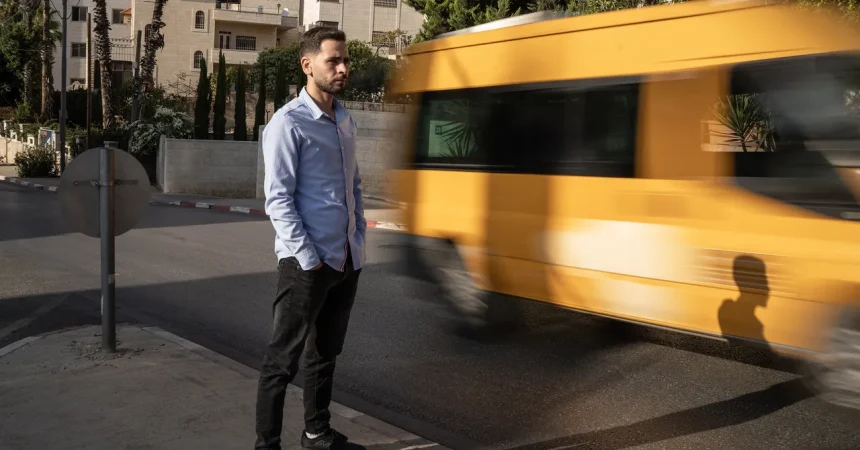
The physical toll of this digital burden was mirrored on his own body. Hattab was a sales representative, a job that required him to be on the road constantly. He was the kind of man who knew the cracks in the asphalt of a hundred different roads. His car, a sturdy, grey Hyundai, was his office, his sanctuary, and, at times, his prison. When he first launched the group, the odometer read 70,000 kilometers. He had seen the miles rack up through the windshield as he drove, and he knew every single one of them. He could feel the weariness in his own body too, an echo of the car’s engine. His lower back ached from the constant pressure of the driver’s seat. His shoulder was tense from craning his neck to see past the A-pillar, to scan the road ahead. The endless driving was a physical, mental, and emotional marathon. But the road was no longer a straight line from point A to point B. It was a labyrinth, a puzzle to be solved. He would leave his house in Ramallah at the crack of dawn, his route planned using the group’s reports. He would take the long way, the safe way, the back roads that snaked through Palestinian villages, avoiding the main arteries where the Israeli army had set up their checkpoints. He would cross the vast, sprawling landscape of the West Bank, a journey that in normal times would take two hours, and turn it into a five-hour odyssey. He would drive through the arid, desert hills of the south, the rocky valleys of the center, the fertile, green fields of the north. He would see the sprawling, grey settlements built on hilltops, their red-tiled roofs a constant symbol of the conflict. He would see the ancient olive trees, gnarled and wise, their roots clinging to the terraced hillsides. It was a landscape steeped in history, but the history was now scarred by the present. The weight of the occupation was a physical presence in the car with him. By the time he finished his rounds, the sun was setting, and he had added another 300 kilometers to the car’s odometer. He would wearily drive home, his head full of images of roads blocked by concrete barriers, of soldiers silhouetted against the setting sun, of the weary faces of his countrymen. He would park his car, sit for a moment in the silence, and calculate the numbers. The odometer now read 274,000. In just over four years, he had driven the equivalent of going around the Earth’s equator nearly seven times. It was a staggering statistic, a testament to the absurdity of his life, and the lives of millions of other Palestinians who were forced to navigate a hostile, fragmented landscape. But the distance wasn’t just about the kilometers. It was about the constant, grinding toll of waiting – waiting at checkpoints, waiting in line, waiting for the soldiers to wave you through. It was about the feeling of being trapped, of being a stranger in one’s own land. Yet, even in this grueling routine, Hattab found a strange resilience. He was the driver, the navigator, the networker. He was a thread in the fabric of a society that was determined to function despite the odds stacked against it.
Out of necessity, the “Road Conditions” group had to evolve. The wild west of the early days, when anyone could post anything, was proving dangerous. Misinformation spread like wildfire, causing people to take unnecessary risks or to be stuck in endless traffic jams for no reason. Hattab, exhausted by the constant moderation, made a critical decision. He took the group private and closed it to new members. He then appointed a team of moderators – the most active, reliable, and trustworthy contributors he had come to know through their posts. They were a diverse group: a taxi driver from Hebron who knew every alley and backstreet, a teacher from Nablus who was meticulous in his reporting, a young woman from Ramallah who was fearless in the face of the soldiers, a farmer from the Jordan Valley who monitored the movement of the military from his fields. Together, they formed a tightly knit, real-time intelligence network. The moderators were the gatekeepers, the filters through which all information had to pass. They developed a code, a system of symbols and abbreviations that could be transmitted in a few keystrokes. A roadblock with a heavy military presence was marked with a red flag. A checkpoint with long queues was marked with an orange clock. A sudden, unpredictable closure was marked with a flashing blue cross. They would cross-reference reports, checking them against each other, against their own knowledge, and against a network of informants they had cultivated across the territory. They would weed out the false reports, the ones planted by the Israeli military to sow confusion or to bait the unwary. They would challenge anything that seemed off. They worked in shifts, covering the clock. The group became a lifeline, a vital organ of the Palestinian body politic. A person about to get into their car would check the group before they left, as naturally as they would check the weather. A family planning a trip would plan their route around the information in the group. A sick person in need of urgent medical care would use the group to find the fastest, safest route to the hospital. The group was not just about avoiding delays; it was about saving lives. They helped a young woman in labor reach the hospital in Nablus during a military closure. They guided a diabetic man to a pharmacy that was open during a strike. They prevented countless people from walking into a trap. It was a constant, low-level war of information, fought from the front seats of their cars. The group was a testament to Palestinian resilience, to their refusal to be broken by the siege. It was a beautiful, terrifying, and deeply human thing. And Hattab, the man who had just wanted to ease the commute, had become the leader of a secret, digital underground. He was no longer just a salesman; he was a general in the war of navigation, a cartographer of a land that was constantly being redrawn by the occupation. His phone, once a symbol of his burden, was now a symbol of his power. He was no longer alone. He was part of a team, a community, a movement that was fighting, one road at a time, against the chaos and the uncertainty of the night. The digital map he and his moderators had built was more accurate than any official map because it was alive, breathing with the constant, updated reality of the ground. It was a testament to the resilience of the human spirit, to the desperate, defiant need to carve out a semblance of order in a world that seemed designed for chaos. And in the process, they were not just sharing information; they were building a new kind of community, a digital sumud – a community of steadfastness – bound together by a shared struggle and a shared determination to survive. The group was no longer just a tool; it was a symbol of resistance, a testament to the power of ordinary people to take control of their own destiny. And Hattab, the man with the weary eyes and the ever-buzzing phone, was at the center of it all. He was no longer just a sales representative; he was the quiet guardian of a thousand journeys, a weaver of connections in a land fractured by conflict. The night, once a time of fear and uncertainty, was now a time of quiet vigilance, the soft glow of his phone screen a small, defiant light against the darkness. The miles on his car were more than just a number; they were a chronicle of a nation’s struggle, written in the only language it truly understood: the language of the road. And for Hattab, the journey was far from over. He would keep driving, and he would keep connecting the threads of his fragmented world, one post at a time. He would keep the road open, in whatever way he could. He would keep the headlights of his car shining into the night, guiding the way for those who were lost, and carrying the hope of his people with him. The car’s engine hummed, a constant, faithful companion, as the odometer prepared to turn over another 10,000 kilometers. And he was ready to drive them all.