If you spent even a few minutes on social media in late July, you may have seen the face of Jordan Zietz—or at least a screenshot of his LinkedIn post—and wondered what kind of person thinks it is a good idea to offer job interviews in exchange for permanent tattoos. Zietz is a 24-year-old entrepreneur, the cofounder and CEO of LemonLime, a startup that uses artificial intelligence to help small businesses with marketing and customer engagement. After attending Y Combinator’s Startup School, he threw a party and, as he described it in a now-viral LinkedIn post, hired an “actual tattoo artist” to be on site, “offered an instant interview to anyone who got a LemonLime tattoo,” and claimed that seven people left with fresh ink. The internet reacted as you might expect: with horror, disbelief, and a flood of accusations. Commenters called him “disgusting” and “very unfair,” while others described the event as a “textbook display of predatory corporate behavior, a gross abuse of power, and a profound violation of professional ethics.” A representative tweet said, “The job market cannot be this cooked that kids have to get permanent tattoos to get interviews.” For a few days, Zietz became the internet’s most hated person, a symbol of everything wrong with startup culture, hustle-culture excess, and the power imbalance between young founders and desperate job seekers. But in an interview with WIRED, he wanted to set the record straight. He insisted that he has never—and will never—force anyone to tattoo his company’s logo on their body. And he wanted people to understand the fuller story, the one that the viral post did not tell.
The backlash itself is worth examining, because it did not happen in a vacuum. The simple phrase “instant interview” in exchange for a tattoo struck a nerve because so many people around the world are currently looking for work in a deeply uncertain economy, where entry-level positions receive thousands of applications and even qualified candidates struggle to get a foot in the door. The image of a young, well-connected Stanford graduate using his company’s brand as a way to seemingly exploit that desperation felt like a dark parody of the worst kind of founder: someone who confuses his own eccentricity with innovation, and who treats job applicants as props in a performance of corporate culture. The comments on LinkedIn were not just angry; they were long, detailed, and devastating. People spoke about their personal experiences with exploitative hiring practices, about the humiliation of being asked to prove loyalty to a company before they are even paid, and about the psychological toll of a job market that asks young people to treat their own bodies as marketing collateral. The viral response was not just about Zietz himself, but about a broader cultural moment in which the line between passion and exploitation has become dangerously thin. In that context, the story of LemonLime’s tattoo party became less about one foolish post and more about a generational anxiety—the fear that your worth as a worker is measured by what you are willing to sacrifice, even if that sacrifice is permanent ink on your skin. Zietz, looking at the angry comments from his own perspective, says he now understands why people were uncomfortable. But he also says the original post did not tell the whole story, and that the real event was different from the one the internet imagined.
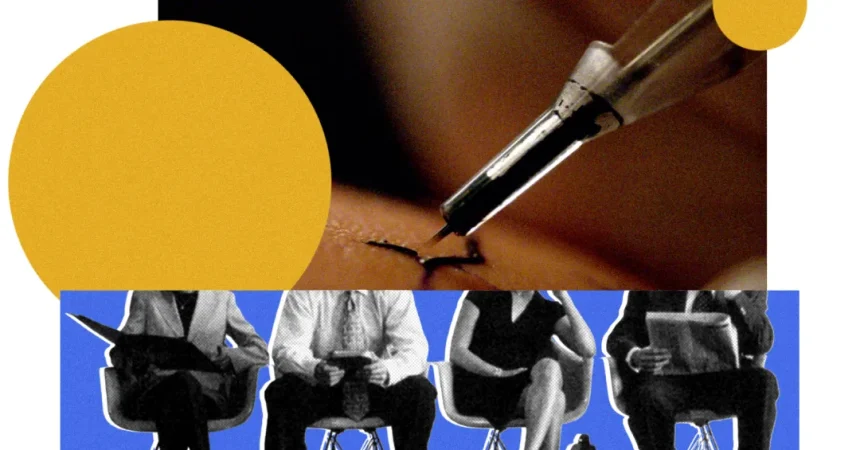
So, what actually happened at the party? According to Zietz, despite what his original LinkedIn post suggested, no one permanently branded themselves with LemonLime’s corporate logo that night. There were predesigned tattoos of lemons and limes, but attendees were free to choose any design, and at least one person who got tattooed chose a personal design on her own body and made clear she was “not seeking a job.” Zietz says he told everyone at the party that getting a tattoo—whether it was citrus-themed or completely unrelated—was not a requirement for employment. In fact, he claims that any attendee who wanted an interview got one, regardless of whether they sat down at the tattoo station. Some people, he said, got tattoos simply because they wanted free ink and had no interest in talking to LemonLime about a role. “A decent amount of people who got tattoos never wanted to even take us up on any offer to chat,” he said. “They just wanted to get a tattoo for free.” That detail matters, because it reframes the event from a transactional gatekeeping mechanism into something more like a strange, chaotic party game. But it also complicates the story: if the tattoos were not a requirement, why did Zietz include that detail in his LinkedIn post? Why did he say “offered an instant interview to anyone who got a LemonLime tattoo” if the line between tattoo and interview was not actually firm? The answer, it seems, lies in the way Zietz thinks about hiring, culture, and the kind of people he wants to surround himself with—which is to say, people who are willing to participate in his vision of a life and a workplace that is unapologetically weird.
Zietz is not shy about his own relationship with tattoos. He says he got his first-ever tattoo on a first date, and he has a pair of thigh tattoos that include a dinosaur doodle and the phrase “This Is The Correct Knee,” with an X underneath. He also got his second LemonLime-related tattoo in less than a month, this time the actual company logo on his other shoulder, and he plans to release a glossy video of himself getting it done. Three of LemonLime’s five employees received LemonLime-themed flash tattoos, including Zietz himself and his cofounder, Daniela Muñoz, and at least one non-employee also got one. Zietz emphasizes that, to his knowledge, he is the only person with the actual LemonLime logo tattooed on his body, and he says he would never ask anyone to do something he would not do himself. He seems genuinely surprised, even hurt, that anyone might read his original post as a mandate. But he also admits that the language of the post created a misleading impression, and that he can see why people outside the party might have interpreted it as a gross exercise of employer power. Part of the reason he hired the tattoo artist, he says, was to identify candidates who would be a good cultural fit for LemonLime. He describes his original post as “half-and-half” earnest—a kind of test for cultural alignment. He did not want people to feel obligated to get tattoos, but he did want people to see the tattoo station and think that what LemonLime was doing was “out there.” Then he wanted them to make a judgment call. Did they love it? Did they hate it? If they were turned off by the tattoo station, they probably would not be a good fit for the startup. “I would never ask anyone to do something I would not do myself,” he says, and from his perspective, the tattoo station was less an ultimatum than an invitation—an invitation to engage with the company’s eccentric spirit, to show a willingness to step outside conventional boundaries, and to prove that you are the kind of person who can laugh at the absurdity of modern work life.
This is not the first time Zietz has embraced the absurd. When he was a student at Stanford, he was suspended from his role as the university’s mascot, the Tree, after unfurling a banner that read “Stanford Hates Fun” during a football game. Before LemonLime, he cofounded a social-media platform called Confetti, and part of the hiring process for that venture, as he wrote on LinkedIn last year, involved an interview conducted while skydiving. There is a clear pattern here: Zietz is drawn to grand, outrageous gestures that blur the line between self-promotion and genuine cultural experimentation. He sees himself as a person who wants to build a company that is not sterile and corporate, but alive, playful, and willing to take risks. The problem is that not everyone experiences risk the same way. For a founder with financial security, social connections, and the validation of an accelerator like Y Combinator, a tattoo is a statement of identity, a fun story to tell, a way to signal belonging to a chosen tribe. For a job seeker in a brutal market, a tattoo can feel like a price of admission—something you do because you are afraid of what will happen if you say no. The power dynamic is real, even if Zietz did not intend it. And when he says that he wants the tattoo station to serve as a filter for cultural fit, he reveals a deeper truth about his philosophy: that the best employees are not necessarily the most qualified, but the most willing to embody the company’s identity in their personal lives. That is a controversial idea, especially for a generation that has watched companies turn “family” into a corporate buzzword and watched leaders use “culture” as a way to obscure underpayment and overwork. Zietz’s defenders might say that he is simply being transparent about something many companies do implicitly—hiring people who fit a certain vibe, who will socialize after hours, who will embody the brand. His critics would say that putting that expectation on a tattoo parlor at a recruiting event is not just transparent; it is a power play dressed up as playfulness.
In the end, the story of Jordan Zietz and the LemonLime tattoo party is not just a cautionary tale about public relations. It is also a story about youth, ambition, and the complicated relationship between charisma and coercion. Zietz is only 24 years old, still early in his career, still figuring out where the line is drawn between being a memorable founder and being a cautionary example of founder excess. He seems sincere when he says he would never force anyone to get a tattoo, and he seems genuinely proud that he and his cofounder and employees are willing to get inked alongside anyone else who chooses to participate. He wants to build a company that feels like a community, not a cubicle farm. But sincerity is not the same as sensitivity, and the internet’s reaction made clear that the optics of his gesture mattered as much as his intentions. In a world where economic insecurity is high and young people are told to do whatever it takes to get ahead, offering an interview in exchange for a tattoo can never be just a joke or a quirky test. It becomes a symbol of how far some people are willing to go—and, just as importantly, of how far those in power will go to make them jump through hoops. The fact that Zietz eventually got the actual LemonLime logo tattooed on his own shoulder does, perhaps, prove some measure of good faith. But it does not erase the image that his original post created: a crowded party, a tattoo chair, a founder standing over it, and a world of young, hopeful people wondering what they would be willing to do for a chance to prove themselves. Whether Zietz learns from this moment or doubles down may depend on how willing he is to see his own actions through the eyes of someone who is not in the sky, unzipping a jumpsuit, laughing with a founder—but on the ground, looking up, wondering if the whole thing is just another way of falling.