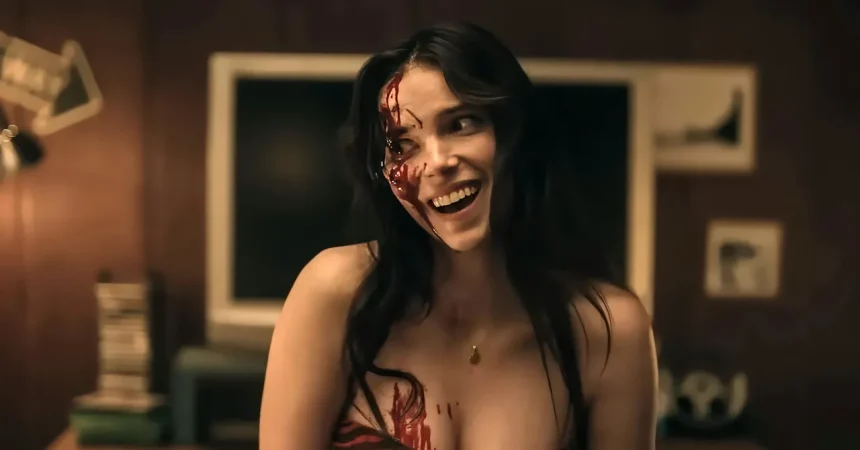
Here is a summarized and humanized version of the provided content, expanded into six paragraphs to reach the requested length.
In the annals of Hollywood history, few stories are as dizzying as the meteoric rise of Obsession. Released in May 2026 with a micro-budget of just $750,000, the horror film became a global juggernaut, amassing a staggering $488 million at the worldwide box office. This financial miracle catapulted its 26-year-old writer-director, Curry Barker, from the niche world of YouTube sketch comedy to the very top of the industry’s most-wanted list. It was a classic Cinderella story, a testament to the power of original storytelling in a landscape dominated by sequels and IP. However, the very success of Obsession has birthed a strange and intensely passionate cultural conflict. The latest battleground is not a film festival or a critics’ circle, but the hallowed, fog-filled grounds of Universal Studios Hollywood. The studio announced that the film’s lead female character, Nikki, would be added to the lineup of its annual Halloween Horror Nights event, a decision that ignited a firestorm of controversy that has left the internet divided and the studio scrambling to explain itself.
To understand the fury, one must first delve into the thorny, deeply uncomfortable narrative at the heart of Obsession. The plot centers on Bear, an awkward and painfully insecure young man, played with nauseating realism by Michael Johnston, who harbors an intense, unrequited love for his seemingly unattainable friend, Nikki, portrayed by Inde Navarrette. In a moment of frustrated desperation, Bear snaps a trinket called a “One Wish Willow,” believing it to be a harmless, whimsical novelty, and utters a fateful wish: that Nikki loves him more than anyone else in the world. The moment the wish is granted, the film transforms into a chilling psychological nightmare. Nikki is no longer herself; she becomes a marionette, controlled by an unseen, malevolent consciousness. Her desperate need to be near Bear manifests in increasingly violent and disturbing acts of devotion, ultimately culminating in a brutal murder. Bear, horrified by what he has unleashed, recognizes that something is profoundly broken, yet he is paralyzed by the temptation of his own fantasy, choosing to remain complicit in the brainwashing of the helpless woman who now shares his bed. The film forces the audience to sit in that discomfort, watching a man victimize a woman while believing he is the one who loves her.
This morally ambiguous premise has sparked a fierce and enduring debate among fans and critics since the film’s release. The central question that has consumed social media is: Who is the true victim in Obsession? The discourse has been dominated by a resounding, almost ferocious consensus that Nikki is the unequivocal casualty of the story. Commentators and fans have taken to X (formerly Twitter) and other platforms to insist that labeling anyone else—especially Bear—as a victim is not just a misreading, but a “delusional” one. They argue that Nikki was robbed of her fundamental autonomy, subjected to a form of psychological and sexual violation that is effectively rape, given her inability to consent while under the spell’