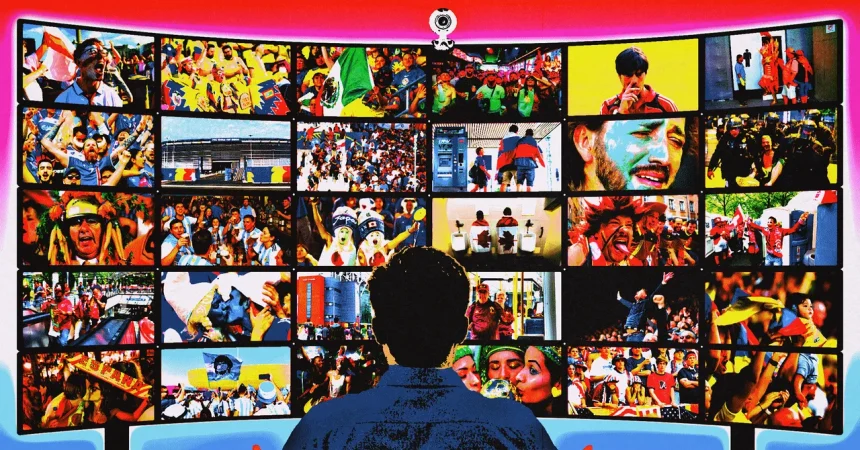
As the 2026 FIFA World Cup approaches, the excitement of hosting the world’s biggest sporting event across the United States, Canada, and Mexico is palpable. With over 5 million fans expected to flood into 16 host cities, the atmosphere should be one of global unity and athletic brilliance. However, beneath the surface of this massive logistical undertaking, a shadow is growing. While the primary mission is to host a secure tournament, civil liberties advocates are ringing the alarm, fearing that the sheer scale of the event is being leveraged to test and permanently entrench intrusive surveillance technologies. The fear is that what happens on the pitch will be overshadowed by a massive, real-world experiment in state monitoring that could last long after the final whistle.
The core of the concern lies in the intersection of national security rhetoric and domestic policy agendas. Experts like Jay Stanley from the ACLU argue that “security” is frequently used as a convenient veil for controversial political objectives. Specifically, there is an acute fear that the incoming administration might use the tournament’s heightened security posture as a pretext to ramp up aggressive immigration enforcement. With U.S. Immigration and Customs Enforcement (ICE) possessing a vast, secretive toolkit—ranging from sophisticated spyware to widespread facial recognition—activists fear that the World Cup could turn into a dragnet. Human Rights Watch has even called for an “ICE truce,” an effort to ensure that the tournament remains a celebration of soccer rather than a weaponized environment for deportation and civil rights abuses.
To understand the scope of the surveillance, one need only look at the sheer financial investment being poured into “counter-drone” technologies. The U.S. Department of Homeland Security and FEMA have committed hundreds of millions of dollars to secure the airspace over games and surrounding areas. Companies like Fortem Technologies, Sentrycs, and Axon have landed lucrative contracts to deploy systems that don’t just watch the skies—they actively intercept radio signals and disrupt digital communications. Privacy experts are deeply worried about this. When drones and ground-based counter-systems start intercepting signals from fans’ personal devices, where does the security stop and the data harvesting begin? There is a profound lack of transparency regarding how this data will be scrubbed, stored, or potentially repurposed.
The digital footprints of fans are also being targeted through the normalization of biometric surveillance. Venues from Boston to Miami and Atlanta are integrating AI-powered facial recognition not just for security, but for everyday conveniences like entry and food purchases. This “convenience” comes at a staggering privacy cost, as it conditions millions of people to accept that their physical identity is now synonymous with a digital data point. Even local infrastructure is being repurposed, with public transit systems in places like Kansas City pilot-testing facial recognition. When these systems become a staple of daily life, the boundary between being a fan at a match and being tracked as a biological signal disappears entirely.
Even more unsettling is the deployment of autonomous hardware, such as the AI-powered robot dogs slated for the International Broadcast Center in Dallas and the New York-New Jersey stadium. These machines, equipped with high-definition cameras and sensors, represent a futuristic shift in how public spaces are policed. By bringing these tools into the World Cup, authorities are effectively creating a “living lab.” Privacy International has correctly pointed out that major sporting events are often used as a trojan horse to normalize biometrics in the public consciousness. Once these technologies are firmly in place under the guise of “keeping the fans safe,” they are rarely removed, effectively turning host cities into high-tech panopticons.
Ultimately, the 2026 World Cup serves as a critical junction for civil liberties in the modern age. While DHS maintains that they are simply coordinating with partners to ensure a safe environment, their actions suggest a future where being a attendee at a public event requires a total surrender of digital privacy. The message to the 120-plus groups in the ACLU-led coalition and to the fans themselves is clear: stay vigilant. While we should be allowed to celebrate the beautiful game without fear of surveillance, the 2026 tournament is proving that in the modern security state, the price of admission may be far higher than the cost of a ticket. We are witnessing the normalization of intrusive tech, and it is happening right in front of our eyes, hidden behind the cheering crowds and the global stage.