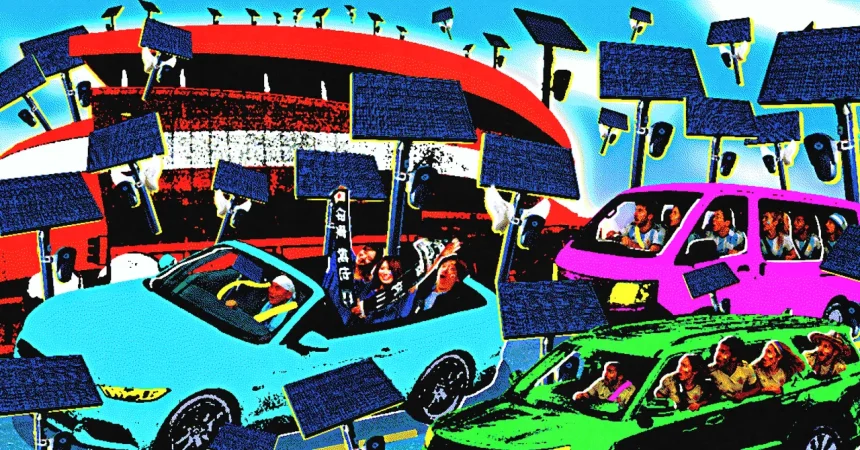
As soccer fans descend upon North America this June for the FIFA World Cup, the excitement of the matches may be underscored by a less visible, high-tech reality. If you are planning to drive to one of the eleven U.S. stadiums hosting the games, you will likely be driving through a gauntlet of surveillance. Investigative research has identified over 1,100 automatic license plate reader (ALPR) cameras stationed within a five-mile radius of these venues. These devices, primarily manufactured by the company Flock Safety, do not just capture fleeting images; they function as a persistent digital dragnet, logging the movements of every vehicle that passes by under the guise of public safety and neighborhood security.
The technology behind these readers goes far beyond simply reading a set of numbers. According to federal market assessments, these systems are capable of recording a vehicle’s make, model, year, and even identifying unique features like bumper stickers. When these cameras are linked together into expansive, interconnected networks, they create an incredibly detailed dossier of a person’s daily life—tracking where you go, when you arrive, and how often you return to certain spots. While companies like Flock Safety argue that their customers—such as homeowners associations, private businesses, or local law enforcement—retain ownership of this data, the reality is that the potential for data sharing effectively turns local, private cameras into a giant, cohesive surveillance apparatus that follows you across city and state lines.
The industry is currently split on how this data should be managed and restricted. While Flock Safety maintains that they provide the tools but leave the policy decisions to the users, other leaders in the space, such as Genetec, express concern over the lack of guardrails. Industry experts acknowledge that the power to aggregate such massive amounts of personal movement data is a practice that should trigger legitimate public alarm. However, the companies are quick to pass the responsibility back to the end-users, suggesting that the problem isn’t the technology itself, but the lack of legislative oversight in how that technology is deployed and operated on a daily basis.
The potential for abuse in this unregulated environment is not just theoretical; it is a documented reality. There have been disturbing reports of police officers using these systems to stalk ex-partners, and government agencies have faced criticism—and confirmed violations—for bypassing state laws to access databases they aren’t authorized to use. Even the companies themselves have come under fire, with reports of staff accessing cameras in sensitive locations, including children’s facilities, as part of sales pitches. While companies often frame these events as isolated “well-intentioned” slips, for the average driver, these incidents highlight a dangerous lack of accountability that leaves personal privacy vulnerable to curious or malicious actors.
In response to this expanding digital perimeter, a grassroots movement is beginning to take root across the United States. Communities, weary of being constantly monitored, are increasingly demanding transparency and pushing back against the normalization of constant surveillance. By auditing search logs and exposing how frequently private citizens are tracked without cause, activists are successfully pressuring some local governments to cancel their contracts with surveillance providers. In fact, a national week of action is being planned for this August, signaling that the public is becoming much less comfortable with the “see everything” mentality of modern law enforcement and private security firms.
As we enjoy the spectacle of the World Cup, it is worth pausing to consider what the price of that sense of security really is. The data compiled by volunteer projects like DeFlock serves as a stark reminder that even if you aren’t doing anything wrong, your movements are being logged, categorized, and stored in databases that may outlive your car. The question moving forward isn’t just about whether we want safer roads, but whether we are willing to sacrifice our fundamental anonymity for a system that currently lacks the laws necessary to protect us from its own reach. Ultimately, until meaningful legislation catches up with this technology, your drive to the stadium may be the most recorded journey of your life.