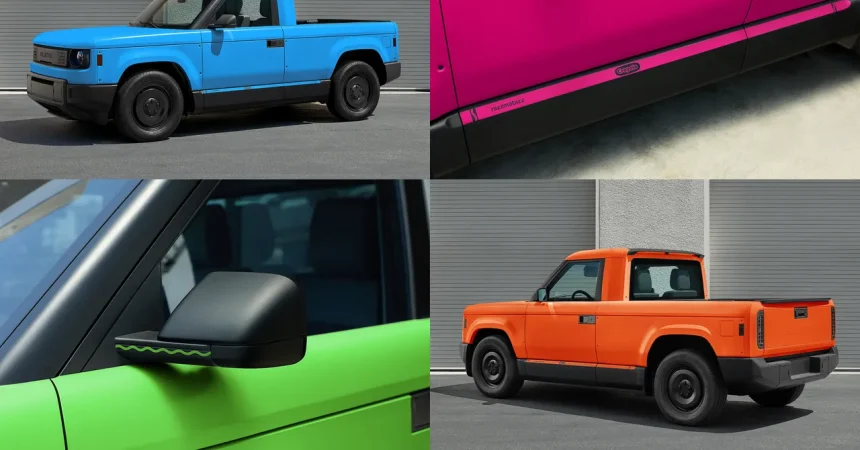
Slate, the ambitious, Bezos-backed startup with a mission to put an affordable electric truck in every American driveway, has just unveiled a collaboration that feels like a fever dream from a childhood coloring book. In a move that is as whimsical as it is strategic, the company has partnered with Crayola to offer five vibrant, iconic vehicle wraps for their utilitarian pickup. This is reportedly the first time the crayon legend has lent its brand to an automotive project, and on the surface, it seems like a bold divergence from the world of heavy-duty manufacturing. However, when you dig into the mechanics of why Slate exists, the partnership actually makes perfect sense. These trucks aren’t meant to roll off an assembly line with expensive, glossy paint jobs; they are designed from the ground up as “blank canvases” meant to be wrapped, allowing the company to keep their entry price at an industry-leading $24,950.
The aesthetic result of this partnership is undeniable: the Slate pickup, which is otherwise a somewhat stark, industrial-looking machine, suddenly pops with the kind of energy usually reserved for a box of wax sticks. Drawing from Crayola’s legendary color palette, the options include Cerulean, Fern, Jersey Tomato, Razzmatazz, and Dandelion. For those who grew up obsessing over the perfect shade of yellow or the unique, punchy pink of Razzmatazz, the prospect of owning a vehicle that mirrors your favorite childhood art tool is undeniably charming. It’s a clever bit of branding that injects a sense of personality into what is essentially a minimalist, bare-bones tool for labor, turning a gray composite body into a rolling piece of pop art that stands out in a monotonous sea of black and silver SUVs.
Beyond the paint—or rather, the vinyl—this collaboration comes as a curated “starter pack” designed to make the customization process feel like a premium experience. This isn’t just a basic color swap; every bundle includes the vinyl decals, a color-matched fob cap, and a whimsical little interior dashboard accessory they’ve dubbed the “Slatelet.” This strategy leans heavily into the company’s broader ecosystem of accessories, currently boasting over 200 items in their online marketplace. By treating the truck more like a modular platform than a fixed product, Slate is gambling on the idea that modern consumers—especially those shopping for an EV—want more than just a commute-ready machine; they want a vehicle that reflects their specific, evolving sense of style, much like customizing a smartphone or a gaming rig.
However, the reality of the price tag acts as a sobering counterpoint to the nostalgia of the Crayola branding. While the base Slate truck is a triumph of cost-cutting—eschewing luxuries like touchscreens and power windows in favor of raw utility—the Crayola wraps are priced at $1,550. This is a significant markup, coming in at three times the cost of the standard, entry-level wraps offered by the company, which usually run around $500. While the addition of the “Slatelet” and the branded key fob offers a bit more value, the premium is steep. For a brand that has built its reputation on “affordable customization,” this move pushes the limits of what their core audience might consider a reasonable splurge, testing whether the desire for aesthetic joy outweighs the pragmatic, budget-conscious mindset that drew them to the Slate in the first place.
This tension between the “workhorse” identity of the truck and the “playful” identity of the wraps highlights the unique tightrope Slate is walking. On one hand, you have a vehicle built for the utilitarian reality of hauling cargo and minimizing overhead costs; it is, quite literally, a gray composite box designed to be functional above all else. On the other hand, by partnering with an entity as fundamentally creative as Crayola, Slate is attempting to redefine what a budget vehicle looks like. It’s a departure from the automotive industry’s tendency to hide cost-cutting measures in dark, metallic paints. Instead, Slate is leaning into the frugality of the composite body and turning it into a virtue, suggesting that if you aren’t paying for a fancy factory paint job, you have the financial freedom to turn your truck into something vibrant and distinctly yours.
Ultimately, whether these packs fly off the digital shelves will depend on how much value customers place on the marriage of branding and expression. Does the $1,550 buy-in for a “Jersey Tomato” or “Dandelion” truck feel like a fun way to invest in a unique look, or does it clash with the thrifty ethos that makes the Slate truck so appealing? It’s a fascinating case study in modern branding: taking the most basic, entry-level vehicle on the market and wrapping it in the high-saturation colors of our collective childhood. If it works, Slate will have successfully cultivated a community of owners who see their truck not just as an appliance, but as an extension of their personal brand, proving that even the most stripped-down, affordable technology can still afford to have a little bit of fun.