For most of my life, my identity was tethered to my thick, long hair. It was a constant—a reliable feature that I never thought twice about until my early forties, when the reality of my changing body hit me in the most literal way possible. Standing in the shower, I would watch in horror as large handfuls of hair fell out, spiraling down the drain. As my hairline began to widen at an alarming speed, I turned to my doctor for answers, desperate to stop what felt like a disappearing act. We ran the gamut of medical tests—thyroid panels, iron deficiencies, and everything else in the standard playbook—yet every result came back normal, leaving me with no explanation for the thinning, fragile strands that were deserting me.
It wasn’t until a couple of years later that I finally discovered the culprit: perimenopause. While I had been hunting for a medical mystery, the answer was hormonal. As estrogen and progesterone levels fluctuate during the years leading up to menopause, many women experience a dominance of androgens—specifically male hormones like testosterone. For those of us with a genetic predisposition, these hormones act as a catalyst for follicular shrinking, leading to classic pattern baldness. It was a lightbulb moment that shifted my perspective entirely. I realized that the “fluffy bouffant” hairstyle I’d seen on older women for years wasn’t just a stylistic choice; for many, it was a tactical camouflage for the very same thinning I was now navigating.
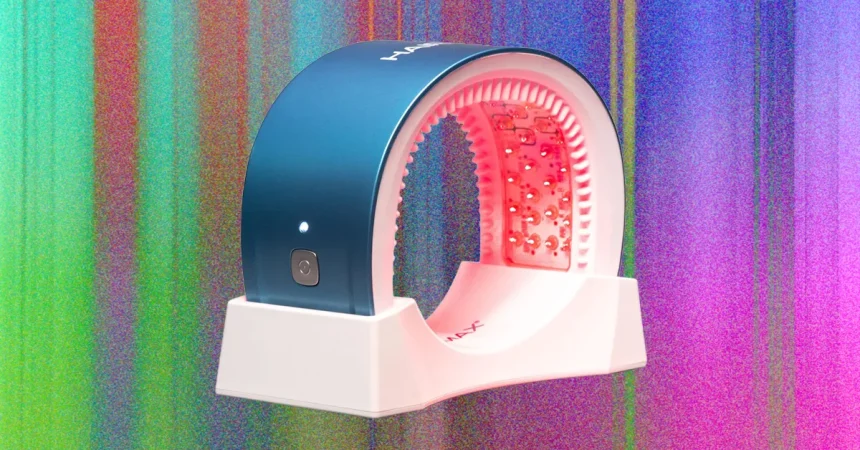
Faced with this new reality, I knew I needed a strategy, but I didn’t have the luxury of time. As a full-time working parent, my daily mental load is already stretched to its absolute limit; I simply don’t have space in my life for a high-maintenance beauty regimen. That’s when I stumbled upon the concept of red-light therapy for hair growth. Specifically, the Hairmax LaserBand caught my eye because of its efficiency. It requires only 30 seconds of treatment per section of the head, and by covering three areas, I could complete the entire process in just a minute and a half. For someone whose schedule defies the laws of physics, this kind of rapid, low-friction intervention was the only way I was ever going to stay consistent.
After five months of dedicated use, the results haven’t been what I would call a “miracle,” but they are undeniably noticeable. To understand why, it helps to look at the science: clinical trials suggest that red-light therapy works by boosting blood circulation and reducing inflammation, which encourages collagen production in the skin. When applied to the scalp, this light energizes dormant hair follicles and works to lower levels of dihydrotestosterone (DHT), the androgen primarily responsible for shrinking follicles. By supporting the production of adenosine triphosphate (ATP)—the molecule that acts as fuel for cellular energy—the device helps keep existing follicles in the active growth phase, preventing them from falling out prematurely.
However, it is important to be realistic about what these devices can and cannot do. While red light is an excellent tool for fostering a healthy environment for thinning or struggling hair, it is not a resurrection machine. If a patch of your scalp has become completely smooth and shiny, the follicles have likely long since closed or scarred over, and a handheld device won’t be able to wake them up. In those cases, more aggressive medical or surgical interventions are the only path forward. My experience served as a gentle reminder that while technology can certainly support and enhance the hair we have, it isn’t a magical solution for areas where growth has completely ceased.
As for the hardware itself, the Hairmax LaserBand is a bit of an aesthetic oddity—a three-inch-thick blue headband with teeth that looks remarkably like a shark’s mouth when it sits on its charging cradle. While it comes with a higher price tag than many of its competitors, it stands apart because it relies exclusively on targeted red-light laser diodes rather than the broader LEDs found in many helmets or baseball-cap-style devices. It’s an investment, but for a busy parent struggling with the psychological toll of hair loss, the combination of ease, efficiency, and clinical backing made it a worthwhile trade-off. It’s not just about vanity; it’s about regaining a piece of myself that I thought I had lost to the changing tides of hormones.