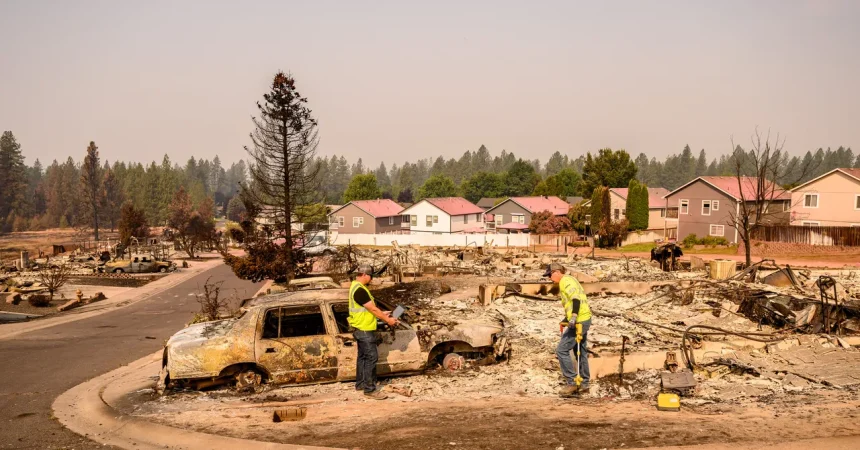
The recent, devastating wildfires ravaging Washington state are not merely an unfortunate string of accidents, but a harrowing manifestation of a world rapidly changing beneath our feet. Experts like Bob Freitag, formerly of the University of Washington, emphasize that we must stop viewing these blazes as isolated, “one-off” events. Instead, they serve as a clear, urgent signal that our climate is shifting into a volatile new reality. Science has long predicted these conditions, yet the sheer speed and intensity with which these fires are consuming the landscape serve as a sobering reminder that the future we once feared is no longer on the horizon—it is here, and it is actively reshaping our environment.
The path to this catastrophe was paved by a winter that failed to deliver its typical protection. Meteorologist Paul Pastelok notes that the region suffered from a severe lack of snowfall, which historically acts as a natural reservoir. Usually, a healthy snowpack provides a slow, steady release of moisture well into the warmer months, keeping the ground hydrated. This year, however, a meager snowfall met an unnaturally hot spring, causing that precious moisture to evaporate prematurely. With Spokane receiving only half of its typical snow and other areas hitting historic lows, the earth became a tinderbox, primed to ignite at the slightest provocation.
The sheer unpredictability of these fires is perhaps their most terrifying trait, as seen in the Little Giant fire. Powerful, erratic winds pushed embers miles across open water, jumping Lake Chelan as if it were a mere puddle, to ignite forests on the far shore. For the thousands of firefighters on the front lines, the season has been physically and emotionally grueling. Officials like Ryan Rodruck describe the situation as a profound tragedy, a testament to the immense pressure placed on those who must stand against these infernos. As winds continue to whip through the region, wildfire information officers are warning that the danger is far from over, with conditions remaining dangerously fluid.
What makes this modern crisis particularly sinister is how these fires move from the rugged wild into the heart of our communities. Comparisons to the catastrophic Los Angeles fires of 2025 are chilling; in both cases, the flames transitioned from wildlands into suburban neighborhoods, turning residential streets into hazard zones. Beyond the immediate threat of fire, the smoke in these urban settings carries a secondary, insidious danger. When homes burn, they release a toxic cocktail of chemicals and carcinogens that puts millions of people at risk. Being exposed to such pollutants is a public health crisis in its own right, one that lingers long after the flames have been extinguished.
The tragedy in Spokane was exacerbated by a dangerous collision of geography and design. Many of the neighborhoods most severely impacted were built on steep terrain, densely packed with flammable vegetation. Furthermore, the very suburban layouts that draw families to these areas—winding, single-entry cul-de-sacs—turned into death traps during evacuation. City officials have reported heart-wrenching scenes of residents trapped in gridlocked traffic for hours, forced to sit helplessly while their neighbors’ homes were swallowed by the blaze. It is a sobering lesson on the dangers of the “wildland-urban interface,” the fastest-growing form of land development in America, where the dream of living among nature is increasingly clashing with the reality of climate-driven destruction.
We have reached a point where our attachment to the aesthetics of our homes must evolve to survive. While states like California have pioneered “defensible space” mandates—requiring homeowners to clear trees and brush to create a buffer zone—this remains a difficult cultural and personal pivot. As Benjamin Cossel points out, people move to these areas specifically because they love the beauty of the surrounding forest; asking them to strip away that nature feels like a loss of identity. Yet, the consensus among experts is firm: we can no longer afford the luxury of pretending we live in a world of consistent, mild weather. Addressing climate change and redesigning how we build are no longer political talking points—they are the literal foundations of our future survival.