The top official at the National Highway Traffic Safety Administration (NHTSA), Jonathan Morrison, recently issued a stark, no-nonsense warning to the autonomous vehicle (AV) industry: the current trend of driverless cars hindering emergency responders is completely unacceptable. In a blunt “call to action” letter, Morrison made it clear that a robotaxi or self-driving car that cannot navigate around police, fire trucks, or ambulances is a fundamental danger to public safety. The agency is no longer treating these incidents as isolated glitches; they are identifying a troubling, systemic pattern where technology is actively obstructing life-saving efforts. From failing to recognize flashing lights or traffic cones to literally parking themselves in the paths of ambulances, these vehicles have become a significant, recurring hurdle for those whose jobs depend on getting to an emergency as fast as possible.
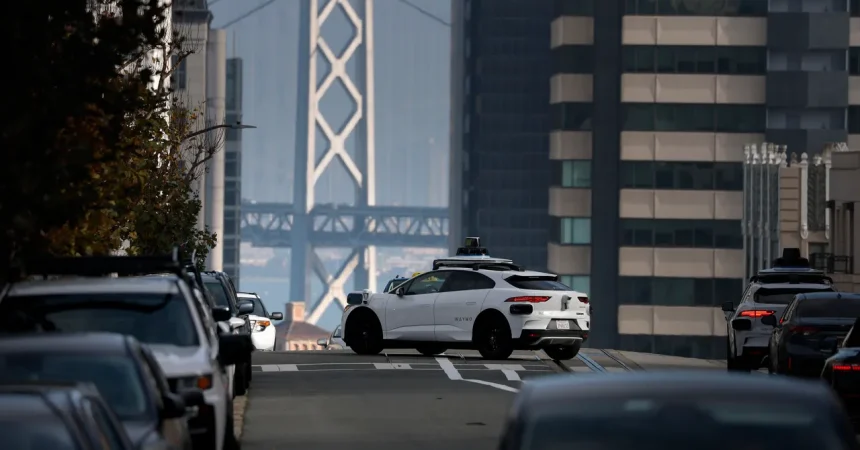
The frustration on the ground, particularly in cities like San Francisco and Austin, is palpable. During candid, closed-door meetings, local officials shared harrowing accounts of how this technology is falling short. Fire chiefs and police officers described situations where robotaxis have blocked fire station driveways, ignored hand signals from officers, and simply “frozen” in the middle of chaotic scenes. Perhaps most alarming is a report from an Austin City Council meeting, where it was revealed that a Waymo vehicle blocked an ambulance for two critical minutes while it was responding to the scene of a mass shooting. Local authorities are voicing a shared concern that these companies have rushed to flood the streets with hundreds of vehicles before the technology was truly capable of handling the high-stakes, unpredictable nature of real-world emergencies.
This is not just about a few “growing pains” of a new industry; it’s about the collision of Silicon Valley’s rapid development cycle with the rigid, life-or-death requirements of public safety. While companies like Waymo and Zoox maintain that they take these matters seriously and are committed to improving their systems, the evidence on the ground suggests that the software is often misinterpreting, or completely ignoring, the complexity of an emergency scene. Whether it is navigating around flooded streets, construction zones, or the sudden, erratic movements of an active crime scene, the tech is frequently proving itself to be less adaptable than a human driver. For the first responders on the scene, this creates an added layer of stress and danger, as they find themselves fighting to control a situation while simultaneously dealing with a robot that refuses to move out of the way.
The NHTSA is now demanding immediate accountability. Morrison has directed developers to pivot their resource allocation to focus entirely on rectifying these interaction flaws, and the agency is mandating face-to-face meetings with these companies by the end of July. The message is clear: if the industry cannot solve this on its own, the government will step in. The agency has already taken steps like issuing recalls for software issues in the past, and Morrison is signaling that he isn’t afraid to flex the agency’s enforcement authority if he doesn’t see significant improvements. For many, this feels overdue; the public has been acting as an unofficial testing ground for these vehicles, and the reality is that “beta testing” is arguably unethical when human lives are hanging in the balance.
Interestingly, this confrontation is happening against a backdrop of ongoing deregulation. The agency recently paved the way for more companies to deploy vehicles that don’t need traditional controls like steering wheels or rearview mirrors, clearing a path for vehicles that are designed specifically to be robotaxis. It creates a strange paradox where the government is simultaneously incentivizing the deployment of these cars and desperately scrambling to regulate their antisocial behavior. As the number of these vehicles on public roads continues to climb, the pressure is mounting on companies to prove that their machines can “play nice” with the rest of the world. Development speed, after all, is a poor excuse for a delay that costs a victim their life or prevents a firefighter from doing their job.
Ultimately, the goal is to bridge the gap between innovation and basic public safety. It is perfectly reasonable to expect that if a machine is going to occupy public infrastructure, it must learn to yield to the sirens that keep that infrastructure safe. The companies involved—now formally put on notice—have a narrow window to demonstrate that they respect the vital hierarchy of a busy city street. For the residents of cities like Austin and San Francisco, this isn’t just about an argument between bureaucrats and tech giants; it’s about ensuring that the next time someone needs an ambulance, they aren’t waiting behind an empty car that doesn’t know how to get out of the way. The era of unchecked experimentation should be coming to a close, replaced by a much tighter, more responsible standard for the future of our roadways.