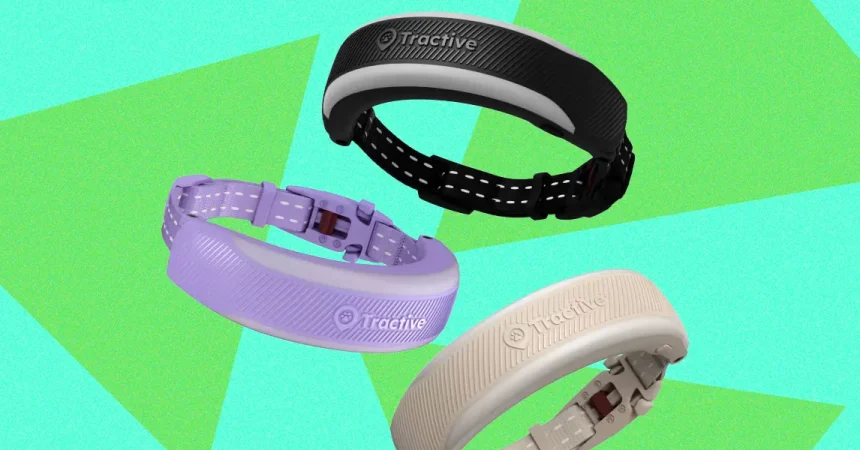
There is a particular kind of anxiety that comes with loving a cat who has a mischievous streak. You want to give them freedom, but you also want to know they’re safe, especially if they ever slip through a door or find an unexpected way outside. That’s the promise of a smart collar like the Tractive Cat 6 Mini: the chance to keep a gentle, watchful eye on your furry family member without making them feel weighed down or confined. At just 1.1 ounces, the device is remarkably light, and it’s designed specifically for cats in the 6.6 to 17.6-pound range. The weight limit isn’t arbitrary—it’s tied to the collar’s breakaway feature, which is meant to release under pressure so that a cat who gets snagged on a branch or fence doesn’t choke or panic. That safety feature is essential for any cat owner, because even indoor cats can find themselves in dangerous situations. My own cat, Basil, is a solid 17 pounds, and I was relieved to see that the Cat 6 Mini fit him well, with a little room to spare. There’s something comforting about knowing that the technology isn’t just functional, but also designed with a cat’s safety in mind. I didn’t have to choose between peace of mind for myself and comfort for him; the lightweight design and breakaway construction made it feel like a reasonable trade, at least at first.
The design of the Cat 6 Mini is both clever and a little complicated. Unlike the previous Tracker Mini model, which attached to a collar you already owned, this version is the collar itself—a complete, self-contained unit. That’s a meaningful shift, because it means the collar is specifically engineered to work with the tracker, and there’s no bulky extra device hanging awkwardly from a separate strap. The Cat 6 Mini fits necks between 7.5 and 9 inches, which is a fairly specific range. For Basil, whose build is substantial but not enormous, it worked well; there was enough adjustability to make it snug without being tight, and the material didn’t seem to irritate his skin. But because the device is the entire collar, taking it off is not like unclipping a regular collar and swapping in another one. There’s no backup collar to use while this one charges, no way to keep a tracker on your cat while the main device powers up. This all-in-one approach makes the product more streamlined in some ways, but it also creates a new kind of fragility in your daily routine. The collar has to come off completely whenever the battery runs low, and that moment of removal is exactly when you realize how much you’ve come to rely on having that little piece of technology attached to your cat. It’s a strange feeling to look down and see your cat without their collar, even for a short time, and to suddenly imagine all the ways they could get into trouble in that small window.
Battery life is where the reality of using the Cat 6 Mini really starts to set in. Tractive says the collar can go up to seven days for indoor cats, and that it may need to be charged nearly every day if your pet spends time roaming outside. That’s a pretty wide range, and in real-world use, my experience fell on the shorter side. Basil is an indoor-only cat, so I wasn’t expecting to have to charge the device too often. But by the fourth day, the battery was already begging for a charge. That meant I was removing the collar from my sweet, unsuspecting cat several times a week, and each time I did, I felt a little knot of worry form in my stomach. The charging process itself took several hours, which is a long time to leave a collarless cat to their own devices, especially if they’re the type to dart out the front door the moment they get a chance. My anxiety told me that in that brief moment of his nakedness, Basil would somehow escape, and I would be left frantically searching the neighborhood without the one tool that could help me find him. And honestly, there were a few times, after a long day, when I simply forgot to put the collar back on him until the next morning. He was fine, of course, but I wasn’t. The constant cycle of charging, forgetting, and worrying made me feel like I was the one being tracked, not him.
What made the experience even harder was the physical challenge of managing the collar itself. I’m disabled, and I live with reduced grip strength and limited fine-motor coordination. My hands don’t always do exactly what I want them to do, especially when I’m dealing with a small, stiff mechanism and a wiggly cat who is not particularly interested in being dressed in technology. The Cat 6 Mini uses a simple looped clasp, which sounds easy enough in theory, but in practice, the thick collar material was difficult to slide under the plastic buckle. I had to fight with it the way you might struggle with a stubborn seatbelt that doesn’t want to pull through. More often than not, the collar ended up either too long or too short, and I’d have to start over. Adjusting the diameter was a fiddly process that required more precision and finger strength than I could consistently muster. And when I needed to remove the collar entirely, I couldn’t just unhook it—I had to pull it in a specific way to trigger the breakaway feature, which was intended for emergencies. That kind of force wasn’t good for Basil. He could sense my frustration, and the pressure made him nervous. Every four days, we went through this stressful little dance together, and I could tell he didn’t understand why his calm, comfortable routine kept being interrupted by a human who was suddenly tugging at his neck.
As I struggled with the collar, I kept thinking about how different the design could be if the people who made it had considered a wider range of bodies and abilities. I would’ve preferred a clasp that opens by easily squeezing the top and bottom to release, something that doesn’t require pulling or excessive force. A mechanism like that would be kinder to the cat, too, because it wouldn’t rely on the tension of the breakaway feature to come off. It’s entirely possible that an able-bodied person wouldn’t have the same struggles with the Cat 6 Mini, and I’m not trying to pretend that everyone will find it difficult. But the truth is that there are millions of pet owners out there with arthritis, hand pain, limited dexterity, or disabilities similar to mine, and they all deserve to use technology that supports them rather than adds another obstacle to their day. It’s not just about convenience; it’s about being able to care for your pet with dignity and confidence. When you can’t easily remove or adjust a collar, something as simple as charging a tracker becomes a small weekly battle. And when that battle involves a creature you love, it takes an emotional toll. I don’t want technology to make me feel like I’m failing my cat because my body can’t handle a clasp the way it’s supposed to. I want it to give me the power to protect him, not make me feel guilty for being disabled.
At the end of the day, the Tractive Cat 6 Mini has some genuinely good qualities. It’s light enough that most cats in the recommended weight range won’t be bothered by it, and the breakaway design shows that safety was at least part of the conversation. For Basil, the fit was comfortable, and the tracker did what it was supposed to do while it was on him. But the battery life was a real practical problem, especially for an indoor cat who wasn’t even wandering far. Charging every four days was more frequent than I’d been led to expect, and the fact that the whole collar had to come off made the process more disruptive than it needed to be. Add in the accessibility issues, and it became clear that this tracker is not designed for everyone. If you’re someone with good hand strength, a patient cat, and a routine that allows for frequent charging, the Cat 6 Mini might work beautifully for you. But if you’re like me, with a disability that affects your hands, or a cat who gets stressed easily, you may find yourself spending more energy managing the collar than actually enjoying the peace of mind it’s supposed to provide. I hope future versions of this product will take those experiences into account—better battery life, a more accessible clasp, maybe a design that lets you swap out chargers without leaving your cat naked and vulnerable. Because the goal of a smart collar should never be to make your life harder. It should be to make you feel closer to your cat, more confident about their safety, and more able to let them roam without fear. And for me, that’s still just a little out of reach, though I’m holding out hope that it won’t always be.