Paragraph 1
Last weekend, at a time when many of us were scrolling through Instagram looking for distractions, the clothing brand Cherrykitten posted something that stopped people mid-scroll. It was a series of products: T-shirts, crop tops, and sports bras, emblazoned with the words “I Am Jane Doe.” The images were bright and clean, the kind of minimalist product photography that has become the language of online shopping. But the slogan was not a playful fashion statement. It was a direct reference to a deeply painful and ongoing sexual assault case—the so-called “Cornell Seven.” In that case, an anonymous woman alleged that seven fraternity members at Cornell University sexually assaulted her, among other serious accusations. In the wake of her story, survivors across the country began using the hashtag #IAmJaneDoe to express solidarity, especially after internet trolls attempted to dox the alleged victim on social media, a cruel act of exposure that threatened to strip away the anonymity that many survivors rely on for safety. The hashtag became a shield, a way for other survivors to stand beside her and say: you are not alone, and we refuse to let them erase you. Against that backdrop, Cherrykitten’s merchandise felt not just tone-deaf but devastatingly inappropriate. The brand’s caption read, “ALL OF US ARE UNTIL NONE OF US ARE,” and it promised to donate 5 percent of net sales proceeds to the National Organization for Women. But for many, the gesture rang hollow. The accused fraternity members have all denied wrongdoing, and none have been charged with a crime, leaving the legal and emotional situation unresolved. The survivor’s reality is not a marketing opportunity; it is a human story of trauma, courage, and the search for justice. Seeing her pain turned into a product, even with a small charitable component, felt like a violation all over again.
Paragraph 2
There is no doubt that “I Am Jane Doe” is a phrase of tremendous emotional weight. It transforms one anonymous woman’s story into a collective identity. It says: the person who accused these seven men could be any of us; the experience of sexual violence is so common, so widespread, that we all wear the name as a kind of armor. It is a statement of radical empathy, a refusal to let a survivor be isolated. And perhaps that is why it was so easy—and so dangerous—to slap it on a sweatshirt. Cherrykitten, a brand perhaps best known for tank tops and crop tops with deliberately provocative slogans like “Pls do not give me a cigarette no matter what I say” and “AI cannot generate tits like these,” seemed to miss the line between edgy irreverence and actual harm. Their previous products were designed to chuckle, to raise eyebrows, to feel cheeky and unbothered. But sexual assault is not cheeky. There is no punchline in “I Am Jane Doe.” The phrase is not a joke, not a statement of rebellious style. It is a wound. When a company with that kind of brand voice picks up a survivor’s cry and prints it on apparel, it strips the phrase of its context, its pain, and its urgency. Instead of a digital act of solidarity, it becomes a commodity. The garment is worn for a season and then discarded. The movement, meanwhile, is left to deal with the mess. The irony is especially painful because the slogan emerged from a moment when a survivor was being targeted and threatened—not from a focus group. To commercialize it is to say that even the most intimate testimonies can be mined for inventory.
Paragraph 3
The backlash was immediate and fierce. On social media, users did not hold back. One tweet, which accumulated over 2.2 million views, captured the general outrage: “Using the cornell seven sexual assault as a merch idea and then donating ONLY 5% to a womens charity.. oh cherrykitten.. you’re fucked.” The accusation was not merely that Cherrykitten had been insensitive, but that it had found a way to monetize a rape allegation while paying only a token to women’s organizations. The math itself felt like a punchline. Five percent of net sales, after all, is not an act of charity; it is a legal shield, a way to claim virtue while still walking away with a profit. People demanded better. They demanded accountability. And Cherrykitten eventually removed the post and issued an apology, acknowledging, according to a screengrab of a now-deleted Instagram post, that it was sorry for “turning a real and deeply serious situation into a product.” The apology was necessary, but it also exposed a deeper problem: why did it take public outrage for the brand to realize that sexual assault survivors were not a demographic? Why did the company look at this story and see a sales opportunity in the first place? Perhaps it was the inescapable logic of the internet, where trauma and true crime have become content, where every hashtag can be turned into a limited edition drop, and where the line between awareness and exploitation is constantly blurred. But for the survivor at the center of it all, the apology likely changed little. The memory of seeing her story reduced to a crop top does not disappear because the product was removed. The internet never really forgets. And neither do survivors.
Paragraph 4
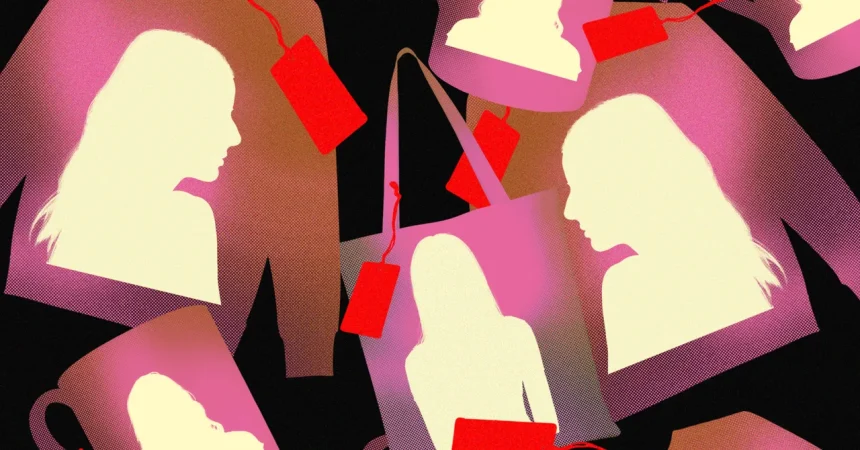
Alarming as it was, Cherrykitten was far from alone. In the days that followed, a quick search on Amazon returned more than 6,000 results for “I Am Jane Doe” T-shirts. On platforms like Etsy and Redbubble, hundreds of independent sellers were offering commemorative merchandise: T-shirts, sweatshirts, hats, bracelets, mugs, and even bumper stickers. The listings were stuffed with keywords meant to game the algorithm and attract shoppers—some of them deeply unsettling. Alongside labels like “feminist,” “protest,” and “true crime,” one Redbubble listing bizarrely included “lizzieborden,” linking a historic axe murderer to the movement. Many of the product images were AI-generated: women with shiny hair, broad grins, and perfect teeth modeling the shirts with the kind of glossy, hollow cheerfulness that belongs behind a mall storefront, not alongside a statement of survivor solidarity. The mismatch was grotesque. Here was a movement born out of trauma, fear, and the bravery to speak publicly in the face of harassment, and it was being sold with the same visual language used to sell leggings and phone cases. These sellers are not major corporations, and many probably told themselves they were helping to spread awareness. But awareness for whom? And at whose expense? The deluge of merchandise desensitizes the public. It turns a phrase that should feel sacred into background noise. It makes it easier to scroll past, to forget that behind the slogan is a real person—a student, a survivor, someone who may one day have to see a stranger wearing her pain as a fashion statement.
Paragraph 5
One seller, a woman who requested her name be withheld to protect her privacy given the sensitive nature of the case, runs a three-year-old Etsy shop that specializes in T-shirts with progressive slogans. She has sold 21 “I Am Jane Doe” sweatshirts since October 1, in colors like ash, dark chocolate, and purple, priced between $19.53 and $27.93. On one hand, this is a small operation, not a mass-produced corporate drop. It is easy to imagine her sitting at a dining room table, packing orders into padded envelopes, genuinely believing that she is aligning herself with a cause. She may have been moved by the survivor’s story. She may have felt helpless and wanted to do something. Making shirts is a tangible way, perhaps the only way she knows, to say “I stand with you.” But the ethics are still murky. Is a sweatshirt really activism? Does wearing a slogan change anything? And how different is her $27.93 sweatshirt from Cherrykitten’s crop top if the profit does not go directly to survivor services? The seller’s decision to remain anonymous is itself a sign of discomfort. She knows that the attention of the internet can be dangerous, especially when a case is this controversial. She may fear being harassed herself, or worse, being held accountable for profiting from someone else’s trauma. And yet, she continues to sell. That contradiction—the desire to help and the desire to profit, the fear of exposure and the willingness to invent—is the uncomfortable heart of this entire situation. There is no clean line between solidarity and exploitation, only a series of choices, each one harder to justify than the last.
Paragraph 6
What does it mean, ultimately, to wear “I Am Jane Doe”? For the survivors who first used the hashtag, it was a lifeline. It was a way to say, without revealing their own names, that they existed, that they believed the alleged victim, that they had survived too. In a world that so often silences survivors, that is no small thing. It is a declaration of community, an act of courage. But when that declaration is printed on merchandise and sold for a profit, the meaning shifts. The phrase becomes a product, a trend, a way for brands and sellers to signal their values without doing the deeper work of supporting survivors. The 5 percent donation, the cheap sweatshirt, the meme-ified listing—all of it is performance. What survivors need is not another piece of merch. They need legal systems that take their testimonies seriously. They need universities that respond to allegations with genuine investigation rather than institutional self-preservation. They need online spaces where speaking out does not invite doxxing, harassment, and threats. They need therapy, housing, safety, and justice. A T-shirt cannot provide any of that. It cannot erase the moment when a troll posted a survivor’s name, or the silence that followed her accusation, or the exhausting weight of carrying a story that the world refuses to fully believe. The “I Am Jane Doe” movement is powerful precisely because it is not for sale. It belongs to the survivors who wore the name as a shield, not to the algorithms and search engines that now treat it as a keyword. If we truly support them, we should put down our credit cards and listen. We should follow their lead, not our shopping impulses. We should remember that Jane Doe is not a slogan. Jane Doe is a woman. And she is not a trend. She is someone we owe the fiercest kind of solidarity—not with our purchases, but with our presence, our patience, and our unwavering refusal to let her story be commodified, distorted, or forgotten.