In the quiet, bureaucratic corners of a Texas registration file, a new political entity has taken shape—one that exists on paper yet seems determined to remain invisible in every other way. This organization, ostensibly aligned with the interests of tech titan Elon Musk, has been formed with a board of directors plucked from the most combative ranks of the American election administration wars, yet it operates without a public website, without a stated mission, and without any apparent desire to engage with the press or the public. The silence is deafening. When questioned about their involvement, the offices of political figures Byrd and DeSantis offered no comment, retreating into a fog of non-answers. The board members themselves, when contacted for this story, simply did not respond. It is a classic tactic of political maneuvering: build the infrastructure, staff it with loyalists, but keep the goals so opaque that accountability becomes a phantom. This deliberate obscurity feels less like a lack of interest and more like a carefully calculated strategy. The group’s existence is a contradiction—it is significant enough to merit board membership from high-ranking officials and controversial figures, yet so nebulous that it leaves no digital footprint. In an era where even the most reclusive billionaire’s ventures manage to generate headlines, this organization has managed to slip through the cracks, a ghost in the machine of political finance. The only clues to its purpose come from the people who sit on its board—and those names tell a story far louder than any press release ever could.
The board itself is a veritable rogues’ gallery of election denialism. Take Sharon Bemis, for example, who presides over Mitchell’s Election Integrity Network, the most prominent and, in many circles, notorious organization dedicated to casting doubt on American electoral processes. Joining her are Julie Adams, a regional coordinator for that same network, who also holds a seat on Georgia’s Fulton County Board of Elections; Janice Johnston, who recently fled the chaotic, MAGA-dominated Georgia State Election Board; and Michigan state representative Ann Bollin, who has maintained a working relationship with the Election Integrity Network. Collectively, they represent a battalion of those who have refused to accept the legitimacy of the 2020 election. When pressed, Johnston and Bollin have previously denied being “election deniers” outright, a semantic dance common among those who spread baseless allegations of fraud while clinging to deniability. Yet their actions speak much louder than their words. They inhabit a world where the machinery of democracy is viewed with deep suspicion, where every vote is a potential crime scene, and where the mere act of certifying a result is seen as a concession to an enemy. This isn’t just a fringe group operating on the margins; these are individuals who hold official positions, who coordinate with national party structures, and who have the ear of powerful political figures. The presence of these specific names on this specific board is not coincidental; it is a deliberate signal that this new entity is intended to be the next chapter in the ongoing saga of contested elections, designed to give a veneer of officialdom to the cause of refusing to accept electoral outcomes.
When it comes to Julie Adams, the word turbulent feels like an understatement. She has carved out her public identity by championing the core Trump conspiracies—the baseless claims of widespread fraud—and has transformed that belief into a relentless legal crusade. With the backing of the Republican National Committee, she has sued time and again for unfettered access to voting records, engaging in a game of ideological whack-a-mole with county officials. Her signature move, however, is her staunch refusal to certify election results unless she is allowed to personally inspect the voting equipment and records—a demand that flies in the face of standard election protocol and which has thrown local governance into disarray on multiple occasions. For Adams, this is not a matter of procedure; it is a holy war against what she perceives as a corrupt establishment. She operates with a zealot’s conviction, interpreting every legal rejection as further proof of a vast conspiracy. This fervor makes her a perfect fit for the new organization. She brings to the table a combination of legal tenacity and a high-profile track record of obstruction. Her work, though frequently dismissed by courts and officials, resonates deeply within a base of voters who see her as a whistleblower fighting a rigged system. Her determination to find fraud where none has been proven is not just an obsessive hobby; it is a career that has propelled her into the highest echelons of the election denial movement, making her a valued and prominent asset for any group looking to push its agenda.
Janice Johnston’s recent tenure on Georgia’s State Election Board was a firestorm of partisanship and legal battles, punctuated by claims of fraud that never held water. She stepped down citing “family and personal responsibility,” but her exit came after months of overseeing deeply problematic actions. Under her direction, the board pursued what can only be described as specious investigations into the heavily Democratic Fulton County, championed mass voter purges advocated by election denial activists, and pushed initiatives designed to effectively dismantle voting machines altogether. Her crusade reached its most cinematic moment in January, when the FBI raided an elections warehouse in Fulton County, seizing tens of thousands of ballots from the 2020 election. While her name remained shielded initially, the Justice Department fought to keep it hidden, only for the affidavit’s description of a “Republican-appointed member” who “was an obstetrician” to instantly expose her identity. In a moment that encapsulates the bizarre theater of this movement, Johnston livestreamed on Steve Bannon’s War Room podcast from an SUV parked near the raid, narrating the FBI’s actions to an audience of believers. She turned a routine law-enforcement operation into a live spectacle of martyrdom. For Johnston, being on the board of this new Musk-linked organization is a logical next step. It allows her to leverage her experience in causing administrative chaos and amplifying narratives of distrust, all while operating under the relative anonymity of a newly-formed group, continuing her work in a space where she can shape policy without the scrutiny of a formal public office.
The human cost of this unrelenting assault on electoral integrity is perhaps best encapsulated by the reaction of Sara Tindall Ghazal, the lone Democrat on the Georgia State Election Board and Johnston’s former colleague. When informed of Johnston’s placement on the new board, Ghazal’s response was not one of outrage, anger, or even fear—it was a flat, disbelieving laugh. “lol,” she said, pausing to add, “I mean this quite seriously, ‘lol.’ That’s my comment.” It is a moment of dark, weary humor that speaks volumes about the exhaustion felt by election officials who have spent years battling this wave of misinformation. Ghazal’s reaction is not dismissiveness; it is the exasperated sigh of a public servant who has watched her workplace be transformed into a political battleground. She has seen her colleagues pursue fantastical theories, has watched legal challenges drain resources, and has felt the personal threats that come with standing up to the mob. To hear that yet another organization has been created to further this work, staffed by the very people who caused so much turmoil, is so absurd that laughter is the only sane response. It is a defense mechanism, a way to keep from crying at the sheer, grinding absurdity of it all. Her “lol” is not a sign of ignorance; it is a badge of survival. It underscores the stark division between those who serve democracy and those who seek to dismantle it. For Ghazal, the existence of this group is just another chapter in a very long, very draining book she didn’t ask to read, a daily reminder that the fight to simply count votes fairly has become a partisan warzone.
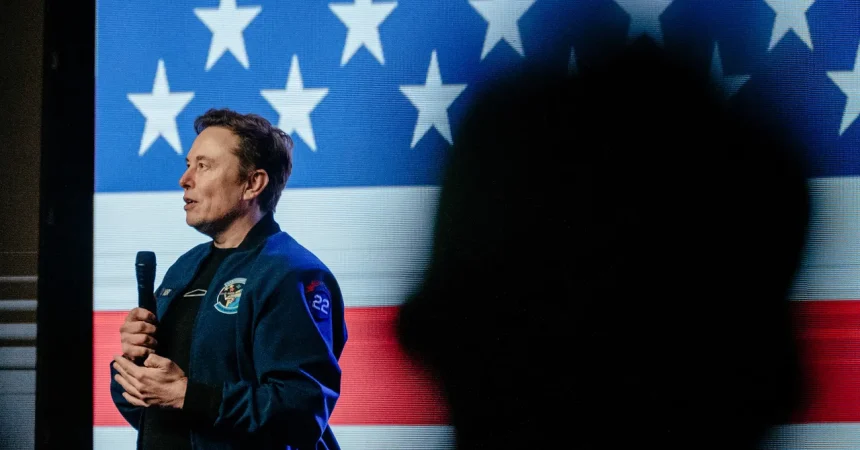
And then there is Elon Musk, the silent architect. While he has quietly ramped up his financial support for Republican candidates and causes, he has increasingly stepped back from the overt, 24/7 public discourse on American election mechanics that once consumed him. With the exception of Talarico, Musk has largely let his money do the talking. His most recent public foray into election commentary came in September, where he engaged with a question from Utah Senator Mike Lee. Lee asked, “Who benefits from noncitizen voting?” Musk’s reply was succinct and telling: “Democrats, which is why they push for open borders and noncitizen voting! Incentives explain behavior.” This pivot from the granular conspiracies of Fulton County to the broader, albeit false, immigration-noncitizen voting trope represents a shift in strategy. By attaching this new enforcement group to this narrative, Musk is attempting to sanitize the conspiracy movement, eschewing the laughable double-counted ballot claims of Johnston and Adams for a more politically sustainable talking point. Yet, the board he has chosen reveals the true intentions of the venture. By funding an opaque organization run by the very people who celebrated the FBI raid and pursued baseless litigation, Musk is economically arming the foot soldiers of democratic distrust. The human reality is stark: election workers are fleeing their jobs, officials are facing threats, and the foundation of a stable, trusted democracy is being eroded one board meeting, one lawsuit, and one “lol” at a time. This new entity, hidden in Texas paperwork, is not merely a policy think tank; it is the latest salvo in a war for the very perception of reality, funded by one of the richest men on Earth, manned by those who see democracy as an obstacle to be overcome, and leaving the rest of us to wonder if the silence from their offices is the sound of plans being made, or the quiet hum of a machine built to unravel it all.