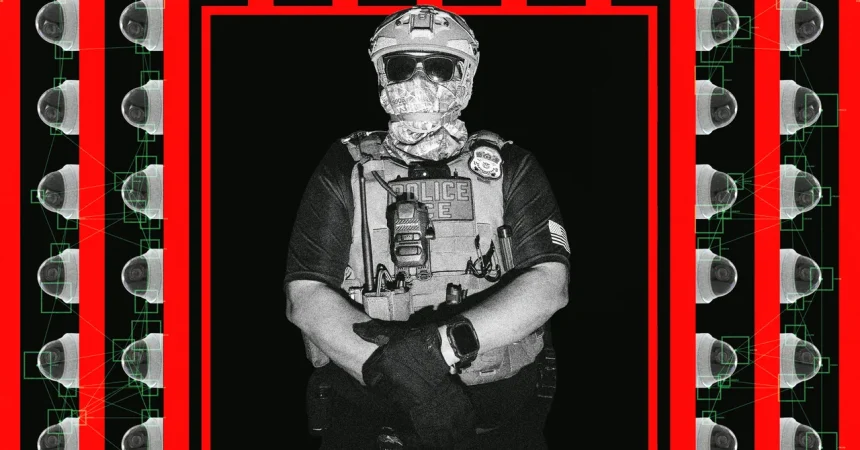
Imagine being a community organizer in Minnesota, spending your days at immigration rallies, mutual aid meetings, church gatherings, and city council sessions. Then, one morning, federal agents arrest you and fourteen other people you know on conspiracy charges. That is the reality for the Minnesota 15, a group of residents now facing federal prosecution in a case that has pulled back the curtain on something far larger than a single criminal investigation. Attorneys for the defendants have obtained evidence of a sweeping, and possibly unconstitutional, spying operation carried out by Immigration and Customs Enforcement against left-wing social movements in Minnesota and beyond. The records are staggering: dozens of reports, audio transcripts, emails, intercepted Signal chats, photographs, and database queries. They reveal the inner workings of domestic terrorism investigations code-named Project Whipple Shield and Operation Puppet Master, authorized by the controversial National Security Presidential Memorandum 7. Published after the assassination of Charlie Kirk in September 2025, NSPM 7 directs federal law enforcement to use every available tool against organizations and people who criticize the administration’s policies and espouse “anti-Christian” ideas. The full scope and extent of the investigations it authorizes remains unknown, but the Minnesota 15 prosecution makes one thing clear: the Department of Homeland Security, flush with federal funds and newly hired personnel, has become President Trump’s primary tool against dissent, using powerful post-9/11 investigative authorities against everyday Americans organizing their communities.
The documents emerging from the discovery process read less like a typical criminal case and more like a counterinsurgency file from a previous era. Experts who have studied the history of American political surveillance say nothing of this scale has been seen in the United States since the federal government’s campaign against the New Left and the anti-war movement in the 1960s and 1970s. The operations targeting the Minnesota 15 were not small-scale, local police efforts. They were sophisticated, multi-agency investigations involving Homeland Security Investigations, one of ICE’s two components, and they were run under the authority of a presidential memorandum that explicitly frames political criticism as a national security threat. The memorandum’s language about “anti-Christian” ideas is particularly alarming, because it suggests that the government is not just monitoring people who break the law, but people whose beliefs or expressions offend the administration. The records include intercepted communications from Signal, a platform often used by activists precisely because it is encrypted, as well as photographs, database queries, and audio transcripts from undercover encounters. Together, they paint a picture of a government using its most powerful surveillance machinery against its own citizens. The names of the operations, Project Whipple Shield and Operation Puppet Master, sound like something from a spy novel, but they are real, and they were directed at real people who were exercising their First Amendment rights to organize, protest, and speak out.
Defense attorneys for the Minnesota 15 argue that the prosecution is not an isolated case but part of a broader nationwide surveillance operation aimed at opponents of the Trump administration’s immigration policies. One attorney in the case has directly compared the Department of Homeland Security’s campaign to the FBI’s infamous Counterintelligence Program, better known as COINTELPRO, which unconstitutionally surveilled, infiltrated, and blackmailed racial justice, civil rights, and anti-war movements from the 1950s through the early 1970s. That comparison is not hyperbolic. Three former law enforcement officials who reviewed the filings concur, telling WIRED that the Minnesota case is almost certainly part of a wider intelligence-gathering operation that began long before the administration invaded Minnesota in December 2025. If that is true, then the arrests of the Minnesota 15 were not the beginning of the story. They were the culmination of a long-running effort to map, monitor, and ultimately dismantle left-wing social movements in the state and across the country. The discovery motions in the case reveal that personnel with Homeland Security Investigations repurposed funding mechanisms and investigative tools originally designed for serious criminal probes and turned them on domestic dissenters. This is a profound abuse of power, because it means the vast apparatus created to fight terrorism and organized crime is now being used to silence people whose only crime is disagreeing with the government.
The mechanics of the surveillance operation are as troubling as its scope. Operation Keyhole, the HSI undercover program that bankrolled the Minnesota 15 prosecution, dates back to 2008. As of June 2026, it was underwriting a half dozen active undercover investigations in the Minneapolis–Saint Paul area alone. Around 120 HSI agents were assigned to the case, many drawn from specialized units across the country that have served as the leading edge of the administration’s militarized immigration enforcement operations. Among them were eleven undercover operatives who infiltrated activist circles, churches, and community organizations. The techniques they used were highly invasive, including the deployment of Reaper drones and the use of Patriot Act tools that are usually restricted to money laundering and terrorism investigations. Reaper drones are not traffic cameras. They are military-grade surveillance aircraft capable of tracking people for hours, capturing thermal imagery, and following targets across entire cities. The use of such technology against American citizens on American soil is a dramatic escalation, and it raises serious constitutional questions under the Fourth Amendment’s protections against unreasonable searches and seizures. Even more disturbing, undercover operatives infiltrated churches in apparent violation of a court order. If the government is willing to violate court orders in the course of investigating activists, then the rule of law itself is under threat. The dueling motions over discovery in the case show that the government fought hard to keep these methods secret, and it is only through the persistence of defense attorneys that any of this has come to light.
For the people caught up in this investigation, the human cost is immense. The Minnesota 15 are not abstractions. They are parents, students, workers, and neighbors who believed they were participating in the democratic process. Now they face federal conspiracy charges and the possibility of years in prison. But the chilling effect extends far beyond the defendants. When the government uses drones to surveil protesters, infiltrates churches, and intercepts private communications, it sends a message to everyone who might be thinking about attending a rally or signing a petition: you are being watched. That is the very definition of a chilling effect, and it is precisely what authoritarian governments rely on to suppress dissent. The comparison to COINTELPRO is not just about the tactics, which are strikingly similar, but about the purpose. COINTELPRO was designed to disrupt and neutralize political movements that the government considered threatening. It used informants, wiretaps, blackmail, and even violence to destroy the careers and lives of activists. The Minnesota 15 case suggests that the United States is sliding back into that pattern, but with even more advanced technology and broader legal authority. The post-9/11 national security apparatus was built to protect the country from foreign enemies, but it is now being aimed at American citizens who criticize the administration’s immigration policies. That is not a national security strategy. It is political repression, and it threatens the foundations of democratic society.
The constitutional stakes in this case could not be higher. If the government can designate political opponents as domestic terrorists, investigate them under the authority of a national security memorandum, infiltrate their churches, surveil them with drones, and then prosecute them on conspiracy charges, then no one is safe. The First Amendment guarantees the right to free speech, assembly, and petition. The Fourth Amendment protects against unreasonable searches and seizures. The Fifth Amendment guarantees due process. The Minnesota 15 case implicates all of these protections, and the evidence obtained by defense attorneys suggests that the government has been systematically violating them. The full scope of the surveillance program remains unknown, and it may take years of litigation to uncover the truth. But the documents already in hand are enough to demand answers from the Department of Homeland Security, Immigration and Customs Enforcement, and the White House. The question is whether the American public will pay attention, whether the courts will act, and whether the political system will hold the administration accountable. History has a way of repeating itself, and the echoes of COINTELPRO are growing louder. The Minnesota 15 are not the only ones on trial. The Constitution is on trial as well. For the sake of the defendants, and for the sake of the country, the evidence must be fully exposed, the abuses must be investigated, and the rule of law must be restored. Otherwise, the surveillance state will continue to expand, and the promise of democracy will become little more than a memory.