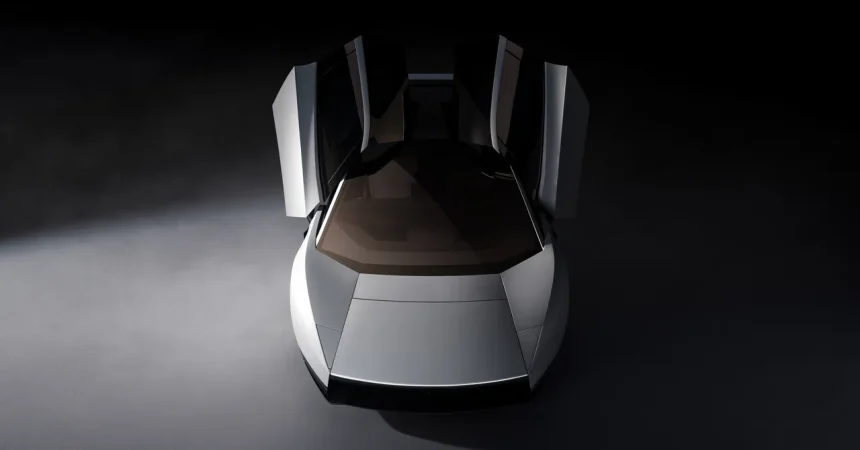
It was only a few seconds of flight, and technically it wasn’t flying so much as leaping on a jet of compressed air. But when Elon Musk stood on stage in mid-October and showed the world the second-generation Tesla Roadster—the long-promised, endlessly delayed, almost mythical sports car—shooting through the air like a prop from a low-budget sci-fi movie, it didn’t matter that the whole thing lasted less time than it takes to tie a shoe. It didn’t matter that the system would need six to seven hours to refill after those brief, gravity-defying moments. It didn’t even matter that the car, if it ever truly existed as advertised, wouldn’t be street-legal and couldn’t be driven on any normal road. For the people watching, especially the ones who had already handed over tens of thousands of dollars on a promise, it was a glimpse of the impossible made real. The spectacle was enough. The dream was alive. And for some, that dream was very expensive. It’s easy to roll your eyes at the theatrics, at a billionaire showing off a flashy prototype that may never deliver what it claims. But for the true believers, the die-hard Tesla faithful, that brief, helium-light moment of airborne nonsense was a signal that the future they’d been promised—the future they’d invested in with both their money and their imaginations—was still coming. It wasn’t a rational calculation. It was a feeling. And feelings, as any fan will tell you, don’t need a practical timeline.
The whole saga of the Roadster has always been more about belief than about logic. Tesla first introduced the second-generation Roadster back in 2017, wheeled out at the end of a Semi truck event as a surprise, with Musk dramatically emerging from the car and promising it would be the fastest production car ever made. The plan was simple: a supercar that could go zero to sixty in under two seconds, with a 200-kilowatt-hour battery, a 620-mile range, and a design that looked like it belonged in a futuristic video game. Reservations opened almost immediately, with hopeful buyers asked to put down a very real $50,000 just to get a place in line. At the time, the delivery date was set for 2020, which felt ambitious but plausible. Then 2020 came and went, and so did 2021, 2022, 2023, and 2024. The Roadster became a symbol not of Tesla’s ability to build cars but of its penchant for overpromising and underdelivering. Musk kept dropping hints, making jokes about “optional SpaceX thruster packages” and suggesting the car could hover, but no production vehicle materialized. The company eventually pushed the timeline to 2028, with delivery dates still vague and unclear. If you had taken that $50,000 reservation fee and instead put it into Tesla stock, today you’d be sitting on nearly a million dollars. That’s the kind of math that would make most rational investors walk away. But the people reserving Roadsters aren’t just investors; they’re fans, collectors, dreamers. They didn’t put down money expecting a return on their investment. They put it down because they wanted to own a piece of the future, and they were willing to wait years—maybe a decade—to get it.
The costs involved are a little absurd, but that’s almost the point. The base Roadster, which doesn’t even include the thruster system or the ability to do that silly compressed-air hop, requires a $50,000 refundable deposit. The next tier up, the Thrust variant, includes the acceleration thrusters and demands a staggering $250,000 down payment. And then there’s the Rocket, the so-called actual flying car, which is listed as “invite-only” and won’t be street legal even if it ever makes it into production. Musk himself has acknowledged that the Rocket is more of a showpiece than a real vehicle, something that would be fun to own on a private track but impossible to drive on public roads. Despite this, Tesla’s reservation terms are careful to note that purchase prices are “only an estimate,” and for the Rocket, those estimates don’t even exist yet. That means people are putting down hundreds of thousands of dollars for a product that has no official price, no confirmed production date, and no guarantee of street legality. To an outsider, it sounds like a coalition of the insane, a bunch of people throwing money at a billionaire’s fantasy. But to those inside the world of Tesla enthusiasts, it makes perfect sense. They aren’t buying a car; they’re buying a story. They’re buying the thrill of being first, of owning something no one else has, of being part of a movement that promises to change the world. The lack of concrete details doesn’t scare them. It just makes the eventual payoff feel more magical.
Take Alex Lawrence, for example. He runs a used-electric-vehicle dealership called EVAuto, and he watched the Roadster demonstration live online from his home, his eyes glued to the screen as the car did its brief, compressed-air hop. “I was freaking out,” he says. “I placed another one.” Lawrence already had a reservation for the second-gen Roadster, made years ago, but the October demo convinced him to double down. He wasn’t worried about the six-to-seven-hour refill time or the fact that the flight lasted only seconds. He didn’t care that the vehicle was years away from production and might not even be street-legal. What he saw was opportunity. Lawrence’s dealership has a large and growing social media following, and he immediately imagined the marketing potential: a Roadster on a track, maybe even the Rocket version, attached to a brand that could draw thousands of viewers and millions of impressions. “We’re going to put it on the track and use it for marketing content,” he says. In that light, the reservation isn’t just a purchase; it’s an investment in attention. It’s a way to turn a lavish, somewhat irrational expenditure into a business asset. When he sees the Roadster, he doesn’t see a possible engineering disaster or a delayed fantasy—he sees money signs. He sees clicks, views, shares, engagement. In a world where online presence can make or break a company, owning a car that most people can only dream about is a golden ticket. The fact that the car might not exist for another three years doesn’t bother him. He’s conditioned to hype, and hype is patient.
Then there’s Travis Cook, a Utah-based tech founder who has been waiting for his Roadster for nearly a decade. Cook originally reserved the base model back in 2017, but after the October demo, he decided to upgrade to the Thrust variant, the one with the acceleration thrusters. His reasoning is different from Lawrence’s; he actually wants to live with the thing. Cook calls himself a car aficionado, and he has a dealer’s license that allows him to buy and sell fun cars, a side hobby that has turned into something like a passion project. He loves nothing more than rolling up somewhere in an unusual vehicle and watching people gather around, asking questions, admiring the design, wanting to know what it’s like to drive. He told a reporter about this while driving a Cybertruck, using Tesla’s Full Self-Driving (Supervised) feature, a perfect snapshot of the kind of person he is: early adopter, risk-taker, delighted by the attention that comes with being at the cutting edge. “When I roll up somewhere, all the other car aficionados come out, and they’re so excited,” he says. “I just get a buzz from that.” For Cook, the Roadster isn’t just a car; it’s a social magnet. It’s a conversation starter, a status symbol, a way to be the center of attention in a world where that’s increasingly rare. He’s not naïve about the delays or the risks. He knows the car may not arrive on time, maybe not at all. But the wait itself is part of the experience. It’s a countdown to something extraordinary, and every year that passes just makes the eventual arrival sweeter.
At the end of the day, the Roadster phenomenon isn’t really about the car, or the flying, or the thrusters, or the numbers on a spec sheet. It’s about belief. It’s about the strange, powerful, often irrational connection that people form with a brand, a vision, a person. Elon Musk has built a company on the back of that connection, and the Roadster is its purest expression—a vehicle so futuristic, so outrageous, so seemingly impossible that it functions more like a religious icon than a piece of machinery. The people who reserve one aren’t just making a purchase. They’re making a statement. They’re saying that they believe in the future, that they’re willing to take a leap of faith, that they’re not afraid to bet on big dreams and wait years to see them come true. There’s something almost beautiful about that kind of optimism, but there’s also something troubling about it. These are people writing five-figure checks for a product with no price, no timeline, and no guarantee of existence. They’re putting their trust in a company that has a track record of overpromising and underdelivering. They’re ignoring the possibility that the thing they’ve been waiting for might never arrive, or that if it does, it might not live up to the fantasy. Yet they do it anyway, again and again, because the alternative—a world without such dreams—is simply too boring. So they keep their reservations active, refresh their screens, watch the demos, and wait. They wait for the day the Roadster finally flies, really flies, beyond a few seconds of compressed air, beyond the confines of a stage, beyond the limitations of current technology. They wait for the impossible to become possible. And until then, they’re happy to revel in the hope, the hype, and the small, ecstatic moment when their hero makes a car leap into the air. For them, that moment is worth every penny—and every passing year.