Coffee has always been more than just a morning necessity; it is a ritual, a comfort, and for many of us, one of the first decisions we make before the world gets loud. For nearly fifty million American households, that ritual has been shaped by a single name: Keurig. The little machine with its cheerful colors and familiar hum became the kitchen workhorse of the late nineties and early two-thousands, replacing the old pot of drip coffee with something faster, cleaner, and almost dangerously convenient. You popped in a plastic K-Cup, pressed a button, and within seconds you had a cup that was piping hot and predictably acceptable. It wasn’t the best coffee you had ever tasted, but it was always there, always fast, and always the same. That consistency was the magic. Over three decades, Keurig trained us to abandon the messy filter basket, the stale reheated leftovers, and the guessing game of coffee-to-water ratios. We embraced the pod because it made sense in a world where time was short and attention was fleeting. But every convenience has a shadow, and for Keurig that shadow has always been the stubborn little plastic cup that refuses to disappear. Now the company that taught us to love the pod wants us to outgrow it, and it’s asking us to trust it once again with something new, strange, and potentially wonderful.
This new step was unveiled during a presentation in New York City, where Keurig’s senior vice president of Future Coffee Systems, Phil Drapeau, tried to explain why the company is willing to risk its most famous invention. Customers, he said, wanted more than brewed coffee. They wanted the stuff they used to pay six dollars for at a café. They wanted cappuccinos, lattes, caramel-drizzled concoctions, autumn spice drinks that once felt like a seasonal treat rather than a kitchen possibility. At the event, guests tasted salted caramel drinks and creamy espresso-style creations, and the mood was optimistic, almost playful. But behind the tasting was a serious engineering challenge. The K-Cup, for all its success, simply could not carry the weight of this new ambition. “We wouldn’t be able to do any of that with K-Cup,” Drapeau said bluntly. “It will fail. You have to brew it at the right temperature and extract. You can’t be constrained by the K-Cup system.” It was a rare admission from a company that had built its empire on that very constraint. The K-Cup was made for simple black coffee, quick and unchallenging. Espresso demands pressure, finely ground coffee, precise temperature, and a level of control that a flimsy plastic pod was never designed to provide. So Keurig had to go back to the drawing board, not just to improve the pod, but to reimagine the entire machine, the packaging, and the relationship between the user and their cup.
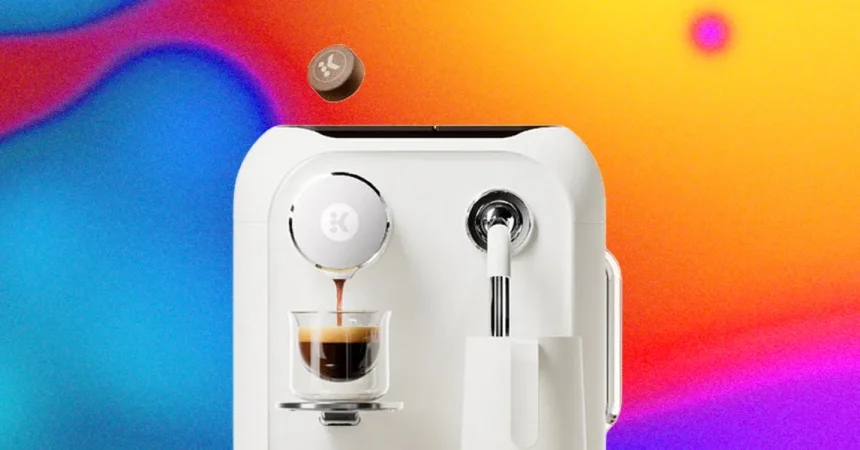
The answer is something called the AltaRound, and on the surface, it looks familiar enough. You drop it in, you press a button, and coffee comes out. But inside that simple gesture is a genuinely different piece of engineering. The AltaRound is a small, compressed disc of coffee, wrapped not in plastic or foil but in a plant-based seaweed material. That wrapper is designed to keep the coffee fresh, dense, and protected while still being fully compostable. It is an attempt to solve the ecological guilt that has dogged Keurig for years, the image of landfills piled high with spent cups that could not be easily recycled. But the AltaRound is not just a greener shell. It is also a different kind of brewing experience. Once the round is inside the machine, the user selects a drink from a touchscreen, and the machine takes over. It punctures the round, applies ten bars of pressure, and forces hot water through the compressed coffee to extract a rich, layered liquid that resembles espresso far more than the thin drip coffee the old K-Cup produced. Used rounds fall into a container, waiting to be emptied into a compost bin or garden waste. There is no need to measure beans, to grind them to the right consistency, to tamp them into a basket, or to fiddle with pressure and temperature gauges. Keurig has looked at the complicated, theatrical ritual of third-wave coffee making and turned it into something as effortless as brewing a standard cup of joe. It is a strange contradiction: a machine that tries to emulate the precision of a professional barista while hiding every step behind a smooth screen and a small, tidy package.
What makes this shift feel significant is the way it changes the human relationship with the coffee maker. The old Keurig was, for better or worse, a utilitarian appliance. You used it because you were tired, because you had no time, because the coffee from the office pot was undrinkable. It never felt special. The new system, by contrast, gestures toward something more romantic. It whispers the language of specialty coffee, even if the experience is effortless. There is no grinding, no tamping, no worry about whether your water is the right temperature. You simply choose your drink and let the machine do its magic. The touchscreen becomes the centerpiece, offering options for a simple black coffee, a velvety cappuccino, or the kind of sweet, indulgent drink that once required a trip across town. For some coffee purists, this might feel like a loss. Part of the pleasure of making coffee by hand is the tactile connection, the smell of fresh ground beans, the satisfying compact of a well-tamped espresso puck, the little dance of frothing milk until it reaches the right texture. The Alta system removes all of that. But for most people, the average household, the parent getting ready for work, the remote worker hopping between meetings, the appeal is different. It is not about the ritual. It is about having the freedom to drink something beautiful without the learning curve. You can wake up, press a button, and within moments be holding something that looks and tastes like it came from a café, without having to spend five minutes weighing beans or steaming milk. There is a quiet liberation in that, a way of saying that luxury and convenience are not opposite forces but two sides of the same comforting experience.
Of course, the elephant in the room is the environmental price of the coffee revolution Keurig helped create. For years, the company has faced criticism for producing millions of single-use plastic pods that were difficult, if not impossible, to recycle. Even as Keurig promised to make recyclable cups, the problem proved stubborn. The new AltaRound is designed to respond to that criticism head-on. Because it is made from compressed coffee and wrapped in a seaweed-based material, it is compostable in a way the old pod never was. That means the waste can return to the earth instead of lingering for centuries in a landfill. It is a meaningful step, though not without nuance. Compostable packaging only breaks down properly in the right conditions, and not every municipal compost system is ready for the challenge. There are questions about how the wrapper holds up, how long the coffee stays fresh, and whether consumers will actually take the extra step to dispose of the rounds correctly. But even with those reservations, the direction is encouraging. Keurig is acknowledging that the future of coffee cannot be built on disposable plastic. It is also acknowledging that flavor matters. The old K-Cup often served coffee that was hot and quick but not particularly memorable. The Alta system tries to capture something closer to the third-wave ethos, a desire for beans that are roasted with care, extracted with precision, and presented in a drink that has texture and depth. It may not replace the coffee shop, and it definitely won’t silence the espresso purists who believe that no machine can truly replicate the human touch. But it offers something simpler: a way to make a very good cup of coffee, at home, without any of the work.
The question now is whether people are ready to leave the K-Cup behind. Keurig is not asking for an overnight rebellion. The new system can coexist with the old one for a while. But the company is clearly betting on a future where customers want more from their coffee machines, and more from their coffee pods. We have spent thirty years being trained to accept convenience as the ultimate goal, and Keurig has always been there to satisfy that craving. Now it wants to train us again, not just to accept a different kind of pod, but to expect more from our morning cup. It wants to be the machine that makes espresso drinks simple and sustainable, that bridges the gap between the hurried weekday and the slow weekend, that lets us feel a little bit more sophisticated without asking us to become home baristas. Whether the AltaRound lives up to that promise remains to be seen. There will be skeptics, as there always are. There will be people who miss the familiar click of a K-Cup, and those who insist that real espresso cannot exist without a seven-hundred-pound machine bolted to a counter. But there will also be people who just want a good cup of coffee, who want to feel good about what they are throwing away, and who want the possibility of a salted caramel latte on a cold Tuesday morning without leaving the house. For them, the future feels less like a compromise and more like a warm, welcoming invitation. And after all these years, perhaps that is exactly what coffee should be.