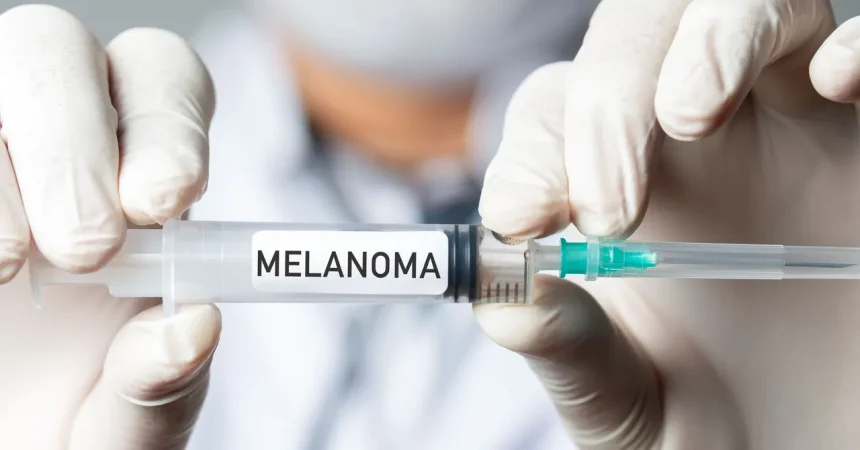
For anyone who has faced a melanoma diagnosis, the word “recurrence” carries a particular kind of dread. Melanoma, especially when caught at a later stage, is notoriously aggressive and can return even after surgery appears to have removed every trace of the disease. That is why the latest news from Merck and Moderna is being met with such profound hope. The two pharmaceutical companies have released results from a large Phase 3 clinical trial showing that a personalized mRNA vaccine, when paired with an existing immunotherapy drug, dramatically lowers the chance of melanoma coming back or proving fatal. The numbers are striking: patients who received the combination treatment saw their risk of recurrence or death drop by 42 percent compared with those who received only the immunotherapy drug pembrolizumab. This is not a modest, incremental gain; it is the kind of result that changes how doctors and patients think about the future. For people living with high-risk melanoma, this news offers something beyond statistics: a real reason to believe that the disease may no longer be a life sentence of waiting and watching.
The trial, called INTerpath-001, was carefully designed to measure the vaccine’s impact in a real-world, rigorous setting. More than 1,100 people with high-risk melanoma participated, all of whom had already undergone surgery to remove their tumors completely. This is an important detail because it means the disease was no longer visible on scans, yet the threat was still very much present — microscopic cancer cells may remain after surgery, and those invisible remnants are what eventually cause the cancer to reappear or spread. The participants were split into two groups: one received pembrolizumab alone, a well-established immunotherapy that helps the immune system recognize and attack cancer cells, and the other received the same drug plus the experimental mRNA vaccine, known as Intismeran Autogene. The vaccine is not a one-size-fits-all formula; it is custom-built for each patient. After following the participants for an average of just over two years, the researchers observed a clear and convincing difference. In the vaccine-plus-immunotherapy group, 82.2 percent of patients remained cancer-free at the end of the follow-up period, compared with 70 percent of those who received only pembrolizumab. The improvement was not just in recurrence — the combination also reduced the risk of the cancer spreading to distant organs by 38 percent, which is exactly the scenario patients fear most.
What makes this breakthrough truly remarkable is the science behind the vaccine. Instead of relying on a generic treatment, this approach is deeply personal, rooted in the very DNA of each patient’s tumor. After a patient’s tumor is removed, scientists analyze its genetic material to identify specific mutations — changes in the DNA that are unique to that individual’s cancer. These mutations cause cancer cells to produce unusual proteins that healthy cells do not make. The vaccine works by teaching the immune system to recognize those aberrant proteins as foreign intruders, essentially giving the body a personalized “wanted poster” for its own cancer cells. Once the immune system knows what to look for, it can hunt down and destroy any remaining cancer cells wherever they hide in the body. The researchers selected up to three of these molecular signatures for each patient, ensuring that the vaccine was narrowly tailored to the specific biology of that person’s disease. This is precision medicine at its most elegant — not treating cancer as a single enemy, but as a deeply individual threat that requires a deeply individual response.
The medical community has responded with excitement and a sense of historic significance. Georgina Long, the medical director of the Australian Melanoma Institute and the principal investigator of the study, called the results “transformative” and said they “have the potential to make a foundational shift in how we treat patients with earlier-stage melanoma.” That language is carefully chosen. In cancer research, the word “transformative” is not thrown around lightly; it usually signals that something fundamental has changed in the understanding of a disease and its treatment. For decades, the standard approach to melanoma was surgery followed by watchful waiting, with chemotherapy or radiation as a blunt backup tool. The arrival of immunotherapy changed some of that, but the combination with a personalized vaccine represents a new chapter entirely. It is the first time in a Phase 3 trial that an individualized therapeutic vaccine has been shown to meaningfully improve outcomes when added to standard immunotherapy. Experts who were not involved in the study have echoed this enthusiasm. Eva Muñoz Couselo, who leads a melanoma research group at the Vall d’Hebron Institute of Oncology in Barcelona, described the findings as “a major breakthrough” and emphasized that the trial demonstrates how therapy can be designed around the molecular characteristics of each patient’s tumor.
Beyond the technical achievement, there is something deeply human about this approach. For cancer patients, one of the hardest parts of treatment is the feeling that the same cookie-cutter therapy is being applied to everyone, and that their individual disease is not fully understood. This vaccine changes that narrative. It is built entirely from a patient’s own tumor, and it works by activating the same immune system that has been protecting that person their whole life. The therapy does not introduce foreign substances into the body in the way chemotherapy does; it simply gives the body the information it already needs to fight back. That is a fundamentally different philosophy of treatment — one that sees the patient not as a passive recipient of toxic drugs but as an active participant in their own healing. There is, of course, a long road ahead. The results need to be replicated, the treatment must be refined, and the logistics of producing a custom vaccine for every patient will need to become faster and more affordable. But the direction is clear. Medicine is moving away from one-size-fits-all treatments and toward a future where therapies are tailored to the unique genetic fingerprint of each person’s cancer.
For the patients and families affected by melanoma, this news is more than a headline. It is the sound of a door opening. Melanoma is one of the most common and dangerous forms of skin cancer, and while early detection has saved many lives, those who reach an advanced stage often face relentless uncertainty. The promise of this vaccine is not just that it lowers the numerical risk of recurrence — it is that it offers more time, more moments with loved ones, and more freedom from the shadow of fear that follows every scan and every checkup. The fact that this benefit was achieved in people who had already had surgery, and on top of an existing effective immunotherapy, suggests that the vaccine is adding something genuinely new and valuable to the treatment arsenal. There is still much work to be done, and the therapy is not yet available outside clinical trials. But for the first time, there is hard evidence that a truly personalized cancer vaccine can change the course of a major malignancy. For the researchers, the statisticians, the doctors, and above all the patients who volunteered for this study, the 42 percent reduction in recurrence or death is the result of years of dedication and hope — and it is a sign that the future of cancer treatment may be far more personal, far more intelligent, and far more hopeful than anyone dared to imagine.