-
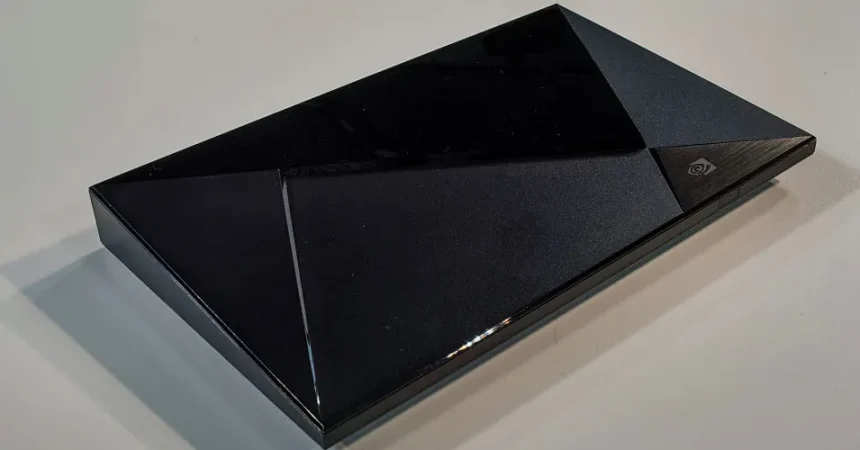
Let’s be honest about 2026: if a gadget contains memory or storage, you’re going to wince before checking out. That’s just the world we live in now. The generative AI boom didn’t just rewrite the rules for cutting-edge data centers and massive GPU clusters; it reached down into the aisles of your local electronics store and quietly (or not so quietly) jacked up the price on everything with a chip inside. Even old hardware isn’t safe. You’d think that once a device has been on the market for years, its cost would drop, that economies of scale and aging components would make it cheaper. But that’s not what’s happening. Instead, we’re seeing the opposite: a weird whiplash effect where a 2019 product suddenly costs more in 2026. The latest victim is the Nvidia Shield TV Pro, a beloved little streaming box that has earned a cult following for all the right reasons. Nvidia has announced that, effective immediately, the Shield TV Pro is getting a whopping $100 price hike. That takes it from $199.99 to a decidedly less budget-friendly $299.99. And the kicker? The device itself hasn’t changed one bit. Same processor, same design, same software. The only thing different is the price tag. That’s the AI economy for you — it doesn’t matter if you want cutting-edge performance or just a dependable box to watch Netflix on. If it needs a single bit of memory, you’re going to pay more, and you’re going to pay more because the entire tech supply chain is choking on AI’s unrelenting appetite.
-
For anyone who has been following the streaming gadget scene for a while, the Shield TV Pro isn’t just another set-top box. It’s something of a legend. The current version made its debut back in 2019, running Android TV and packing a bunch of features that made it the go-to choice for tinkerers, media hoarders, and people who take their home entertainment way too seriously. At its heart, it runs Nvidia’s aging Tegra X1+ processor — a chip that was already a throwback when the device launched. But in the context of a TV streamer, that old chip was fast enough then and, honestly, still fast enough today. It handled almost anything you threw at it, from crunchy 4K rips to weird codecs that would make other boxes cry. It also had AI upscaling, which made lower-resolution content look surprisingly sharp on big screens. That combination of affordability, raw performance, and versatility made it a no-brainer. The original Shield launched at $199.99, with a cheaper non-Pro version at $149.99 for people who didn’t need all the extra bells and whistles. Over time, the non-Pro model was quietly discontinued, leaving the Shield TV Pro as the sole survivor of the lineup. Now, that lone product is getting a serious price bump. For years, the Shield was one of those rare devices that felt like a steal: a powerful, flexible streaming box that could double as a Plex server and handle just about every media format you could imagine. At $199.99, it wasn’t exactly cheap, but it earned its keep. At $299.99, it’s crossing a line that will make even hardcore fans hesitate. The little box that could is still the little box that could — it’s just asking you to pay a lot more for the privilege.
-
Nvidia’s official explanation for the price hike is exactly what you’d expect in this era of supply chain chaos: components, especially memory, have gotten significantly more expensive across the entire industry. A spokesperson told Ars Technica that starting October 2, the Shield Pro will be priced at $299 because of those rising costs. It’s a simple, straightforward reason. But it’s also one that feels deeply ironic. Earlier this year, Nvidia’s Andrew Bell sat down with Ars and talked about the Shield as a bit of a passion project. He described how Nvidia still actively manufactures the device and sells every single unit it makes. It’s not a mass-market product like an iPhone or a budget laptop; it’s a niche device aimed at enthusiasts. And because the company sells everything it builds, there’s no giant stockpile of older, cheaper components sitting around. So when costs spike, Nvidia has no choice but to pass them on to the consumer. You can almost imagine the conversation at Nvidia headquarters: “We love the Shield, we still believe in it, but we also have to pay bills.” Passion projects don’t get to hide from the cold, hard math of component prices. And in 2026, that math is brutal. The cost of memory chips has skyrocketed, and the market is being reshaped by the same AI forces that Nvidia itself has funneled billions of dollars into. It’s a strange position to be in: a company that is both a driver and a victim of the very supply chain that’s making its beloved hobby device more expensive.
-
And that brings us to the uncomfortable truth that Nvidia isn’t exactly an innocent bystander in all of this. Yes, Nvidia makes the Shield, and yes, it has to buy memory and other components at inflated prices just like everyone else. But Nvidia is also one of the biggest reasons those prices are so inflated in the first place. As a key player in AI hyperscaling, Nvidia has been gobbling up huge portions of the world’s supply of memory, storage, and advanced manufacturing capacity. The company’s data center GPUs and AI accelerators are the engines driving much of the current tech boom, and that boom has been sucking up resources faster than the industry can replenish them. Nvidia has become one of the most valuable companies in the world — a powerhouse whose quarterly earnings are watched more closely than some national economies. But when a company gets that big and that deeply embedded in the tech ecosystem, it doesn’t just enjoy the benefits of a booming market. It also distorts the market for everyone else. Game consoles have been hit especially hard, with Nintendo, Microsoft, and Sony all bumping up prices on their current generation hardware. The PS5 Pro is a perfect example: it launched at $699.99 in 2024 and has since climbed to $899.99 today. That’s a $200 increase on a premium console, with no hardware revision to explain it. The same story is playing out across the entire industry. New products launch with higher prices than their predecessors, and existing products often get more expensive while they’re still on shelves. It’s as if the old rule of tech — wait a year and it’ll be cheaper — has been replaced by a much crueler one: buy now, because it only gets worse.
-
For the average consumer, the real question is simpler: is the Shield TV Pro still worth it at $300? And the answer, as with so many things, is it depends on who you are. If you just want to stream Netflix, Hulu, Disney Plus, and the occasional YouTube video, there are much cheaper streamers that will do the job perfectly well. A $50 streaming stick can handle basic 4K streaming with a cute remote and a tiny footprint. You don’t need the Shield’s extensive codec support or its ability to act as a Plex server unless you’re the kind of person who has a media library stored on a network drive and refuses to rely on cloud subscriptions. For those people, the Shield remains unmatched. It’s still the go-to box for hardcore media enthusiasts who need hardware decoding for just about every format under the sun. It’s still one of the best ways to turn a big dumb TV into a media powerhouse. But at $300, that niche is getting a lot smaller. Nvidia’s stock of the Shield TV Pro has been slim for a while, partly because it became too expensive to manufacture new units when component prices were rising so quickly. This price increase is likely to change that, giving Nvidia the margin it needs to restart production at a healthier pace. But it comes at a cost: making a product less appealing to the very people it’s designed for. A streamer that was already too niche for mainstream buyers now becomes an even tougher sell. If you’re a die-hard fan underwater on your computing needs and your entire living room revolves around a Plex server, the new price might just be a bitter pill to swallow. For everyone else, it’s a reason to look elsewhere. At the moment, the Shield TV Pro is still out of stock on Nvidia’s own store, though Best Buy has it listed at the new, higher price. If you’ve been holding out for a deal, don’t hold your breath.
-
Stepping back, this entire situation feels like a perfect metaphor for the current state of technology. We live in a world where the most powerful AI models are trained on infrastructure worth billions of dollars, where companies literally cannot buy enough GPUs or memory chips, and where the knock-on effects are felt by ordinary people trying to buy a streaming box. The Shield TV Pro isn’t a flagship phone or a next-gen console. It’s a six-year-old set-top box that, somehow, remains the best at what it does. But even that isn’t enough to escape the gravitational pull of the AI boom. Nvidia is far too deep in the machine-building business to give the Shield a free pass. The company is making staggering amounts of money from AI accelerators, but it also has to buy storage and memory for its own products at the same inflated prices as everyone else. There’s no such thing as a friendly internal discount when the entire global supply chain is on fire. So we’re left with a moment that perfectly captures 2026: a beloved, slightly ancient gadget becomes more expensive, not less, because of a technology that didn’t even exist in its original product cycle. The passion project survives, but only at a price. For fans, the hope is that Nvidia eventually releases a new Shield with modern hardware, but who knows when that will happen — and given current trends, it would probably launch at a price that makes $299.99 look like a bargain. Until then, the Shield TV Pro remains a wonderful device, a stubborn little reminder of an earlier generation of streaming hardware. It’s just a wonderful device with a heavier price tag, caught in a world where AI rules everything and memory is gold. If you’ve got the cash and you know what you’re getting into, it’s still a solid purchase. But it’s no longer a steal, and in a market full of cheaper options, that’s a hard pill to swallow. The future arrived, and it brought a receipt.