1. A Smaller, Stealthier Beginning
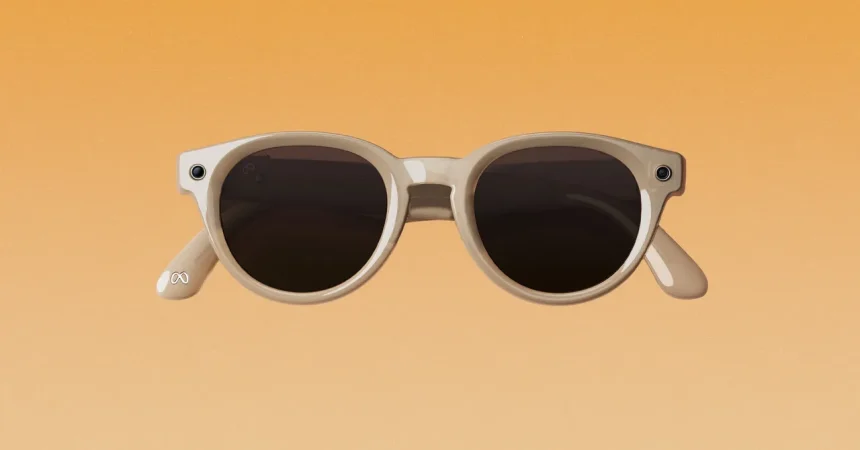
When I first unboxed the Meta Nova glasses, the most immediate thing I noticed wasn’t some flashy new screen or a dramatic leap in processing power—it was the camera housing. It’s noticeably smaller than the one on the Gen 2 glasses, and that tiny design change makes an enormous difference in how the glasses feel in real life. From a distance, the little circular bump on the temple might even be mistaken for a rivet, a piece of ordinary hardware that you’d find on any pair of reading glasses. That subtlety is both exciting and, frankly, a little uncomfortable. I remember standing in the WIRED office, asking my colleague Reece Rogers to give me an honest assessment of how they looked on my face. He studied me from a few feet away, paused, and then admitted that he hadn’t even realized they were camera-enabled glasses at first. That’s the kind of invisibility that smart glasses companies have been chasing for years, and it’s genuinely impressive. But it also raises a quiet unease: if they look this unremarkable, how many people am I unintentionally recording without their knowledge? The Gen 2 glasses were already fairly unobtrusive, but the Nova frames take that to another level. They blend in, they pass unnoticed, they sit on your nose like any other accessory. In a way, that’s the dream—wearable tech that doesn’t scream for attention, that feels less like a gadget and more like part of your outfit. In another way, it’s a social hazard. We’ve all gotten used to cameras in phones being kind of obvious—you know when someone is pointing one at you. But this is a different beast entirely. Still, you can’t deny the craftsmanship. The smaller housing doesn’t sacrifice anything in terms of comfort or balance. The glasses sit lightly on the bridge of your nose, the weight distribution is even, and for hours of wear, you forget they’re doing anything other than correcting your vision or adding a little attitude to your face. It’s the kind of subtle evolution that doesn’t make headlines but makes all the difference in daily use. And honestly, that’s what most people want from smart glasses: not a robot slapped across your face, but a quiet little helper that doesn’t change who you are when you look in the mirror.
2. Familiar Feel, Familiar Functions
Once you get past the external redesign, the Nova glasses feel remarkably like the Gen 2. And I mean that as a compliment. The button placement is intuitive, the touch controls respond without hesitation, and the way you interact with the glasses is the same straightforward system that Meta has been refining for a while now. You press a button, and you’re immediately talking to the AI assistant. You press another button, and you snap a photo. Hold it a little longer, and you start recording a video. It’s frictionless in a way that makes you wonder why more smart glasses don’t work like this. The camera itself continues to produce nice, vibrant photos—the kind of shots that don’t look like they came from a device that lives on your face. Videos are smooth, stabilization is decent, and the audio-capture quality during recordings is good enough to make vlogging from your glasses a plausible daily habit. What’s new and exciting is a feature called Conversation Focus, which is designed to help hard-of-hearing people pick up spoken words more clearly in noisy environments. It sounds genuinely life-changing for people with hearing loss, a way to use the glasses’ microphone and processing power to isolate speech from background chatter. The catch? It’s only available in early access, and only on Meta’s Ray-Ban and Oakley smart glasses right now. My Meta-designed Nova frames, as polished as they are, don’t have it yet. That’s frustrating, because this feels like the kind of feature that could have real, tangible benefits for a community that often gets ignored by flashy tech releases. It’s not another AI party trick—it’s a practical accessibility tool. As someone who doesn’t personally struggle with hearing loss, I can’t fully appreciate how powerful that might be, but I can imagine sitting in a crowded restaurant, the clatter of plates and voices all around, and the glasses helping you focus on the person across the table. That’s not just convenience; that’s connection. And it’s a reminder that the best technology doesn’t always come wrapped in spectacle. Sometimes it comes in a quiet feature buried in settings, waiting to make a real difference in someone’s life. For now, I’ll have to wait, but the fact that it exists at all signals a thoughtful direction for the platform.
3. Looking Forward to Muse AI
Another thing my Meta-designed Nova glasses don’t have yet is integration with Meta’s Muse AI, which the company says is heading to these frames later this year. I’m honestly more intrigued by that than by almost anything else on the road map. Muse takes a different approach to assistance—it’s less about answering a random question you fire off and more about proactively helping you make sense of the world around you. It feels like a companion, not just a search engine with a camera. I’ve had a chance to poke around with Muse on other platforms, and I’ve found it more useful than Meta’s current AI assistant, which often feels like a robot that has all the answers written down somewhere but can’t find them. The promise of having Muse on your glasses is particularly compelling because a camera on your face gives the AI a sensory advantage. It can see what you see, hear what you hear, and perhaps anticipate what you need before you even ask. That’s a little chilling, sure, but also undeniably cool. There’s something weirdly personal about the idea of asking my “entirely too cute AI buddy” for help while walking down a street, and having it gently guide me toward a coffee shop or remind me of the name of a building I’m looking at. The core issue, though, is that Meta’s current assistant is not that. Its track record is spotty at best, and honestly, it’s often terrible. When I tried to ask it simple questions about the very glasses I was wearing, it fell apart. I told it specifically which frames I had on, I let it snap a picture of the Meta product page for reference, and it still couldn’t get any of the details right. It was like talking to someone who had skimmed the brochure and then guessed the rest. There’s a certain charm in that if you’re in the mood, but it’s not the kind of reliability you want when you’re depending on technology to help you with something that actually matters. So, yes, I’m excited about Muse. But I’m also cautiously optimistic at best, because the current assistant is a reminder that big promises don’t always translate into good experiences.
4. The AI Assistant’s Embarrassing Failure
Let me walk you through that AI failure in more detail, because it perfectly captures where this technology stands today. I put on the Nova glasses, made sure the camera had a clear view of the small printed product page for the exact model I was wearing, and then asked the assistant a straightforward question: “What features does this pair of glasses have?” I expected a confident recitation: “You’re wearing the Meta Nova, with a 12MP camera, enhanced speaker system, and support for the newest AI features.” What I got instead was a mess. The assistant hesitated, gave me a vague answer, and then proceeded to misidentify features, mix up generations, and completely miss details that were literally in the picture it had just captured. I tried again, this time explicitly saying, “These are the Meta Nova frames, the ones on the product page.” It still stumbled, offering half-true information and some details that simply weren’t accurate. It felt like watching a smart person who had eaten too much and couldn’t concentrate. Now, artificial intelligence has gotten incredibly good at many things—writing emails, generating images, summarizing documents—but when it comes to answering live questions about your immediate physical surroundings, it’s still remarkably immature. This is especially disappointing because the entire point of smart glasses is that they give AI a first-person view. The context is right there. The camera should be an advantage, not an afterthought. But the assistant doesn’t seem to know how to leverage that. It treats the photo like a separate piece of evidence rather than an integrated part of the question. The result is an experience that feels less like having a helpful companion on your face and more like trying to give directions to someone who keeps getting lost. I can’t imagine relying on this assistant for anything with real complexity—like troubleshooting a problem, planning a route, or even identifying something important at work. It’s fine for setting a timer or taking a photo, but the AI’s core intelligence isn’t yet ready for prime time. The promise is huge, but the execution is behind. I’ve learned to lower my expectations, and maybe that’s the right approach. Treat it as a fledgling helper, not a genius sidekick.
5. Ignore the AI, and the Hardware Shines
Here’s the thing, though: if you basically ignore the AI entirely and treat the Nova glasses as a wearable camera with a nice pair of frames attached, they do just about everything Meta promises. Photos look good. Videos are surprisingly smooth for something mounted on your head. The speaker system, while not room-shaking, is clear enough for phone calls and voice messages. The battery life is acceptable for a day of casual use, as long as you’re not filming everything in sight. And the glasses themselves are genuinely wearable. I’ve worn them through long walks, coffee shop sessions, and even into meetings where they sparked curiosity rather than suspicion. They don’t feel like a head-mounted computer; they feel like a pair of sunglasses with hidden talents. One improvement I noticed is that the indicator light—the tiny LED that lets people around you know the camera is recording—has been made more tamper-proof. In previous versions, there were ways to cover it, which understandably worried privacy advocates. Meta has tried to close those loopholes, and that’s a good step. But it’s not enough. A small light is never going to deter someone who’s determined to be creepy. If you want to secretly record in a bathroom or follow someone around, a tiny light is easy enough to ignore or obscure. The point of the light isn’t really to stop bad actors; it’s to give decent people plausible deniability and to signal to society that the company cares about consent. But in practice, social norms matter more than hardware. We’ve learned to live with cameras everywhere because, for the most part, people aren’t always filming. The same applies to glasses. They’re not inherently evil—they’re just tools. And as a tool, this one is quite capable. The software experience is competent, the companion app is serviceable, and the integration with WhatsApp, Instagram, and other Meta services is smooth. If you can accept that the AI is more of a beta feature than a finished product, the Nova glasses are easy to enjoy on their own terms. They let you capture moments without pulling out your phone, and they do it without turning you into a cyborg from a dystopian movie.
6. Price, Alternatives, and a Gentle Reminder
Of course, there’s the question of price. The Nova glasses are expensive, there’s no way around that. And when you consider that the AI is still immature and some marquee features are missing or delayed, it’s reasonable to wonder whether you’d be better off saving a little money and sticking with the Gen 2. The Gen 2 glasses still capture quality photos, still integrate with Meta’s services, and still offer the same core experience. The smaller camera housing on the Nova is nice, but if nobody noticed the Gen 2 cameras at a glance anyway, does it really matter? Maybe not. For most people, the upgrade is incremental rather than night-and-day. And unless you specifically need the best possible version of a still-developing product, the previous generation might be the smarter buy. But if you’re the kind of person who likes having the latest and greatest, who enjoy being on the cutting edge even when the edge is a little rough, the Nova glasses are a fun and functional piece of technology. They’re not a revolution, but they’re an evolution—and an encouraging one at that. They show that smart glasses are getting closer to becoming a normal everyday accessory rather than a weird sci-fi experiment. The design is more discreet, the build is more comfortable, and the core functionality is genuinely useful. The missing pieces will come in time: better AI, broader feature support, maybe even the Muse integration that I’m eagerly awaiting. But for now, the Nova glasses are a solid companion for capturing life’s little moments and staying connected on the go. Just maybe don’t be weird about it. Use them respectfully, be mindful of other people’s privacy, and remember that technology is at its best when it helps you connect with others rather than spy on them. We don’t need to have a philosophical panic about camera glasses; we just need to behave like decent humans. If you can do that, the Nova glasses will serve you well—and they’ll look pretty good doing it.