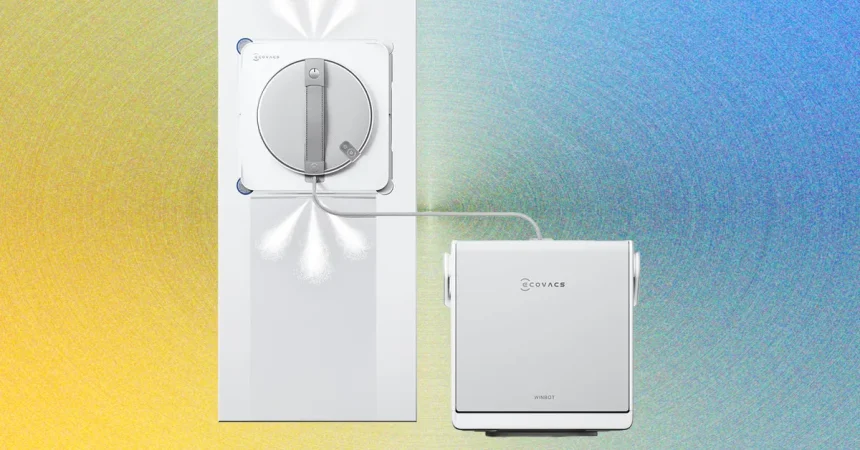
I was seduced by the promise of automation. The glossy box on my doorstep whispered of a world where I could recline with a cup of coffee while a tireless, miniature disc scoured the grime from my double-hung windows, leaving behind a streak-free gleam that would impress even the most discerning neighbor. But, as with most technological promises, the devil was in the details, and my dream quickly soured into a frustrating reality. The first thing I learned is that these mechanical marvels are fiercely prejudiced against traditional windows. They demand a perfectly pristine, perfectly smooth, perfectly flat pane of glass—a standard my sixty-year-old home simply cannot meet. Textured glass is an automatic disqualifier, as the suction cups get confused and struggle to create a seal. Window handles, no matter how slim or flush, are treated as insurmountable obstacles. And astragals—those vertical dividers between the panes—must be thick, solid, and finished in hard plastic. If they are too thin, hollow, or made of a softer material, the robot’s sensors throw a fit, refusing to traverse what it perceives as a deadly chasm.
Armed with the knowledge of these limitations, I decided to give the device one final, dramatic chance on the upstairs bay window. This was a PVC replacement, pre-installed by the previous owners, and it boasted beautifully solid, hard-plastic astragals that met every specification in the manual. My heart hammered with a mix of hope and dread as I hauled the contraption up the stairs. The elevation alone was enough to give me pause; being a full story up instantly multiplied the stakes. I carefully clipped the safety tether, double-checking its knot on a heavy armchair—a flimsy countermeasure against disaster, I knew. As I pressed the power button, the robot whirred to life, its suction locking onto the cold glass with an alarming thunk. Watching it inch upward, emitting a high-pitched, squeaky squeal against the PVC frame, was a suspenseful viewing experience akin to waiting for a train to derail. My knuckles were white around the handles of the charging case, which was doing double duty as a counterweight.
Then the red light flashed. I was watching a panel of streaks when a strident, three-tone alarm cut through the suburbs’ quiet afternoon. The cheerful English-accented voice informed me in a stern tone that it was stuck and I should check the companion app for a solution. The app, which I fumbled for, had a flowchart of errors, none of which seemed helpful for the particular physics problem I was facing: my expensive little robot was clinging to the very top of the topmost sash, its suction cups locked firmly onto the only sliver of glass where the window frame met the ceiling. I live in France; my windows are tall, and that top edge was unreachable by any human standing on any piece of furniture in the room. My anxiety, which had been a simmering background hum, hit a rolling boil.
My panic was visceral and immediate. The primary fear wasn’t just the expense of the robot plummeting to the pavement, but the catastrophic cascade it could trigger: the device has a heavy battery, and if it fell a full story, it could shatter the patio slab below or, worse, bounce and smash into the glass panes of the large bay window on the ground floor. While the design features a strap and a charging case that doubles as a counterweight, and a tethered cord that can be anchored to a chair, physics is a harsh mistress. Even with the cord clamped, a fall would result in violent swinging, potentially breaking the downstairs windows. The screen suggested pressing the power button on the device to release the suction, but it was a good arm’s length beyond my reach, stuck stubbornly at the top of the framecarousel. Desperately, I contorted my body half out of the sash, feeling the disconcerting flex of the old wooden frame, my fingers stretching uselessly. A few neighbors, walking dogs or heading to the corner store, paused on the sidewalk, craning their necks up at my flailing arms, their heads tilted in a silent, curious judgment of what must have looked like a high-stakes game of robotic limbo.
Desperate, I pulled the tether hard, but it wouldn’t budge. The little machine was locked onto the astragal by sheer physicsament. In a moment of clarity born of pure terror, I realized the only way to get to it was to lower the top sash of the double-hung window. But that meant leaning dangerously out, one hand gripping the frame, the other clutching the power strap of a device that seemed designed to mock me. The neighbors had now stopped entirely, some with phones out, eagerly recording the drama unfolding a story above them. I could hear the alarm blaring from the unit—a stern, robotic voice repeating, “Stuck. Please check app.” With the window lowered, I contorted my body, catching my escape on the frame, and blindly groped for the power button. Holding the suction release mechanism down, I felt the grip falter. There was a horrible second where the robot dangled solely on the tether before I yanked it inside, panting, my heart a frenzied drum against my ribs生的.
By the time I had wrestled the machine back into its plastic case, the verdict was painfully obvious: this thing is a monumental waste of time morning. The manual labor and panic for that one small bay window had taken me twenty minutes ticks. For a comparison, my grandmother could have hand-washed that entire facade in five minutes flat with a sponge and a squeegee. But the time investment goes beyond the actual cleaning. The robot requires a meticulous setup: the tether must be anchored, the fake plastic astragal conditions must be initial-checked, and the water tank primed. You cannot simply switch it on and walk away; you are forced to babysit a device that is ostensibly meant to free you from babysitting. It moves with the speed of a snail, pausing to think about every inch of the glass. It refuses to touch the edges—the very parts where the dirt tends to accumulate—leaving a perimeter of grime that screamed for a good old-fashioned cloth. And heaven forbid there be any gust of wind, because the little device would just give up, demanding a reset.
The final straw was the futile exercise in its practicality. Even if I had been able to actually get it to function perfectly, the time expenditure was astronomical. You must prepare the device, calibrate the sensors, map the window, and then physically hoist it onto the pane. You spend the entire time babysitting it, watching it bumble across the glass, only to have it stop dead at every single seam or frame connection. It can’t handle handles, which means you have to hand-scrub those areas later. It leaves the corners completely untouched, thick with a build-up of old residue)Skip the edges—because the sensors won’t get close enough—and if there’s any stubborn muck like dried bird droppings or hard water spots, the robot just smears it into a depressing, grey arc across the glass. It’s a machine that offers the illusion of efficiency while requiring a dedicated operator, a safety net, and a bucket of sheer patience.
Ultimately, my foray into automated window cleaning felt less like embracing the future and more like a hostage negotiation. The promises of uncomplicated, hands-free living dissolve the second you encounter a single irregularity—a breeze, a wobbly PVC frame, a sunroom with awkward angles. The robot is a delicate prima donna demanding perfection from the very environment it’s supposed to make perfect. In the end, I returned to my old tools: a bucket of soapy water, a squeegee, and a chamois cloth. I spent twenty minutes cleaning all the windows that the robot had taken an hour to fail on, without a single panic attack or an audience on the sidewalk. The windows are clean, my blood pressure is stable, and the machine is safely boxed up, destined for a return label. In the battle between human hands and a clever silicon morsel, it was humanity that won. Some tasks, it seems, are simply too delicate to be left to the robots—or at least, too safely accomplished by a person with a spray bottle and common sense.