Some people read the news. Some people watch sports. iFixit reads circuit boards. For years, the company has been known for completely tearing apart just about every product and device it can get its hands on, and it just did the same thing with the brand-new iPhone 18 Pro. The goal isn’t to destroy anything for fun. It’s much more practical than that. By taking the latest iPhone apart piece by piece, iFixit can understand how all the parts fit together, which pieces are easy to reach, which ones are locked away behind glue and screws, and what someone might face if they ever need to fix something that breaks. That kind of information matters to a lot of people. Even if you’ve never opened a phone in your life, you still have to deal with the consequences of how a phone is designed. When your screen cracks, your battery starts dying before lunch, or your camera suddenly refuses to focus, your options are shaped by the decisions Apple made during manufacturing. Can you replace just a small part, or are you forced to buy a whole new module? Is the repair something you can do at home with the right tools, or does it require a trip to the Apple Store and a repair bill that might make you wince? Those questions are exactly what iFixit tries to answer with every teardown. After spending time with the iPhone 18 Pro, the company gave it a repair rating of 7 out of 10. That’s a respectable score, and it matches the rating iFixit gave the iPhone 17 Pro back in 2025. But before you celebrate, keep in mind that a 7 on the iFixit scale doesn’t mean the iPhone has suddenly become an easy repair project. It just means that, compared to some other devices out there, it’s not the worst thing you could open up. The phone is still a miniature computer with a high-resolution camera, wireless antennas, sensors, and a battery all squeezed into a thin, fragile package. Getting inside it requires patience, heat, special tools, and a steady hand. Still, the score tells a story of modest progress, and for anyone who wants to keep a phone for more than a couple of years, that progress matters.
The iFixit teardown video and accompanying post walk through the whole process in painstaking detail. It’s not the kind of thing you’d watch if you wanted a quick overview. It’s the kind of thing you’d watch if you were genuinely curious about how modern smartphones are engineered, or if you were thinking about attempting a repair yourself one day. The team shows how to remove the screen, how to disconnect the battery, how to lift out the camera module, and where the screws and adhesives are placed. They also point out the little design choices that make a repair easier or harder. Some parts are held in with standard screws. Others are glued into place. Some connectors are easy to reach. Others are buried so deep that you have to remove half the phone just to get a finger on them. In the case of the iPhone 18 Pro, the camera assembly and battery assembly are both relatively easy to remove, which is one of the main reasons the phone earned a 7 out of 10. Those are two of the most common components people need to replace, so making them accessible is a meaningful improvement. But there’s a catch. The fact that a part is easy to remove doesn’t automatically mean it’s easy to repair. Sometimes, the simplest path is to take out the whole module and swap it for a new one. That’s better than having to throw away the entire phone, but it still costs money, and it’s not always the same as fixing the exact problem. To understand why that matters, you have to look at one of the iPhone 18 Pro’s most interesting new features, and also one of its biggest repair headaches.
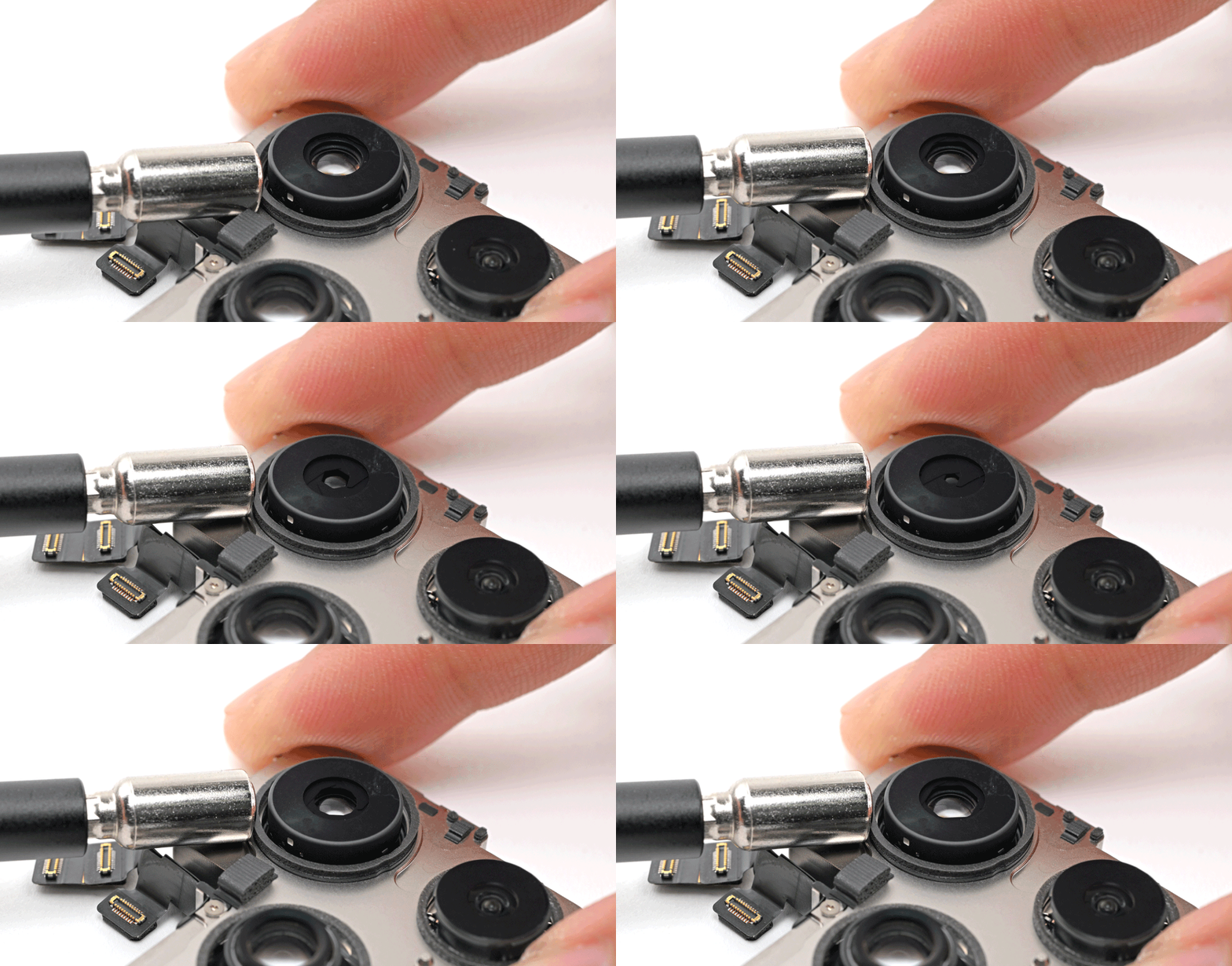
The Achilles heel of the iPhone 18 Pro may be a new feature that sounds great on paper: a variable aperture lens in the phone’s main 48-megapixel camera. This is the first time an iPhone has had a variable aperture, although it’s not the first smartphone to include one. What does that mean? In simple terms, the camera can adjust the size of the opening that lets light in. You can set it to let in more light for darker scenes, or close it down for sharper, better-lit shots. It gives photographers and videographers more creative control and flexibility. It’s like having a tiny mechanical iris built into your phone, similar to how the pupils in your eyes expand and contract depending on how bright or dark it is outside. The technology itself is genuinely cool. It uses six rotating aperture blades that are about the width of a human hair. Those blades move together to control how much light passes through the lens. The problem is that those blades are moving parts. And moving parts are exactly what a repair technician doesn’t want to see inside a device that is packed as tightly as a smartphone. Moving parts wear out, jam up, get dirty, or break. With something as small and delicate as a hair-width blade inside a camera module, the margin for error is almost zero. iFixit called trying to fix the individual blades an almost-impossible task. If one of those blades bends, jams, or snaps, there’s really no practical way to repair it. You wouldn’t be able to take the camera apart, reach the tiny blade, and adjust it back into place. There’s too much precision involved, and the entire assembly is built to be installed as one unit. That means if your camera breaks, you’ll probably be forced to replace the entire camera assembly. That will undoubtedly be more expensive than paying for individual pieces. The one silver lining is that the camera assembly itself proved easy to remove, so at least the replacement process won’t require the same kind of miniature surgery that the aperture blades would demand.
The situation with the battery is a bit stickier, but it also offers some reasons for hope. To get to the iPhone 18 Pro’s battery, you first have to figure out how to open the phone, and that means dealing with the screen. The screen is glued down, which sounds simple enough until you realize how easy it is to crack a display while trying to pry it open. The standard approach involves applying heat to soften the adhesive, then using suction cups and thin picking tools to slowly separate the glass from the frame. It’s a process that takes patience and a gentle touch. One wrong move and you could end up with a broken screen on top of a dead battery, which is a bad day no matter how you look at it. But once you manage to get the screen open, the news gets better. The battery is not glued down like it is in many other phones. Instead, it’s secured with screws. That makes it much simpler to extract once you’re inside. You don’t have to wrestle with stubborn adhesive strips or risk bending the battery while pulling it out. You just remove the screws, disconnect the connector, and lift the battery out. That’s a nice change, and it’s one of the reasons iFixit gave the phone a solid score. When you compare the iPhone 18 Pro to older models, or to some Android devices that are practically sealed shut, the repair experience seems to be moving in the right direction. All in all, the iPhone 18 Pro is about as straightforward to repair as it has been for a few years. It’s not an easy fix by any stretch, but it’s not a nightmare either. There are tangible improvements, and those improvements are worth acknowledging, especially given the long and complicated history between Apple and the repair community.
That history has been contentious, to put it mildly. For years, many repair advocates accused Apple of making its products unnecessarily difficult to open, using proprietary screws, gluing components together, and restricting access to parts and diagnostic tools. The company’s designs were often elegant and beautiful, but they weren’t always friendly to people who wanted to fix their own devices. That frustration became a major political issue. The European Union eventually stepped in with legislation designed to make consumer electronics easier to repair, and Apple became one of the main targets of that effort. The pressure didn’t come from Europe alone. Repair advocates in the United States also pushed for what they call the right to repair, and state lawmakers began introducing bills that would require companies to provide parts, tools, and documentation to consumers and independent repair shops. In response to all of this, Apple introduced a self-service repair program in 2021. It sounded like a big win for consumers. Finally, regular people would be able to order genuine Apple parts and fix their own phones at home. But the program got off to a bumpy start. The company withheld certain tools or made them difficult to access, and the process of renting a repair kit was expensive and complicated. It felt less like an open invitation and more like a carefully controlled compromise. Over time, after continued pressure from state lawmakers and consumer advocates, Apple made it slightly easier to repair its phones. The company also introduced a repair assistant tool designed to help guide users through the repair process after they’ve made a repair, so that their iPhone doesn’t stop working properly because of software lockouts. These were steps in the right direction, but many advocates remained skeptical. They pointed out that Apple’s moves were often slow, limited, or introduced only after regulators threatened to act.
Even now, with the iPhone 18 Pro earning a 7 out of 10 from iFixit, the broader debate about repairability is far from over. Just this year, the ownership advocacy group PIRG gave the iPhone 17 a D- rating for its repairability. A D- is not a passing grade by any reasonable standard, and it shows that a lot of people still don’t trust Apple’s repair policies. There’s a big difference between a teardown score and a policy score, after all. iFixit can rate how easy it is to physically open a device and swap out its parts, while PIRG can look at what kind of legal roadblocks, software restrictions, and parts monopolies make real-world repairs harder than they should be. Both perspectives are important. You can have a phone that’s beautifully designed on the inside, with screws instead of glue and modular components instead of soldered ones, but if you can’t buy the part, can’t access the software, or can’t run the diagnostic tools, the repair might still be out of reach. That’s the reality of modern consumer electronics. Progress happens in small steps. The iPhone 18 Pro is not a revolutionary repair dream. It still has a sealed screen, delicate camera machinery, and plenty of ways for an amateur repair attempt to go wrong. But it also shows that pressure from advocates, regulators, and everyday people is beginning to change the way Apple designs its products. The fact that iFixit can point to easy camera and battery removal is a sign that repairability is being considered earlier in the design process. That’s something worth appreciating, even if there’s still a long way to go. If you’re someone who wants to keep your phone for as long as possible, the score card is mixed but promising. The iPhone 18 Pro may not be easy to repair, but it’s not impossibly hard either, and that’s more than you could say about a lot of devices out there. The key is to keep pushing, keep asking questions, and keep making noise until repairability becomes a standard feature, not a luxury.