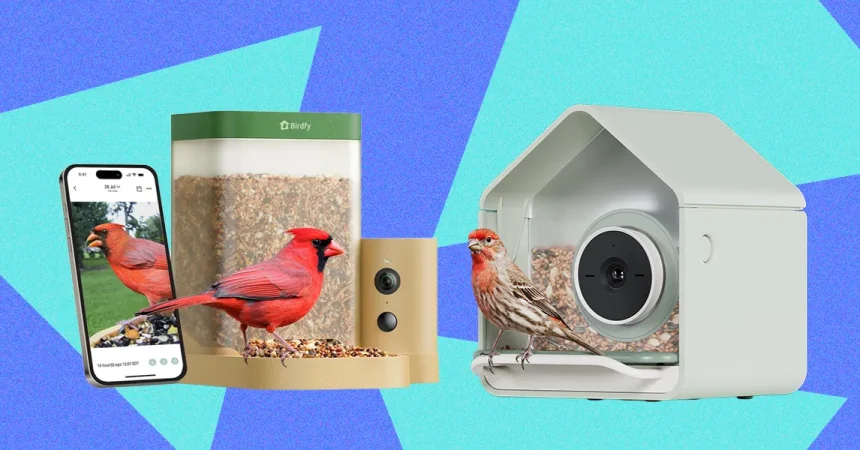
There is something genuinely refreshing about the Birdfy Rookie, and after spending four weeks with it mounted in my backyard, I found myself constantly torn between admiration and frustration. From the moment I unboxed it, I appreciated how wonderfully simple the whole concept is. There is no complicated wiring, no confusing setup manual, no smartphone pairing ritual that makes you feel like you need a computer science degree. You fill the small hopper with seed, place the feeder on a pole or hook, and let the built-in camera do the rest. The Rookie also shares the exact same app ecosystem as Birdfy’s more expensive feeders, which is a real advantage if you are already familiar with that platform or if you are considering upgrading later. The app feels clean, reliable, and intuitive, and it gives you a direct window into the bird activity that happens while you are at work or indoors. I genuinely loved that simplicity; it is the kind of product you hand to a less tech-savvy relative without worrying that they will get lost in menus and settings. But simplicity, I learned, can come with hidden costs. While the Rookie is undeniably easy to use and carries the Birdfy name, it also makes some compromises that became harder to ignore the longer I tested it. The most obvious compromise is the camera quality. The Rookie shoots in 1080p, which used to feel completely acceptable, but after spending time with the pricier Birdfy feeders and comparing footage side by side with the Nook, the difference was immediately apparent. The picture is noticeably softer, less detailed, and more prone to noise in dim light. It is not a bad image by any stretch, but it lacks the crisp, vibrant clarity that makes you want to watch every clip again. Still, I will give the Rookie credit where it is due: it reliably captured every single bird that visited, so I never felt like I was missing the action. The problem was that it also captured an overwhelming amount of things that were not birds at all. False-alarm motion detections became a constant companion, triggered by rustling leaves, passing cars, shadows shifting across the yard, and even the occasional insect crawling too close to the lens. By the end of a long afternoon, my phone would light up with a string of notifications that had nothing to do with feathered visitors, and I learned to check the app with a healthy dose of skepticism. It is a classic tradeoff in the smart feeder world: too sensitive and you get drowned in alerts, too insensitive and you miss the cute moments. The Rookie leans heavily toward the former, and while that means you will never miss a bird, it also means you will spend a lot of time swiping away alerts that lead nowhere.
As the weeks went by, the design flaws of the Rookie started to surface, and they were more significant than I initially expected. The feeder itself carries an IP66 rating for water resistance, which sounds impressive and suggests that it can handle rain and wind without issue. On paper, that rating should give you confidence that the electronics are safe from the elements. And indeed, the camera and internal components never seemed to suffer from water damage during my testing period, even when the weather turned ugly. But here is the thing: water resistance for the electronics is not the same thing as water resistance for the birdseed. The Rookie has no overhang on its roof. The roof is essentially flat and flush with the top of the feeder, and when it rained, and it rained off and on throughout my entire four-week test, water ran directly into the seed chamber. I watched the pellets at the top of the hopper become wet and clumpy, and I knew from experience that wet seed quickly becomes moldy seed, which is both wasteful and potentially unhealthy for the birds. It felt like a major oversight for a product that is specifically designed to live outdoors. A little lip or eave on the roof would probably have solved the problem entirely, but the Rookie simply does not have it. As if that were not enough, the lid itself is not secured by any latch, hinge, or clip. It just sits loosely on top of the feeder, held in place only by gravity and hope. That turned out to be a losing strategy. Whenever a decent gust of wind rolled through the yard, the lid would blow off and tumble to the ground. I found myself chasing it across the grass more times than I can count, picking it up out of mud puddles, and placing it back where it belonged. On one particularly windy afternoon, I watched the lid sail off the top of the feeder and land in a flower bed, and I briefly considered just leaving it there before deciding that the feeder would be worse off without it. It is the kind of design decision that makes you wonder whether the product was ever tested in a real backyard during a typical spring storm.
The placement of the camera on the Rookie also led to some unexpected quirks in the footage I captured. Because the lens is mounted on the side rather than positioned to give a broad, top-down view, the feeder has a specific angle at which it watches the action. For small birds like chickadees, finches, and sparrows, the framing was actually quite nice. They perched close to the camera, and the resulting videos felt well composed, giving me a clear look at their markings, their behavior, and their little personalities. The lens also stayed relatively clean throughout the testing period, which I suspect is because it is positioned farther away from the messiest parts of the feeding area. Birds tend to scatter seed, shells, and debris everywhere, but the Rookie’s side-mounted camera is far enough from the fray that it did not get coated in dust and bits of seed the way some other feeders do. That was definitely a positive. However, the same camera placement became a real problem when larger birds showed up. When a blue jay or a mourning dove landed on the Rookie, the framing was often awkward, with the bird’s body partially out of view or blocked by the roof and structural elements of the feeder. The camera simply did not do the greatest job capturing larger birds, and I found myself wishing that the lens could be repositioned or that the feeder offered a wider field of view. It was frustrating, because the larger birds are often the most dramatic and exciting visitors to a backyard feeder, and I wanted to see them in full glory. Instead, I would watch a clip that showed only a tail feather and part of a wing, or a heavily cropped view of a jay’s head bobbing in and out of frame. It is not a dealbreaker, but it definitely limits the Rookie’s appeal if you are someone who wants to document all of your backyard visitors equally. Battery life was another serious point of disappointment. Birdfy advertises that the battery charge lasts seven weeks, which sounded perfect for a low-maintenance setup. My experience was very different. My test unit lasted less than two weeks on a full charge, and that was with mostly average activity and not an unusually high volume of visitors. I also checked the motion detection settings several times to make sure I had not accidentally left something in an aggressive mode, but the settings were perfectly normal. Two weeks is not terrible for a smart bird feeder, but it is a far cry from the advertised seven weeks, and it changes how you think about the product. Instead of setting it and forgetting it, you are constantly monitoring the battery level, planning your recharge schedule, and carrying the feeder back inside more often than you expected.
One big advantage that the Rookie does have, however, is its seed capacity. Despite being compact and unassuming, the feeder holds 1.3 liters of seed, which is only slightly less than Birdfy’s popular original feeder. That original model is a favorite among many people, and it holds 1.5 liters, so the Rookie is practically in the same ballpark. For a feeder of this size, that is genuinely impressive, and it means you do not have to refill it constantly. If you are the kind of person who likes to feed a small number of birds in a small yard, the Rookie’s capacity is more than enough to keep things running smoothly for a few days at a time. However, I would be remiss if I did not put that number in perspective. Birdfy’s Bamboo feeder, which is featured as a top pick in our guide to the best smart bird feeders, holds a massive 3.5 liters, which is nearly three times as much seed. The Rookie simply cannot compete with that, and if you have a busy backyard with flocks of hungry birds, you will notice the difference quickly. The 1.3-liter hopper is fine for casual use, but it is not designed for heavy-duty bird populations. For me, that was acceptable because I appreciated the small footprint and the clean design. But if you are shopping for a feeder that will attract a wide variety of birds and keep them fed without constant attention, the capacity might be a limiting factor. Still, within its category, the Rookie does well, and the fact that it nearly matches the much-loved original Birdfy feeder is a point in its favor. The seed capacity might not be the reason you fall in love with the Rookie, but it is also not something that should prevent you from considering it seriously.
The app, though, is where the Rookie truly shines, and it is probably the strongest reason to consider this feeder over cheaper, less integrated alternatives. Birdfy’s app is well designed and simple, with a clean interface that makes it easy to see which birds visited that day. You can scroll through a daily log, check thumbnails of the clips, and quickly identify the species that stopped by without having to watch hours of footage. It also groups the visitors by type in some views, which is a nice touch if you want to track patterns over time and see which species are becoming regulars in your yard. The notifications are immediate, and when they are accurate, they make the whole experience feel magical. One particularly delightful feature is the ability to watch your feeder on television if you have a Roku device. The Birdfy app is available on devices running Roku OS 15.1 or higher, which means you can cast a live view of the feeder onto your TV screen and watch the birds from the comfort of your sofa. It sounds like a gimmick, but I found it genuinely enjoyable, especially during a quiet weekend morning when I could sit with a cup of coffee and watch the feeder in real time without squinting at a phone screen. Best of all, as of November 1, Birdfy now offers unlimited automatic AI-based identification without requiring a subscription. This is a rarity in the smart bird feeder market, where so many companies have started moving toward paid plans and premium tiers. The AI identification is also pretty decent. During my entire testing period, it made nearly no mistakes, correctly identifying the common species that visited my feeder with confidence and speed. There were no confusing overlaps between similar-looking species, and I did not catch it labeling a sparrow as a house finch or anything bizarre like that. That kind of reliable, free AI identification is a huge value-add, and it makes the Rookie much more attractive than its price tag might suggest. In the end, the Birdfy Rookie is a mixed bag. It is a charming, approachable feeder with a fantastic app, generous seed capacity for its size, and free AI identification that works well. But it is also held back by a mediocre camera, an unprotected seed hopper, a lid that flies off in the wind, and a battery life that does not live up to its promises. If you are new to smart bird feeders and want something easy and affordable, the Rookie is a reasonable starting point. Just know that you are getting a product that sacrifices some polish and durability in exchange for simplicity, and that you may need to make a few adjustments to keep it working at its best.