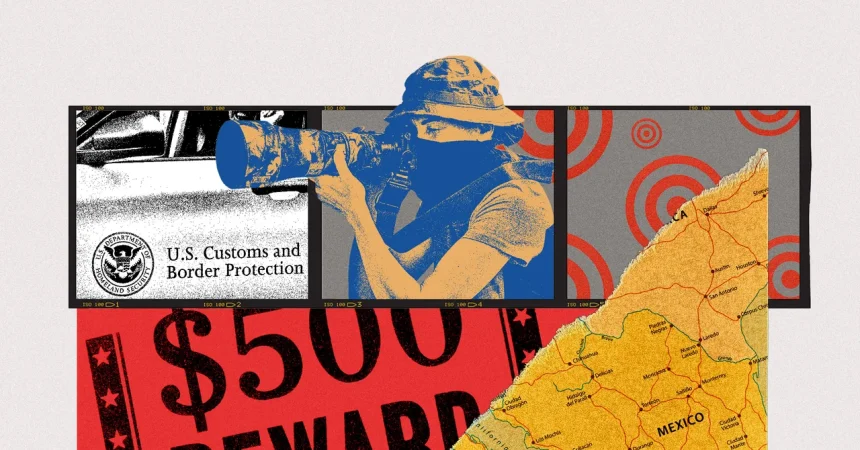
The United States government, specifically Customs and Border Protection (CBP), is undertaking a controversial expansion of its debt collection efforts by hiring private investigators to track down deported immigrants and individuals who have already left the country. Under the “Tracing and Payment Recovery Services” program, which has been allocated a budget of up to $9 million over two years, the agency intends to use contractors to locate these individuals in Mexico, Honduras, Guatemala, and potentially other nations. The objective is to force these individuals to pay outstanding fines allegedly owed to the U.S. government, using methods that involve “physical observation,” such as taking photographs of private residences and verifying utility bills or employment records to confirm their presence abroad.
The scope of the financial penalties driving this program is staggering. The Department of Homeland Security (DHS) has issued over $84 billion in fines against immigrants accused of failing to depart the U.S. on time, utilizing a previously dormant provision of a 1996 immigration law. These fines accrue at a rate of nearly $1,000 per day for up to five years, leading to individual debts that can reach as high as $1.8 million. The practice has drawn severe criticism, as legal experts argue these fines are less about actual fiscal recovery and more about creating a climate of fear. By resorting to private investigators who must serve official notices in English and Spanish, the government is essentially extending its enforcement reach far beyond its own borders, creating a global dragnet for people who are often already struggling to survive in the countries they were sent back to.
For those still within the U.S. system, the impact of these fines has been devastating. Immigrant advocacy groups, such as the Legal Aid Society and the NYU School of Law’s Immigrant Rights Clinic, have documented instances where individuals have faced wage garnishment, the seizure of tax returns, and the total destruction of their credit scores. Some collection agencies have even tacked on hundreds of thousands of dollars in administrative fees, compounding the financial burden on families who are often ill-equipped to challenge these notices. Legal scholars argue that the process circumvents fundamental due process rights, characterizing the program as a heavy-handed tactic of intimidation designed to coerce people into self-deporting rather than a legitimate regulatory procedure.
A particularly complex aspect of this strategy is the “clean slate” promise tied to the CBP One app. While the government claims that failure-to-depart fines can be forgiven if an individual self-deports using this digital tool, the waiver comes with significant caveats. A separate, congressionally mandated fee of over $5,000—applied to those arrested by ICE after being ordered removed in absentia—cannot be waived. This leaves many immigrants in a “catch-22” scenario where they may comply with government demands to leave, only to discover they remain tethered to the U.S. financial system by insurmountable debt. Experts suggest that this approach signals a “significant escalation” in immigration policy, likely intended to serve as a long-term deterrent for those considering migration to the United States.
Despite the significant investment and the aggressive nature of these new contracts, the effectiveness of the program remains highly questionable. Prior to this, three debt collection agencies working with the CBP attempted to reach individuals overseas via letters and phone calls; as of this summer, they had failed to locate a single person. There is also a major diplomatic question mark regarding these operations, as the foreign ministries of Mexico, Guatemala, and Honduras have remained silent on whether they were even consulted by the U.S. government regarding the presence of foreign investigators operating on their sovereign soil. The logistics of enforcement are inherently flawed, as many of these individuals left the U.S. precisely because they lacked the means to survive there, making it unlikely they possess the funds to pay millions in penalties while living in countries with vastly different economic realities.
Ultimately, the program raises serious moral and practical questions about the reach of the U.S. government. Critics, including immigration attorneys, point out the absurdity of spending millions in taxpayer money to hunt down individuals who, by the government’s own admission, have already been removed from the country. By prioritizing the pursuit of life-altering debts over more productive policy solutions, the program appears to prioritize punitive theater over actual governance. As the legal challenges to these fines mount, the move to hire private eyes to operate in foreign territories underscores a hardening stance that seeks to penalize migrants long after they have left U.S. borders, raising concerns about the limits of government power and the human cost of these aggressive fiscal policies.