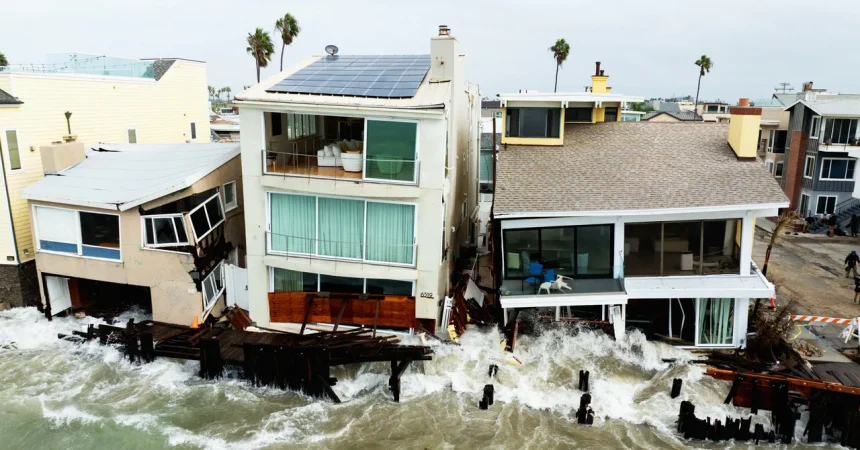
Imagine for a moment that the Earth is a patient in a hospital gown, sitting on the edge of an exam table. It’s time for the annual physical, and the doctor comes in with a clipboard and a grave expression. “I wouldn’t say this is hopeless,” the doctor says, “but your condition is serious, and it’s getting worse.” That’s essentially the message from Oregon State University researcher Bill Ripple and his colleagues, who have just published the planet’s latest climate checkup in the journal BioScience. The report doesn’t rely on vague anxiety or anecdotal weather stories; it looks at hard numbers, a set of sixteen planetary vital signs that scientists have been tracking for years. This year, seven of those sixteen indicators have hit their most extreme state since researchers began measuring them. Not just abnormal. Not just concerning. The worst they’ve ever been. If these were the vital signs of a human patient, there would be no debate about whether to admit them to the hospital. There would be alarms going off, specialists called in, and a serious conversation about what needs to change before it’s too late. Vital signs are the basic measurements that tell a doctor how the body is doing. For the Earth, they include the level of carbon dioxide in the atmosphere, the mass of the polar ice sheets, the temperature of the oceans, the extent of sea ice, the health of forests, the rate of sea-level rise, and the frequency of extreme weather events. Together, they paint a picture of a body under stress. The phrase “not looking so hot” has never felt more literal. The climate isn’t just changing in some abstract, distant way; it’s shifting in ways that are measurable, visible, and increasingly dangerous. And what the latest checkup shows is that while a few indicators are stabilizing or even improving, the overall trend is unmistakable: the patient is deteriorating, and the window for turning things around is narrowing.
Start with the most basic blood test a climate doctor would order: the amount of carbon dioxide in the atmosphere. That number is now about fifty percent higher than it was before the industrial revolution, when humans began pulling coal and oil out of the ground and burning them at staggering rates. Fifty percent higher doesn’t sound like much until you think about what it means for a system that is exquisitely sensitive to change. Every extra molecule of carbon dioxide acts like a blanket, trapping heat that would otherwise escape into space. The patient, in other words, is running a fever. The polar ice sheets in Greenland and Antarctica, which act as the planet’s cooling system, have shrunk to record lows. The oceans, which absorb most of the excess heat, have reached record high temperatures. The pace of warming has accelerated dramatically over time. From 1880 to 1970, global temperatures rose by roughly 0.05 degrees Celsius per decade. Since 2010, that rate has jumped to about 0.36 degrees Celsius per decade, more than seven times faster. That acceleration is not just a statistical curiosity. It’s the difference between a world where gradual change gives species time to adapt and a world where heat arrives so quickly that ecosystems and communities are overwhelmed. It’s also compounding, meaning the longer we wait, the harder it becomes to stop the momentum. If this were a human fever, a doctor would be worried about organ failure. The Earth’s overall average temperature, including all the land and ocean surfaces, hasn’t quite hit a record extreme yet. But that could change by the end of the year, as a powerful El Niño builds in the Pacific and injects even more heat into the atmosphere. The fever is climbing, and there’s no easy medicine on the horizon. This is not a moment for denial or delay; it’s a moment to take the prescription seriously.
One of the most urgent complications in this year’s checkup is El Niño. El Niño is a natural climate pattern, and it can sound almost cozy, like a warm blanket over the Pacific Ocean. In reality, it’s a powerful disruption. Normally, trade winds push warm water across the Pacific toward Asia. During El Niño, those winds weaken, and warm water sloshes back toward the Americas, releasing enormous amounts of heat and moisture into the atmosphere. The result is a planet that runs even hotter than usual, with all sorts of knock-on effects: droughts in some places, floods in others, extra stress on ecosystems that are already struggling. This year’s El Niño is shaping up to be one for the record books. That’s a little like telling an already feverish patient they’re about to catch the flu. Bill Ripple, the lead author, puts it plainly. A strong El Niño could temporarily push global temperatures even higher, he says, while bringing additional heat and drought to vulnerable regions. And he adds an important caveat: El Niño is a natural phenomenon, but it’s now occurring on top of a much warmer planet. That makes its impacts potentially more dangerous. In other words, the same natural cycle that has come and gone for millennia is now operating in a radically altered environment. The baseline is higher. The stakes are higher. And the patient has very little margin for error. It also means that communities that have been through El Niño before cannot simply rely on past experience. The same pattern that once produced a manageable drought or a mild heat wave is now more likely to produce something extreme, something outside the range of normal memory. The atmosphere holds more moisture, the oceans hold more heat, and the land is more degraded, so the same trigger produces a bigger, more dangerous response.
Some of the most heartbreaking symptoms are showing up in the living parts of the planet, the organs that keep the Earth breathing. Coral reefs are among the first to suffer. When ocean temperatures rise too high, corals expel the tiny algae that live in their tissues, turning ghostly white in a process known as bleaching. A bleached coral isn’t necessarily dead, but it’s gravely weakened. With each successive wave of bleaching, reefs become less resilient, less able to recover, less able to support the incredible diversity of life that depends on them. If the planet warms beyond 1.5 degrees Celsius above pre-industrial levels, most of the world’s coral will almost certainly not survive. That’s not a distant possibility; it’s a future we’re walking toward with every ton of carbon we emit. Tropical forests face their own crisis. In the Amazon, El Niño tends to bring dry weather, and this year the timing could be especially disastrous. The region, often called the world’s lungs, is already under intense pressure from logging and mining interests. There is also the possible return of a right-wing government in Brazil that has signaled it will prioritize extraction and land clearing over conservation. The combination of human destruction and natural drought is a one-two punch. The new report warns that the Amazon is among the ecosystems at risk of crossing a tipping point, a threshold where it would shift from lush rainforest into something closer to dry savanna. That isn’t likely to happen overnight, or even this year, but every year of warming and deforestation edges it closer. Ripple expresses his concern directly: “Warming, drought, and deforestation could push the Amazon toward widespread forest degradation,” he says. “My concern is that these changes could interact, making them increasingly difficult to stop.” It’s a stark way of saying that ecosystems don’t decline in straight lines; they can reach a breaking point, after which collapse becomes irreversible.
There is, to be fair, a little good news in the report, and it’s worth acknowledging. Carbon-free forms of energy are playing a bigger role in the power grid than ever before. Solar panels and wind turbines are no longer niche experiments; they’re major sources of electricity in many parts of the world. The report even calls this the “Age of Electricity,” a nod to the slow but real shift away from burning fossil fuels for our power. That’s a significant step, like a patient finally agreeing to switch from a sedentary lifestyle to taking a daily walk. But here’s the problem: the patient is still smoking a pack a day. Annual greenhouse gas emissions are at record highs. Not plateaued. Not gradually declining. Record highs. Every year, humans extract and burn immense amounts of fossil fuels, and the resulting emissions are still climbing. The growth of renewables is real, but so far it’s being added to the system rather than replacing fossil fuels at the scale needed. In other words, despite all the solar farms, wind turbines, and electric vehicles that have come online, the world is still pumping more carbon into the atmosphere every year than ever before. The healthy choices we’re making are real, but they aren’t yet anywhere close to offsetting the damage we’re still doing. Ripple sums it up with a careful tone: “There are some encouraging signs, especially the growth of renewable energy, but they aren’t yet enough to reverse the overall deterioration.” It’s the kind of comment that might come from a doctor who has watched a patient cut back on sugar but continues to drink heavily. Every bit of progress matters, but no amount of incremental improvement is going to help if the underlying disease is still spreading. The diagnosis demands more than a slight adjustment; it demands a fundamental change in behavior.
This checkup is more than a collection of graphs and data points, and it’s more than a warning for some distant future. It’s a snapshot of the home we all share, and the patient is us. The metaphor of the annual physical is useful because it reminds us that we don’t have to be passive. When a doctor tells you your blood pressure is dangerously high, you can ignore it, or you can change your diet, start exercising, take your medication. The choice is still available, even if the window is getting smaller. The planet doesn’t have a choice about whether to follow the laws of physics; it inevitably does. We have a choice about whether to change course, but the decision cannot be postponed indefinitely. Every year of delay means another year of accumulating heat, another year of lost ice, another year of stress on every living system. Ripple’s final message leaves no room for complacency: “The climate emergency is not something waiting for us in the future. We are already living through it.” That means the wildfires, the hurricanes, the floods, the heat waves, the bleached reefs, and the shrinking ice sheets are not previews or metaphors. They are the immediate, tangible cost of the way we live. The report is an avalanche of bad news, but it’s also an invitation to pay attention before it’s too late. We can argue about which exact policy is best, or we can keep debating whether the patient is truly sick. But the vital signs are right there in the chart, measured by scientists, published in journals, and read by anyone willing to look. The question is whether we will act like the patient who hears the doctor’s warning and walks out of the office determined to do better. The Earth doesn’t need a new annual physical next year to tell us what to do. We already have all the information we need. What’s missing is not diagnosis. It’s treatment.