Paragraph 1: The Long Wait is Finally Over
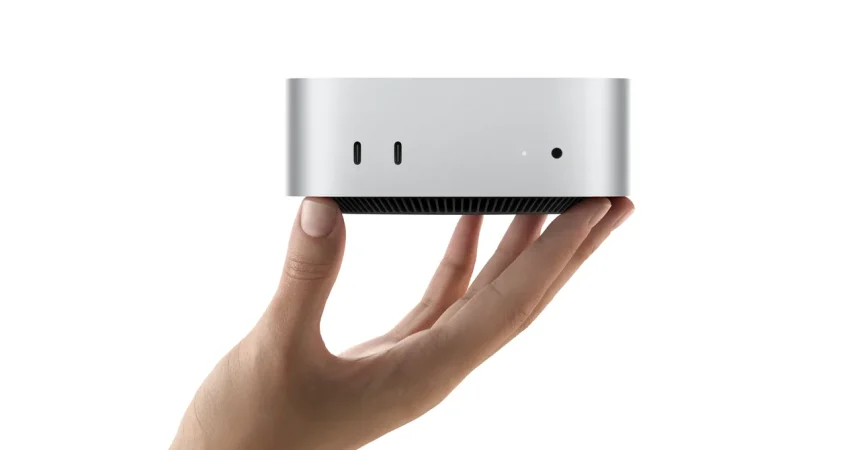
After months of patience, Apple has finally taken the wraps off the brand-new Mac Mini and Mac Studio, and for anyone who has been wrestling with a surrendering laptop, this feels like a long-awaited breath of fresh air. It is no secret that these machines had been exceedingly difficult to find for the better part of this year, as demand outstripped supply, leaving both creatives and everyday professionals checking inventory pages with a sense of frustration. Now, with this announcement, those who’ve been hanging onto an older machine can find a way forward. Outwardly, neither computer has changed its silhouette; the Mac Mini remains that compact, slightly mysterious little silver brick, and the Mac Studio continues to be a substantial yet unobtrusive box for the serious artist or engineer. But underneath the aluminum, the story is entirely different. This update isn’t about breaking new ground in industrial design; it’s about breaking barriers in performance. The biggest star is the introduction to the M6 chip, a piece of silicon that isn’t just for these desktops; it’s a harbinger of what we will all be carrying in future MacBooks. It’s a step forward that effectively puts the entire computing world on notice, and it shows that Apple intends to keep quietly dominating the desktop market with sheer internal muscle rather than flashy outer changes.
Paragraph 2: A Deeper Look at the M6 and the Core Power Within Let’s dive into the heart of the matter—the new Mac Mini. The lineup is fascinating because Apple has chosen to skip the naming convention entirely with the M5 for the base model, instead going straight to the M6, while also offering the more familiar M5 Pro for those who want a direct upgrade from the previous generation. What makes the new M6 so special is that it is the very first Apple Silicon chip to be built using the leading-edge 2-nanometer process technology, a feat of engineering which allows for more transistors squeezed into the same tiny footprint. This isn’t just a ceremonial thumbs up for science either; the numbers speak a tantalizing language. The M6 is a 12-core behemoth, which is a new riot for Apple’s lineup, and it is cleverly split into an unusual configuration: it has two “super cores,” four “performance cores,” and six low-power efficiency cores. The introduction of those four performance cores is the hottest new addition, engineered specifically to tear through multithreaded work, handling sustained bursts of complex calculations while telling the battery (in laptops) not to panic over the juice drain. Practically speaking, Apple claims this impressive brain performs twenty percent faster than the M5 in heavy, multithreaded workloads, and a full forty percent faster than the previous M4 generation (the one it replaces). For the average user, those percentages translate into video timelines that crunch without choking, large spreadsheets that react instantly, and coding projects that compile before you find time for your coffee break. The sheer elegance of the design here shows you that Apple is no longer just about the output professions; they are pushing the Maths.
Paragraph 3: Graphics, Neural Engines, and an Interesting AI Deal
But the M6 chip doesn’t just focus on the CPU, it also overhauled the graphics side of the story. The new GPU has been boosted up with two additional cores, bringing the total to a register of twelve. While the count might not leap forward as aggressively as the CPU numbers, the fine tuning within those cores makes the laptop a genuinely competent machine for gaming and creative acceleration tasks. Apple claims the M6 is roughly twice as fast overall when held up next to the M4 Mac Studio, which is a wild claim of the mark, but one that holds through the weight of the other enhancements. And we must also mention the first-time appearance of the “Neural Accelerators” within a Mac Mini. After debuting in the M4 chip last year, these specific accelerators are dedicated to ramped up machine learning and AI tasks, such as running notoriously heavy open-source language models or performing local image generation. In a clever move, Apple gave this Mac a “dual 16-core Neural Engine,” effectively the power of two neural engines working in sync. That component alone doubles the peak AI performance compared to the previous generation. All of this means that our little mini is no longer just a good “web machine”; it is a serious on-device powerhouse for anyone dabbling in the near future of artificial intelligence, at least in the local, private, and offline sense. And all this power lives in a box that’s smaller than the average cardboard lunch box.
Paragraph 4: The Price Escalation and the Value Proposition
Of course, power has a premium attached to it. While the specifications have risen to impressive pilots, the starting price of this machine has unfortunately increased as well. The new M6 Mac Mini now begins at $to $899, a $200 jump from the previous generation. Considering inflation and the delivery of immense performance, this feels inevitable, but it stings for those who have traditionally looked at the Mac Mini for years as the budget-friendly option in the Mac ecosystem. The entry model does come with 16GB of unified memory — Apple recognizes that a lot of tough athletes nowadays need that baseline just for the basic operation of Webel and memory for apps, and it seems they are moving away from the 8GB standard. The real beauty of this structure is that you can still configure the Mini all the way up to 32GB of RAM, which would turn it into as substantial a workstation as some mini towers. Moreover, Apple has doubled down on the speed of that memory, explaining that the memory bandwidth is now the highest this machine has ever seen, topping out at roughly 170 GB/s, which sounds monstrous to the ordinarys. It’s a vivid purchase: you pay 200 dollars more, but you get a pretty big performance bump in return that allows your machine to handle heavy streaming daily tasks despite the small size of the chassis.
Paragraph 5: The Mac Studio Unleashes the M5 Ultra Monster
Switching up to the larger Mac Studio, the renewal is a triumphant step forward for pro users. The Studio comes with two processor choices this year: the M5 Max and the new M5 Ultra. If that turns out to be the most physically powerful configuration in Apple’s entire consumer library, the M5 Ultra is must considered the “Beast mode.” For years, Apple’s professional “UltraYou make the chips by taking a slice of the Max chips and gluing them together, but this time, the architecture has radically changed. Because the M5 Max chip was assembled on a “dual-die” configuration internally, joining two of these Max chips together now leaves you with a quad-die monster. To ensure those four distinct pieces communicate perfectly, Apple has implemented the next version of their UltraFusion interconnect, a high-speed data link system that allows the central processor to see all its parts as one single, cohesive large chip. The raw bandwidth low at over 4.4 terabytes per second, which is a staggering number, but it boils down to this: there is no communal inefficiency. The Mack Studio Ultra features a 36-core CPU up from 32, and keeps the wall – an 80-core GPU. While the GPU core count remains identical to its predecessor, the M3 Ultra, it is imperative to point out that the actual architecture is far more efficient per clock, able to leverage M5-specific improvements to render engines and shader pipelines, meaning it performs even better, silicon per silicon.
Paragraph 6: The Practical Housekeeper and Muscular Move Forward
So what does this all mean in the reality of your desk? With the M5 ultra, you can now treat the Mac Studio as the ultimate neutral command center for visual effects, large scale 3D renders, and uncompressed 8K video editing. The whole system acts like a spaceship while still managing to generate far less heat and noise than any equivalent PC tower you would put beside it. It is a testament to Apple’s deep vertical integration of hardware and software, that they can produce this level of power in a relatively modest box. On the other side, the Mac Mini now moves from a peripheral environment into a true editing suite. The quiet design, the restrained energy consumption, and the absence of screaming fans makes it the perfect computer to sit on your desk while you get from work. More important, the new M6 chip sends a massive message about the future: it is the foundation upon which the previously earned MacBook Pro and MacBook Air will be built, probably within a year. By delivering this performance at a desktop price point first, they are giving us a taste of the be more powerful notebook. So, although the minis and studios don’t have new flat faces or colorful skins, their internal improvements are a quiet but almighty statement. Apple hasn’t just restocked his shelves; they’ve redefined what a compact desktop can do, ensuring that pure, raw power becomes the highest language in the upcoming generation.