For centuries, the doctor’s physical examination has remained a stagnant ritual, relying on the same basic tools—a glance at the throat, a listen to the heart—that physicians have used since the dawn of modern medicine. While these methods are foundational, they often rely heavily on the subjective intuition of the practitioner. However, beneath the surface of the human throat lies a wealth of biological data that has long remained untapped. Recognizing this, Japanese innovator Sho Okuyama, a former emergency physician with firsthand experience in the limitations of rural medicine, founded the company Iris. His mission was to drag the traditional physical exam into the digital age by teaching artificial intelligence how to “see” the throat in ways no human eye could hope to achieve.
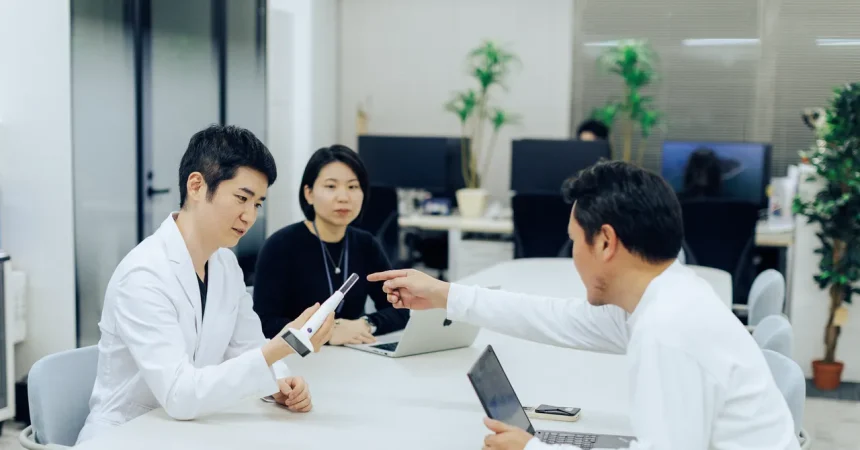
The result of this ambition is a device called Nodoca, a compact, camera-equipped tool that transforms a routine checkup into a high-speed diagnostic event. By capturing high-resolution images of the pharynx and combining them with patient interview data, the system provides an influenza assessment in barely ten seconds. Beyond its speed, the device represents a profound shift in patient comfort; it renders the invasive, uncomfortable nasal swab—a staple of flu testing—obsolete. This innovation not only streamlines the clinic workflow but allows for detection at much earlier stages of infection, potentially curbing the spread of illnesses before they become unmanageable.
The path to success was far from linear. When Iris was founded in 2017, the medical world lacked the “training data” necessary to teach an AI how to distinguish between healthy tissue and a pathogen-infected throat. Undeterred, Okuyama personally oversaw a three-year project, partnering with 100 medical institutions to collect millions of anonymized images. By building his own custom hardware and navigating the immense regulatory hurdles of the Japanese healthcare system, Okuyama achieved a landmark in 2022: Nodoca became the first AI-equipped medical device in Japan to receive official approval and national health insurance coverage. It now serves over 2,000 clinics, with its capabilities expanding in 2025 to include the detection of Covid-19.
What makes Nodoca truly formidable is its “network effect.” Because the system learns from every patient interaction, its diagnostic accuracy improves with every use. What began as a few hundred thousand images has evolved into a dataset of several million, creating a massive technological moat that makes it incredibly difficult for competitors to catch up. This continuous cycle of improvement demonstrates the power of AI not as a static tool, but as a living, learning extension of the physician’s own expertise. It is a testament to how hardware and software, when designed in tandem, can turn a simple observation into a sophisticated scientific analysis.
Looking toward the horizon, Okuyama sees the throat as a window into the body’s systemic health far beyond simple infectious diseases. His team is currently exploring how the patterns within mucosal tissue and blood vessels might indicate the early stages of chronic conditions, such as diabetes and hypertension. He envisions a future, perhaps only a decade away, where a single, rapid photograph of the throat acts as a comprehensive health screen. Because the cost of AI inference is remarkably low, this high-tech approach could eventually provide a scalable, low-cost solution to some of the world’s most taxing healthcare burdens, democratizing access to high-quality diagnostics.
Ultimately, Okuyama’s vision is not merely about selling a device; it is about “redesigning” the entire architecture of healthcare. He imagines an ecosystem where AI seamlessly integrates into every stage of the patient journey—from the initial automated medical interview and remote consultation to the final point of care with a primary physician. By actively lobbying for regulatory reform and pushing for a more digitized medical infrastructure, Okuyama is working to dismantle the barriers that keep medicine tethered to the past. He is not just treating throats; he is building a framework for a more efficient, proactive, and compassionate medical system that puts the power of discovery directly into the hands of those on the front lines of care.