Let’s be honest: shopping for a mattress can feel like dating. You’re looking for something that supports you, doesn’t keep you up at night, and doesn’t make you wake up in a bad mood. And just like dating, there are deal-breakers. For some people, the biggest issue is temperature. If you’re someone who wakes up in the middle of the night feeling like you’ve been sleeping on a heating pad, you already know how miserable a hot bed can be. Memory foam has a reputation for being cozy and contouring, but it also tends to trap body heat. That can be fine in winter, but in summer, it’s a nightmare. If you’re a sweaty sleeper, you’ll want to steer toward latex or hybrid mattresses, because both allow much better airflow than traditional foam. Latex has an open-cell structure that lets heat escape, and hybrids usually combine foam with coils, leaving channels for air to circulate. That said, memory foam isn’t necessarily a lost cause. Some newer foam mattresses use special cooling features like gel infusions or phase-change materials, which are designed to pull heat away from your body as you sleep. Those can make a big difference if you love the feel of foam but hate waking up drenched. Temperature isn’t the only thing that can ruin a good night’s sleep. If you share your bed with a partner, motion transfer is often just as important. You don’t want to be woken up every time your partner rolls over or gets up to use the bathroom. Memory foam is fantastic at absorbing movement, so if one person tosses and turns, the other side of the bed stays calm. Pocketed coils are also good, offering a bit more bounce without making the whole mattress wiggle. Innerspring mattresses, on the other hand, are the bounciest of the bunch, and they can ripple like a trampoline when someone moves. And then there’s firmness, which can be the biggest disagreement of all. If one of you likes a cloud and the other likes a board, a split mattress or an adjustable bed with different firmness settings on each side might save your relationship.
That brings us to the modern hero of the mattress world: the hybrid. Traditional coil mattresses have evolved into these clever combinations, and if you walk into a mattress store today, you’ll find that hybrids are everywhere. The beauty of a hybrid is that it lets you sample the best parts of different materials in one single bed. You can choose a layer of memory foam for pressure relief, a layer of latex for a little responsiveness, and a coil core underneath for support. Many reviews like to call hybrids the “best of both worlds,” and there’s a reason that phrase gets thrown around so much. With a hybrid, you’re not forced to commit to one material philosophy. You can get the soft, hugging sensation of foam or the springy, buoyant feel of latex, but you don’t have to sacrifice the sturdy support of coils. This makes hybrids incredibly customizable. You can pick your top layer based on how you like to sleep, whether that’s side, back, or stomach, and you can pick the coil system below based on how much support and bounce you want. If you’ve ever felt like you couldn’t find a mattress that matched your specific needs, a hybrid is usually the answer. It’s like building a sandwich exactly the way you want it, except instead of choosing bread and cheese, you’re choosing foam, latex, and coils. And because the top layers can be swapped or adjusted, manufacturers can fine-tune the feel more than they could with a simple innerspring or a slab of foam. That flexibility is a huge part of why hybrids have become the default for so many people. They’re not overly soft, not overly hard, and they tend to perform well across the board. Whether you want a plush, pillowy surface or a firmer, more supportive bed, there’s almost certainly a hybrid out there with your name on it. Even better, hybrids can address both a hot night and a restless partner in the same package, because the coil core creates airflow and the foam layers kill motion. It’s no wonder they’ve become the go-to choice for modern sleepers.
Now, let’s talk about what’s actually inside those hybrids, because not all coils are created equal. The old-school coil design, called Bonnell coils, is what you remember from the creaky mattresses of your childhood. Those coils are all connected to each other, both side to side and end to end, which means they move together as one big unit. When you lie down, your weight pushes down on several coils at once, and they all compress together. That can feel firm and supportive, but it also means motion travels easily, and there’s little to no targeted pressure relief. Modern hybrids, thankfully, have upgraded to something called pocketed coils, also known as individually wrapped coils. Each coil is placed inside its own little fabric pocket, completely separate from the coils around it. Because they aren’t connected, each coil can compress independently based on the amount of pressure placed right on top of it. That’s incredibly useful for areas where your body is heavier, like your hips and shoulders, because the bed can adjust to your shape instead of fighting against it. Where you’re heavier, the bed will naturally feel a little firmer, and where you’re lighter, it stays a bit softer. That targeted support is one of the main reasons pocketed coils are considered such an upgrade. They also do a much better job with motion isolation. When you roll over or get out of bed, only the coils directly under that movement shift; the rest of the mattress doesn’t care. Traditional interconnected coils, by contrast, almost seem to enjoy spreading the news. Move a little, and the whole bed quivers. So if you’re sleeping with a partner, pocketed coils are a dream because they let you move without waking someone up on the other side. They also tend to be more durable than their old-fashioned counterparts, and they provide more consistent support over time. All of this makes pocketed coils the gold standard in modern mattress design, and one of the first things you should check for when you’re reading those mattress labels. If you see “pocketed” or “individually wrapped,” you know you’re getting a mattress that was built with real thought for how a body actually sleeps.
One of the most common questions people ask about hybrid mattresses is whether they need a box spring. The short answer is no, and the longer answer is a little surprising. Box springs were originally designed for traditional coil mattresses, and they served an actual purpose. They were built to align with the coils in the mattress and provide extra support, and they also acted as a shock absorber of sorts. Back in the day, a mattress without a box spring would sag and wear out much faster. But hybrid mattresses with pocketed coils don’t need that extra layer. In fact, using a box spring with a hybrid can actually void your warranty. That’s right, you could be doing something that you think is helpful, and it could come back to bite you when you try to file a warranty claim. Manufacturers today usually recommend putting a hybrid on a solid foundation, like a platform bed or a slatted frame with slats that are close enough together to support the mattress evenly. Some people still have a mental picture of a bed needing a box spring because that’s what their parents had, and they assume it’s a standard part of every bed. But in the modern mattress world, box springs are becoming obsolete. The coils in hybrids are self-contained, and they provide their own support. So unless the manufacturer explicitly says otherwise, you can skip the box spring and save yourself the money, not to mention the risk of ruining your new mattress warranty. It’s one of those little things that can make a big difference in your buying experience. When you get your new hybrid home, you don’t have to worry about finding a matching box spring or wondering if the base you already have is compatible. You just put it on a sturdy foundation and go to sleep. That said, it’s always worth reading the fine print on your specific mattress, because different brands recommend different foundations. Some are fine with a platform, others want a special base, and some have very specific requirements about slat spacing. It’s annoying, but it’s also worth it. A quick check of the manual can save you from a long, unpleasant customer service call later. In any case, say goodbye to the box spring era. Your hybrid is fully capable of standing on its own.
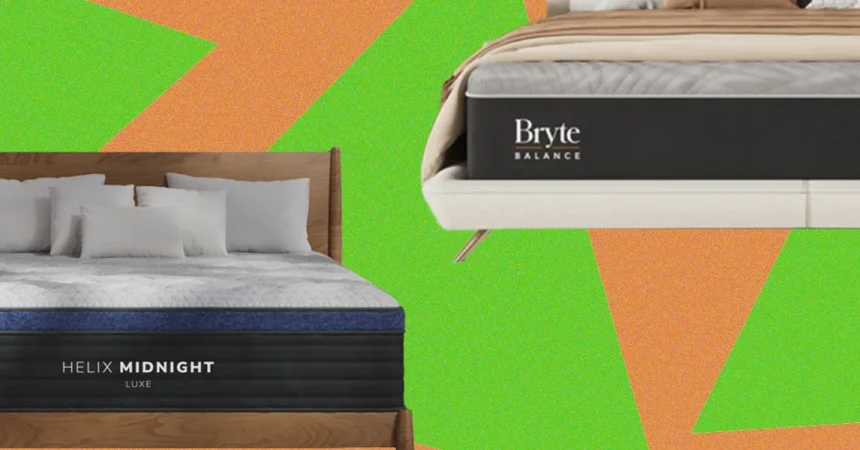
If you want some real-world examples of great hybrids, we’ve tested quite a few, and a couple of standouts are worth mentioning. The Helix Midnight Luxe is our top overall pick in our Best Mattresses guide, and it’s easy to see why. It combines pressure-relieving foams with pocketed coils to deliver targeted lumbar support, which is exactly what most people need. The foams on top are soft enough to cushion your shoulders and hips, while the coil layer underneath keeps your spine aligned. It’s a balance that’s hard to get right, but the Midnight Luxe does it beautifully. The brand even offers an optional ErgoAlign upgrade, which adds even more support in the lumbar area. For people who struggle with lower back pain, that extra attention can be a game-changer. Another awesome hybrid we’ve tested is the Nolah Evolution. This mattress puts together some genuinely wonderful memory foam with pocketed coils, and the two work together to counteract tension buildup across your pressure points. If you’re a side sleeper, this bed is particularly lovely because the foam cushions the extra pressure on your shoulders and hips, which are the spots that typically hurt the most when you sleep on your side. But it also works well for back and stomach sleepers, making it a versatile choice for many people. The coils give it a bit of ease when you move around, which is helpful if you tend to shift positions during the night. And for co-sleepers, that combination of pressure relief and easy movement is a huge win. When you share a bed, you don’t want to feel like you’re trapped in quicksand every time you roll over. The Nolah Evolution gives you enough responsiveness that you can move freely, while still keeping your partner comfortable. It’s one of those mattresses that seems to have thought of everything, and it’s another great example of why hybrids have become so popular. There’s no one-size-fits-all recommendation, but if you’re looking for a proven performer, these two are excellent places to start.
And finally, let’s take a moment to honor the old-school innerspring mattress, because it’s more than just a mattress; it’s a piece of history. The traditional innerspring is the bed you probably remember from your grandparents’ house, the one that felt rock hard and creaked every time you moved. It’s the original coil mattress, made up of a layer of innerspring coils wrapped in a thin cover, with no fancy foam, no gel, no phase-change fabric. The coils used in these mattresses are the Bonnell coils we mentioned earlier, and they are connected to each other both laterally and vertically. That means when you lie down, your weight presses into the mattress and all of those coils act together. They compress as one unit, responding as if they were a single giant spring. This design has some real advantages. For one, it’s highly responsive. When you move, the mattress pops right back into its original shape, giving you near-instantaneous support. If you’re the kind of sleeper who rolls from side to back to stomach throughout the night, that responsiveness can be a good thing because you’re never left waiting for the bed to catch up with you. However, the old innerspring design doesn’t do much for pressure relief. Because all the coils work together, they don’t conform to your body the way modern pocketed coils do. You might feel like you’re lying on top of the bed rather than in it, and that can lead to achy joints and a restless night. It’s also, as you probably remember, squeaky. The interconnected coils rub against each other when they compress, and that creaky sound can become a soundtrack to your sleep. In many ways, traditional innersprings have been left behind by the newer, smarter designs, but they’re still worth understanding because they explain so much about how mattresses have evolved. The hybrid was invented to solve the innerspring’s weaknesses, keeping the support and responsiveness while adding the comfort and pressure relief of foam and latex. So when you lie down on a modern hybrid, you’re really feeling the result of decades of innovation. It’s progress that you can actually feel, and your sleep is all the better for it.