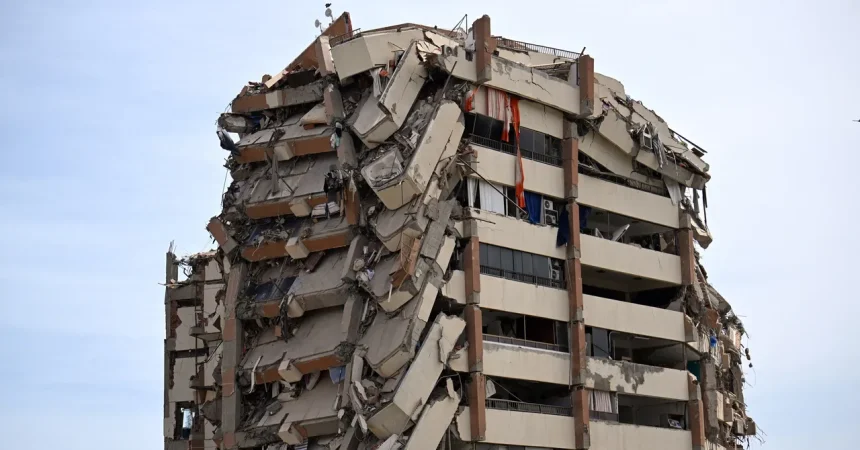
The nation of Venezuela has been plunged into a state of emergency following a terrifying seismic event that has left both geologists and the local population reeling. This past Wednesday, the earth beneath the country violently shifted, not once, but twice, with two massive earthquakes of 7.2 and 7.5 magnitude occurring just 39 seconds apart. This rare and devastating event, scientifically dubbed a “seismic doublet,” sent shockwaves through the region, with the tremors being felt as far away as the capital city of Caracas and across several Caribbean nations. For the people on the ground, those few seconds of relative quiet between the initial jolt and the second, even larger impact felt like an eternity, turning a moment of standard alarm into a full-scale humanitarian crisis as buildings succumbed to the forces of nature.
The epicenters of these tremors were located northwest of the town of Yumare, near the city of Morón, at depths ranging from 10 to 20 kilometers. Because of their proximity to populated areas, the structural integrity of much of northern Venezuela has been challenged. Images emerging from areas like Catia La Mar show the chilling aftermath of these ruptures, with apartment buildings left severely compromised, serving as a stark reminder of how quickly our modern infrastructure can be dismantled by the power of the Earth’s crust. While the USGS estimates that the chances of an earthquake being followed by an even larger one within a week are generally slim—hovering around 5 percent—this particular event defied the statistical norm, turning that rare probability into a harsh, immediate reality for the Venezuelan people.
To understand how this nightmare unfolded, experts are looking to the mechanics of tectonic stress. A seismic doublet is not merely two random quakes; it is a domino effect of geological instability. When the first earthquake ruptured a segment of the fault, it did not just release energy; it redistributed the immense pressure accumulated over years onto an adjacent fault line. Like a stretched rubber band suddenly snapping and causing the one next to it to fray, the first rupture effectively triggered the second. This mechanism is similar to the tragic events seen in Turkey and Syria three years ago, where a 7.6-magnitude quake primed the environment for a 7.8-magnitude successor, illustrating how fault lines can communicate this lethal energy across distances.
The geological makeup of Venezuela provides the setting for this volatility. According to Professor Mark Allen of Durham University, the epicenter sits squarely on the plate boundary where the South American plate meets the Caribbean plate. This boundary is characterized by lateral movement, much like the famous San Andreas Fault in California. In these regions, tectonic plates are constantly grinding against one another sideways, building up friction that cannot be released gradually. When that friction finally overcomes the strength of the rock, it produces strike-slip earthquakes. These events are particularly dangerous because they occur horizontally along the crust, releasing centuries of accumulated stress in a matter of seconds, leaving very little time for early warning systems or emergency preparation.
As the country navigates this national emergency, the scientific community is using this event as a critical case study to better understand how stress migrates through the Earth’s crust. While we often view the ground beneath our feet as solid and permanent, these doublets remind us that the planet is dynamic and constantly shifting. The interaction between these faults is a complex puzzle, and every doublet provides new data on how to predict—or at least better prepare for—such double-strike disasters. For the residents of Venezuela, however, the academic interest in these geological phenomena is secondary to the immediate tasks of rescue, recovery, and the long road of rebuilding homes that the tectonic plates have turned into rubble.
Ultimately, this disaster underscores the vulnerability of our built environment against the raw, unyielding nature of plate tectonics. The suddenness of a 39-second interval between these massive quakes serves as a sobering lesson in the limits of human anticipation. As Venezuela begins to assess the damage and support those displaced by the destruction, the rest of the world watches with empathy and scientific interest alike. We are reminded that we share our world with a powerful, living planet, and that our best defense against such surprises is to study these patterns carefully, hoping that the knowledge gained today leads to more resilient infrastructure and better safety protocols for the communities living along the world’s most active fault lines tomorrow.