It was a quiet September morning in Fano, a coastal town in Italy, when healthcare staff began noticing a cluster of patients arriving with identical, troubling symptoms. What started as localized cases of fever, nausea, and a distinct rash on the extremities quickly turned into a medical mystery. Initially, doctors were baffled, scouring test results for common local ailments. When a positive result for dengue fever finally arrived, it sent a ripple of concern through the clinic. Dengue is a virus typically associated with sweltering, tropical climates far from the Mediterranean, yet here it was, manifesting in people who hadn’t stepped outside of their own country. The common thread was a single neighborhood, revealing that the infection wasn’t being imported—it was being homegrown.
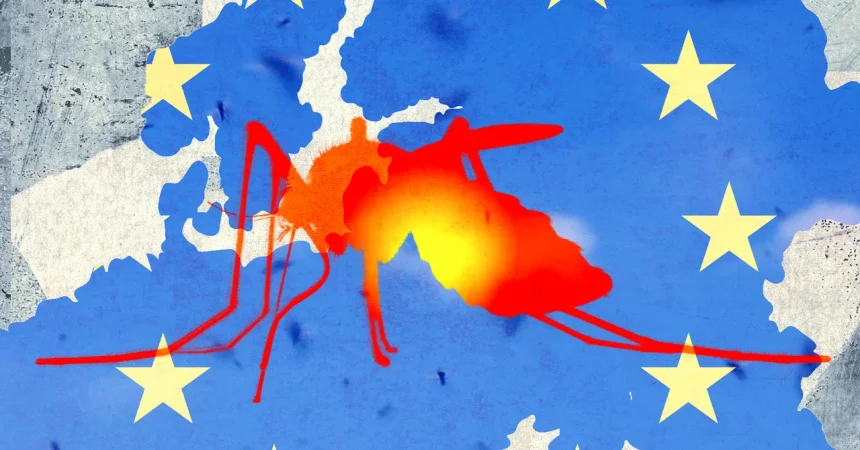
This concerning event in Fano is a harbinger of a broader, systemic shift. As the rhythm of our climate changes, Europe is becoming a hospitable new frontier for invasive mosquito species, effectively bringing tropical health risks to the doorstep of the West. This was not an isolated blip; between August and October 2024, 199 cases of dengue were identified in that single region. Beyond dengue, other unwanted guests—like the chikungunya virus, known for its debilitating joint pain, and the West Nile virus—are increasingly making their presence felt. As the world grows warmer, the traditional boundaries of these diseases are dissolving, forcing scientists to confront the reality that what we once dismissed as “tropical problems” are becoming permanent local concerns for the European continent.
The primary figure in this unfolding drama is the Aedes albopictus, or the Asian tiger mosquito. Unlike the familiar, nighttime-biting pests we’ve learned to swat away, this species is aggressive and active during the day. Having already established itself across all continents, the tiger mosquito has found a comfortable home in Europe, particularly in the south. Riccardo Moretti, a researcher who has spent two decades tracking these insects, emphasizes that their potential range is far broader than we think. While they thrive in a temperature range of 20 to 30 degrees Celsius, they aren’t halted by cooler weather. Even in regions as far north as England, the environmental conditions are beginning to align with the needs of these mosquitoes, suggesting that our maps of risk are being redrawn in real-time.
The danger lies in the resilience and adaptability of these insects. In southern Europe, the mosquito season is no longer just a summer occurrence; researchers are finding them active in the cold months of March and December, as they have learned to overwinter as eggs, waiting for the slightest nudge of warmth to emerge. Moretti warns that we are approaching a tipping point: the possibility of a population that survives and breeds year-round. This is a massive shift from the typical “imported case” scenario, where an infected traveler returns home and triggers a brief outbreak. If the mosquito season continues to stretch, we transition from sporadic, manageable blips to a permanent, endemic state where these viruses circulate constantly within our own communities.
Small shifts in temperature have profound, cascading effects on epidemiology. A recent study revealed that the threshold for mosquitoes to transmit the chikungunya virus is lower than previously estimated—dropping from 16 degrees Celsius down to 14. That two-degree difference might seem trivial on a weather app, but for an epidemiologist, it represents a massive expansion of geography and duration for potential outbreaks. It means a larger portion of Europe is now vulnerable for a longer stretch of the year. Scientist Sandeep Tegar, who led the research, underscores that these minor fluctuations in climate provide the exact conditions these vectors need to move into new territories, effectively making the entire continent more susceptible to diseases that were once only distant headlines.
Ultimately, the situation in Fano serves as a wake-up call for how we view public health in a warming world. We are no longer living in an era where geographic location acts as a reliable shield against tropical disease. The biological adaptation of the tiger mosquito, paired with rising temperatures, is forcing us to rethink our urban planning, our healthcare readiness, and our daily interactions with the natural world. Dealing with occasional, imported viruses was a manageable challenge; dealing with a permanent, circulating risk is an entirely different battle. As we move forward, the “new normal” will require us to stop looking at these infections as travel stories and start seeing them as local realities we must actively prepare to defend against.