The nation of Venezuela is currently grappling with a catastrophe of unimaginable proportions following two back-to-back earthquakes that struck the northwestern region near Yumare on Wednesday evening. The tremors, which occurred in quick succession just before sunset, sent shockwaves through the country, with the second quake registering a staggering 7.5 magnitude. It is the most powerful seismic event recorded in Venezuela since 1900, and its impact has been felt not just in the immediate vicinity of the epicenter, but as far away as the capital, Caracas. The sky over the region grew dark as the earth settled, but for thousands of families separated from their loved ones, the true darkness of the night had only just begun.
The immediate statistics released by interim President Delcy Rodríguez are sobering, with 164 confirmed dead and nearly 1,000 injured. However, these figures are widely expected to rise—perhaps into the thousands—as the scale of the destruction becomes clear. The United States Geological Survey has issued a grim projection, suggesting that the death toll could ultimately exceed 10,000, a chilling prospect that underscores the sheer intensity of the seismic force. A digital registry established to track the missing has already seen entries for more than 10,000 individuals, a figure that represents a devastating cross-section of the Venezuelan population, each name attached to a family currently waiting by a phone or searching through rubble in a state of desperate suspense.
In the wake of the devastation, President Rodríguez took to national television to declare a state of emergency, her voice a fragile anchor in a time of national trauma. She implored the country to remain united, prioritizing the immediate preservation of life above all else. In a direct appeal to the nation’s medical professionals, she requested that every doctor, nurse, and health worker report to their posts immediately to manage the mounting influx of the wounded. For a nation already burdened by years of political and economic instability, this disaster acts as a cruel secondary blow, forcing the healthcare system and the citizenry to find reserves of strength that many feared had long ago been exhausted.
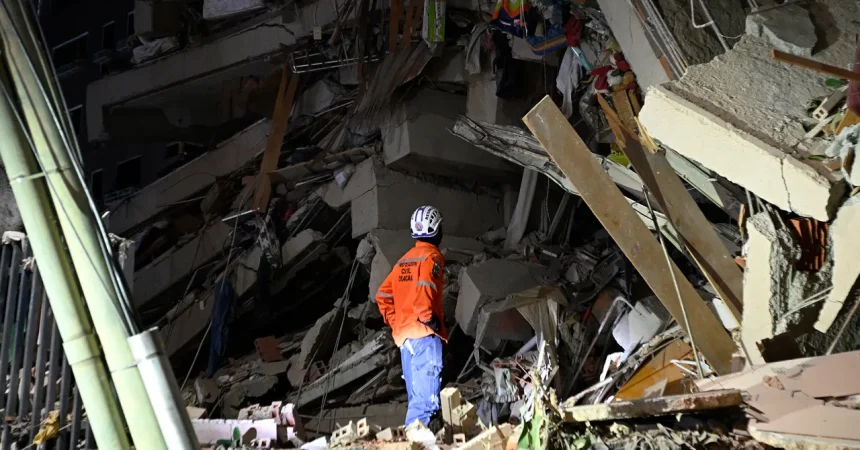
The physical reality on the ground is one of profound vulnerability. Throughout the night, thousands of Venezuelans chose to forgo the safety of their homes, opting instead to sleep in the streets and open spaces, terrified that the structures they once called home might collapse under the weight of aftershocks. The destruction of physical infrastructure, including the closure of the major airport at Maiquetia, has created a logistical nightmare, hampering initial rescue efforts and isolating severely affected communities. The images reported from the affected towns—toppled walls, shattered storefronts, and the frantic labor of citizens digging through dust and concrete—paint a portrait of a country fighting for its survival against the whims of nature.
Help, however, is on the horizon. In a swift diplomatic response, United States Secretary of State Marco Rubio confirmed that the U.S. government is mobilized to provide immediate assistance. Following a pledge of support from President Donald Trump, search and rescue units, alongside critical medical supplies and humanitarian aid, are being deployed to the region. This development marks a significant turning point in the relationship between the two nations, as the U.S. looks to assist the interim government. The promise of international aid offers a flicker of hope, signaling that while the road to recovery will be punishingly long and complex, Venezuela will not have to weather this storm in total isolation.
As the sun rose over a wounded landscape, the true extent of the challenge ahead became undeniable. The coming days will be defined by the race to reach those still trapped, the struggle to house those left homeless, and the monumental task of rebuilding shattered infrastructure. For the people of Venezuela, this is no longer a political struggle or an economic debate; it is a human tragedy of immense scale. As the world watches, the focus remains on the families searching for missing relatives and the rescuers navigating the ruin. The spirit of the people, tested to its absolute limit, is now the only thing standing between the current chaos and a path toward collective healing.