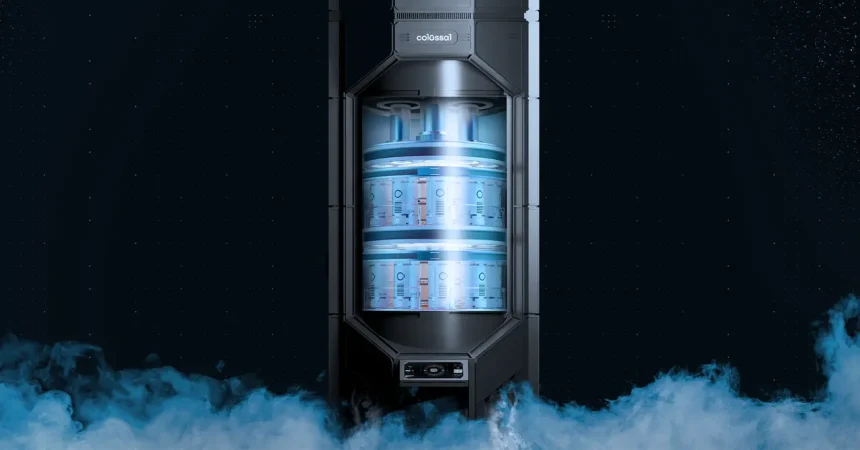
The United States government has launched an ambitious, high-stakes partnership with the Texas-based biotech firm Colossal Biosciences to create an expansive, national genetic repository for endangered and threatened species. This initiative, carried out in coordination with the U.S. Fish and Wildlife Service, aims to immortalize the biological blueprints of over 2,300 species currently protected under the Endangered Species Act. By collecting and cryopreserving cells, reproductive tissues, and DNA, the federal government hopes to secure a “backup” of the natural world. While these samples will be stored at Colossal’s facilities in Dallas and distributed to various locations across the country, the government will retain full ownership of the genetic data, which will eventually be sequenced and opened to researchers and conservationists worldwide.
The logistics of this project are as advanced as its mission is urgent. Colossal is actively equipping field biologists with specialized collection kits designed to gather blood, skin, and tissue samples from across the globe, with the intake process already officially underway. While the company is perhaps most famous for its provocative headlines regarding the potential de-extinction of ancient animals, this partnership is rooted in the very modern reality of genetic salvage. Secretary of the Interior Doug Burgum has championed the alliance, framing it as a marriage of public sector expertise and private sector ingenuity. The primary goal is to provide a safety net for species on the razor’s edge of survival, using technology to strengthen our ability to recover populations that may otherwise vanish within our lifetime.
The practical necessity of this project was underscored by the successful 2021 cloning of a black-footed ferret, a milestone achievement for the U.S. Fish and Wildlife Service. By utilizing cryopreserved cells from a ferret that had perished in the 1980s, scientists proved that genetic material from the past could provide a viable path for the future recovery of near-extinct species. This success story serves as the blueprint for the current initiative: if we cannot keep a species alive in its natural environment, we might at least preserve its genetic building blocks. By institutionalizing this capability, the government is essentially creating a biological insurance policy against the catastrophic loss of biodiversity that has plagued the planet over the last century.
However, the launch of this project arrives at a complex and politically charged moment for American conservation policy. The current administration has signaled a pivot toward restructuring the landmark 1973 Endangered Species Act in ways that many environmental advocates fear will severely undermine its efficacy. Proposed changes include a shift in how protected habitats are designated—placing a higher premium on economic impacts and national security—and the elimination of “blanket rules” that previously protected threatened species with the same rigor as those classified as endangered. This regulatory shift, combined with the rare convening of the “God Squad” to waive protections for offshore oil and gas drilling in the Gulf of Mexico, has left many observers questioning the government’s true commitment to environmental stewardship.
Critics of the partnership, such as Noah Greenwald of the Center for Biological Diversity, argue that storing DNA in a freezer is a poor substitute for protecting the living, breathing ecosystems that these species require to survive. From this perspective, the initiative is less of a conservation triumph and more of a “last-ditch” concession—a tech-centric solution to a crisis that could be better addressed through habitat protection and land management. Greenwald maintains that even if science advances to the point where we can resurrect or sustain species via cloning or genetic manipulation, those creatures will have no future if their natural environments continue to be surrendered to industrial interests, urban expansion, and habitat fragmentation.
Ultimately, the partnership between the U.S. government and Colossal Biosciences reveals a deep tension between how we value nature and how we manage our industrial footprint. By focusing on genetic preservation, the government is undeniably investing in a sophisticated tool that could save species from the finality of extinction. Yet, as skeptics point out, technology cannot replace a healthy forest or a flourishing wetland. As this repository grows, the success of the initiative will likely be measured by a difficult question: will these genetic samples become the foundation of a robust era of species recovery, or will they serve only as digital tombstones for a world that we were unwilling to protect while it was still outside the lab?