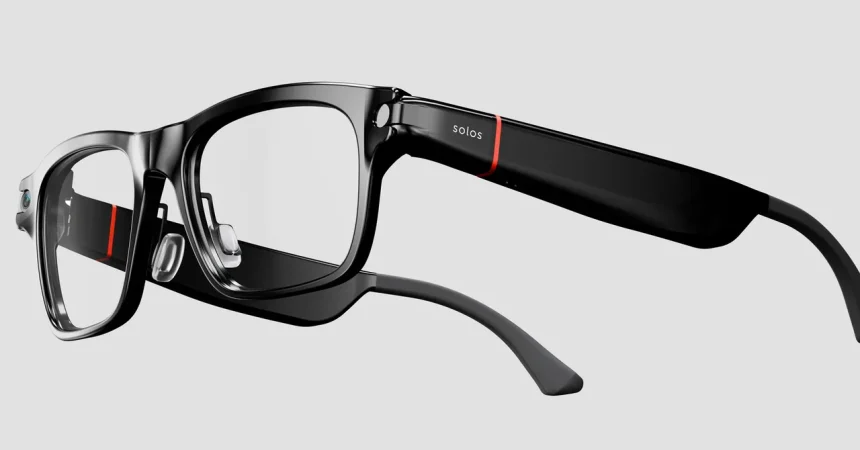
The landscape of wearable tech is shifting rapidly, and Solos, a company that has long championed audio-only smart glasses, is making a bold play to stay relevant in a market dominated by tech giants. With the recent announcement of the AirGo A6 and the camera-equipped AirGo V2, Solos is attempting to offer a direct alternative to the industry-leading Meta Smartglasses. While the AirGo V2 aims to match Meta’s feature set—offering photo and video capture alongside an AI assistant that perceives the world through the wearer’s eyes—Solos is betting that its unique approach to modularity and privacy will carve out a distinct space for users who feel uneasy about the constant surveillance inherent in today’s smart eyewear.
The introduction of the AirGo V2 is clearly designed to compete with the ubiquity of Meta’s $299 offerings, providing users with a similar 10-to-12-hour battery life and the ability to integrate prescription lenses. However, Solos recognizes that the “camera-first” mentality of modern wearables brings significant baggage. To address this, they have unveiled a “Privacy Kit”—a set of clip-on accessories priced at $79. This kit includes a polarized lens and, most notably, a physical privacy shield that blocks the camera entirely. It’s an interesting concept, allowing the wearer to physically disable their device’s “eyes” and revert the V2 into a simple, audio-only pair of glasses whenever they feel the environment demands a more discreet experience.
Despite the innovation, there is a lingering sense of skepticism regarding the practicality of this privacy solution. Requiring users to buy an accessory, store it, and manually attach or remove it creates a friction-filled user experience that many customers might simply forgo. Furthermore, critics point out the inherent insecurity of a physical clip-on; there is nothing to stop a dishonest user from removing the privacy shield once they have stepped inside a building where recording is prohibited. By making privacy an “add-on” rather than a built-in, failsafe feature, Solos might be highlighting the very problem they are trying to solve: that cameras on faces are fundamentally intrusive, and a piece of plastic might not be enough to fix that.
This launch also comes at a challenging time for Solos, which previously saw its AirGo Vision glasses struggle with poor media quality, difficult touch controls, and an over-reaching app. This history casts a long shadow over their new attempt to dethrone Meta. While Meta has faced its own share of public backlash, ranging from privacy concerns regarding face-recognition software to frustration over the recent decision to charge for previously free AI features, they still maintain a firm grip on the market. Users have come to expect a level of polish and ecosystem integration from Meta that smaller, niche companies have historically struggled to replicate, despite the public calling Meta’s devices “creepy” or unfairly invasive.
The broader industry, however, is not just standing by. Tech behemoths like Google and Samsung have formed an alliance to develop a new Android XR platform, with premium collaborations in the pipeline involving lifestyle giants like Warby Parker and Gentle Monster. Even Apple is rumored to be exploring the space. This rush to develop eyewear that bridges the gap between digital utility and physical presence shows that the “smart glasses war” is only just beginning. As these companies fight for the bridge of the user’s nose, they are all navigating the same treacherous waters of public opinion, trying to balance the desire for cutting-edge AI assistance with the growing societal demand for privacy and human connection.
Ultimately, the future of smart glasses may not be a one-size-fits-all model. Meta’s own CTO, Andrew Bosworth, has hinted that there is genuine market demand for audio-only glasses, even if the company remains focused on its camera-centric vision for now. Smaller players like Solos and Even Realities are essentially fighting a guerrilla war, catering to those who want the audio features—music, calls, and voice assistance—without the baggage of a recording device. Whether the market chooses the convenience of an integrated camera or the peace of mind offered by companies like Solos, the battle for our faces is heating up, and the quest for a device that feels as natural as it is innovative remains the ultimate goal for everyone involved.