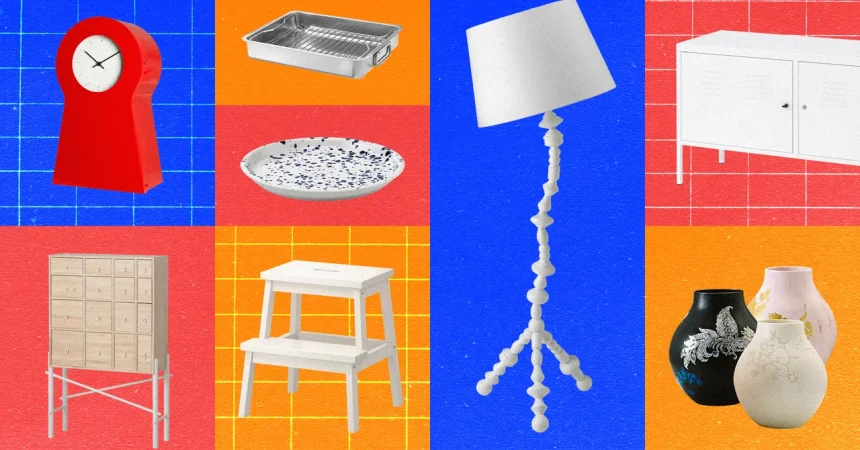
Designing a home is rarely about achieving a pristine, catalog-perfect look; it is about the stories we accumulate and the objects that stand the test of time. Johan Ejdemo, a long-time veteran of IKEA’s design team, understands this better than most. His personal home is a collection of memories, featuring pieces from various IKEA PS (Post Scriptum) collections that highlight his career and his appreciation for clever engineering. One of his most cherished items is the Svarva floor lamp, created in collaboration with the design group Front. What began as a challenging concept—a wooden lamp that could be twisted and articulated like a snake—nearly stalled in the prototype phase. However, a moment of pure serendipity occurred in Hungary when the team discovered that a factory specializing in turned wooden beads sat right next to their metal-tubing supplier. By treating the beads like individual pieces on a necklace threaded over metal, they turned a seemingly impossible design into functional, bendable art.
Beyond lighting, Ejdemo’s home showcases the beauty of thoughtful, space-efficient design, epitomized by the PS Sinka cabinet. The cabinet holds a unique place in his hallway, serving as a masterclass in logistics and utility. Facing the common struggle of large packaging volumes, the design team engineered the piece so that the drawers could stack neatly inside one another, drastically reducing shipping space while maintaining a sleek, structural integrity. The name “Sinka,” derived from the Swedish word for “dovetail,” honors its construction, and the cabinet even includes a hidden compartment—a secret nook perfect for those mysterious house keys that seem to accumulate over time. It is a reminder that the best furniture isn’t just decorative; it’s an active participant in organizing the chaotic rhythms of daily life.
Sometimes, the best design is found in repurposing, a philosophy Ejdemo applies to his collection of Jonsberg vases, designed by Hella Jongerius. Though originally part of a prestigious set showcasing diverse ceramic techniques from various regions, Ejdemo treats them not as museum pieces, but as functional partners in his home. He famously uses one of the large black vases to hold toilet paper in his bathroom, proving that elegant design can elevate even the most mundane household corners. While he regrets the loss of a terracotta piece from the original set—now highly sought after by collectors for thousands of dollars—his pragmatism shines through. He finds beauty in the utility of these objects, proving that true “respect” for a design isn’t found in leaving it untouched on a shelf, but in inviting it to improve our living space every single day.
Personalizing one’s environment often means stepping away from the “out-of-the-box” experience and adding a touch of the owner’s hand. This is evident in Ejdemo’s approach to the ubiquitous Pax wardrobe system. While he utilizes the modular functionality of the wardrobes throughout his home, he refuses to let them blend into the background as generic fixtures. In his kitchen, he has taken the initiative to sand down and hand-paint the veneer doors, constantly refreshing them to match the evolving character of his space. This hands-on customization highlights a core truth about domestic comfort: modular furniture provides the sturdy infrastructure, but the user provides the soul. By taking a brush to his cabinets, Ejdemo ensures that his home feels like a lived-in reflection of his personality rather than a static showroom.
Perfection is not the goal of a well-lived home; in fact, a bit of wear and tear tells a far more compelling story. Ejdemo’s pepper mills from the Spraka collection, designed alongside Marcus Arvonen, reflect this philosophy perfectly. Nearly 20 years old, they are tall, weathered, and proudly chipped. While a person might be tempted to replace or fix such blemishes, Ejdemo embraces them as proof of a life in motion. He argues that the relentless pursuit of perfection is a treadmill—fix one scratch, and another appears tomorrow. Instead, he suggests leaning into the patina of everyday usage, viewing those small imperfections as a testament to the object’s service. It is a refreshing perspective that encourages homeowners to stop stressing over signs of aging and start taking pride in their history.
Ultimately, Ejdemo’s home acts as a bridge between his professional expertise and his personal sensibilities. Even when it comes to the most famous pillars of IKEA’s catalog, like the Billy bookcase or the Kallax, his approach remains grounded in practicality rather than sentimentality. He currently doesn’t have a Billy, but he holds a deep respect for the Kallax, noting its legendary success in organizing his vinyl collection. His home is not a shrine to specific brands, but a collection of items that function well, possess interesting histories, and offer space for personal evolution. In a world of fast furniture and disposable trends, Ejdemo’s residence stand as a testament to the idea that thoughtful items, when treated with care and a bit of a personal touch, will remain just as relevant and beloved two decades later as they were the day they were brought home.