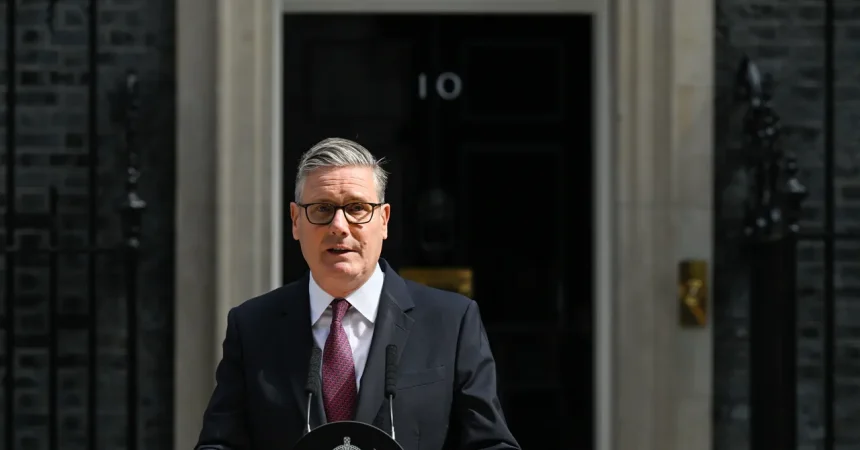
In a move that has sent shockwaves through Westminster, Keir Starmer has announced his resignation as Prime Minister, cutting short a premiership that began with such immense promise less than two years ago. Following a landslide general election victory that ended fourteen years of Conservative governance, Starmer’s tenure has unravelled with unexpected speed. Standing outside the familiar black door of 10 Downing Street on Monday morning, he addressed the nation with a sombre tone, admitting that his parliamentary party had signalled it was time for a change. It is a startlingly abrupt end for a leader who campaigned on a promise of stability and competence, only to find himself unable to navigate the relentless pressures of modern British governance.
The catalyst for this departure was a profound disconnect between the government’s agenda and the reality of life for millions of Britons. While Labour entered office with high hopes of revitalising a struggling nation, those ambitions were quickly swallowed by the fiscal gravity of tax hikes, stringent spending cuts, and the ongoing stagnation of vital public services. As voters grappled with the rising cost of living, the initial goodwill that swept Labour to power evaporated, leaving a vacuum quickly filled by voter disillusionment. This dissatisfaction was made painfully clear during the recent local elections, which saw Labour haemorrhage nearly 1,500 councillors and surrender control of 38 councils, with a significant number of these seats falling to Nigel Farage’s Reform UK.
For many observers, Starmer’s resignation highlights the exhaustion of the British political system, which has become a revolving door of leadership since the 2016 Brexit referendum. The UK has burned through a succession of Prime Ministers—Cameron, May, Johnson, Truss, Sunak, and now Starmer—a turnover rate that speaks to a deeper instability within our political landscape. Starmer, who had frequently rebuked the Conservatives for their internal chaos and inconsistency, now finds his own name added to the lengthening list of leaders who failed to complete their term. The irony of his departure, after promising a “decade of national renewal,” is not lost on a public that has become increasingly cynical about the durability of its elected officials.
The final blow to Starmer’s position arguably came on Friday, when Andy Burnham, the popular Mayor of Manchester, secured a seat in Parliament via a by-election. Burnham has long been considered a formidable alternative to the status quo, possessing a brand of political charisma that had been notably absent in the Labour leadership. With his entrance into the House of Commons, the pressure on Starmer became unsustainable. It was a clear sign that the tectonic plates of the Labour Party were shifting, and once the appetite for a leadership challenge became palpable among his own colleagues, Starmer’s ability to govern effectively was all but extinguished.
Despite the gravity of his decision, Starmer has committed to a period of controlled transition. He will serve in a caretaker capacity as Prime Minister until the Labour Party concludes the internal process of selecting a new leader. He has set a deadline for this transition to be completed before Parliament reconvenes in September, aiming to minimise the period of uncertainty that could further cripple the nation’s governance. This is a crucial window for the Labour Party, which now faces the monumental challenge of rebranding itself yet again while desperately trying to retain the trust of an electorate that feels increasingly let down by the political establishment.
As the dust settles, the focus shifts to what comes next for a country that has been defined by political volatility for nearly a decade. For the Labour Party, the work of rebuilding begins immediately, with the shadow of recent electoral losses looming large over the leadership contest to come. For the public, the resignation serves as a sobering reminder of the fragility of our democratic institutions when they are disconnected from the daily struggles of the citizenry. As we await the next chapter in this unfolding saga, it is clear that whoever steps into the role of Prime Minister will inherit not just the mantle of leadership, but the urgent, pressing task of restoring a lost sense of optimism to a weary nation.