The Hidden Abuse of Power Within America’s Border Agency
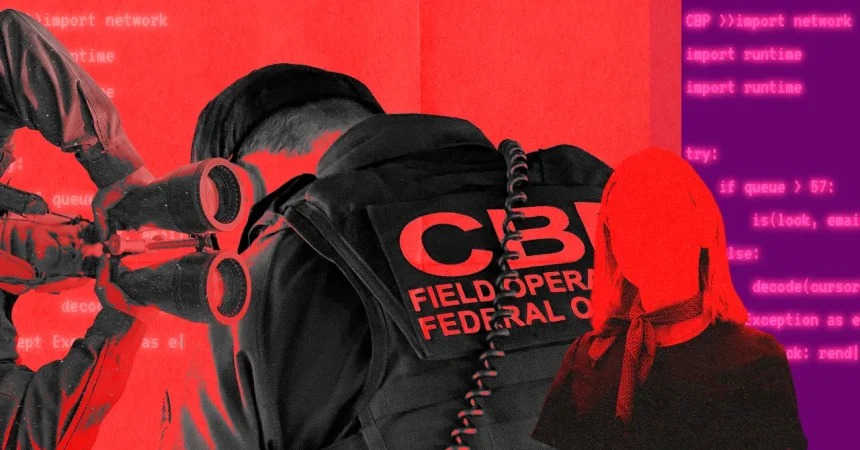
For years, the very systems designed to protect America’s borders have been quietly weaponized by those entrusted with their power. Internal records obtained by WIRED have exposed a disturbing pattern of behavior within the U.S. Customs and Border Protection (CBP), revealing that for more than a decade, employees and contractors have been accused of abusing sensitive government databases for deeply personal, and sometimes criminal, reasons. These were not sophisticated cyber-attacks or foreign infiltrations. Instead, the allegations paint a picture of federal agents using their powerful surveillance tools to stalk romantic interests, spy on family members, dig up personal information on neighbors, and in the most serious cases, tip off suspected drug traffickers. The records, acquired through Freedom of Information Act requests, span from 2009 to 2022 and represent a stark betrayal of public trust, highlighting the immense vulnerability of everyday citizens in an era of unprecedented government surveillance.
The sheer scope of the alleged abuse is staggering. The dataset reveals hundreds of entries detailing misuse of law enforcement databases, ranging from seemingly minor infractions like self-queries to serious allegations of criminal misconduct. In one case, a CBP officer allegedly used government databases to contact a flight attendant he had encountered. In another, an officer was accused of pulling information from trusted-traveler applications to ask people out on dates. Other employees were accused of accessing border-crossing records to provide intelligence in a “heated divorce.” Perhaps most alarming, a Department of Homeland Security (DHS) employee allegedly used controversial ad-tech-derived location data to track the cell phones of several coworkers, marking what appears to be the first known internal abuse case involving this type of commercially purchased surveillance data. This incident underscores a growing concern: as agencies expand their surveillance capabilities with facial recognition and license plate readers, the potential for abuse multiplies exponentially, turning powerful tools intended for security into instruments of personal vendetta.
When these allegations came to light, the internal handling was often inconsistent and sometimes lenient. Complaints involving CBP personnel were routed through the Joint Intake Center, where analysts decided the fate of each case. Of the nearly 300 data-related entries identified, 138 were referred to CBP management for internal review, while 78 were deemed serious enough to be assigned to criminal investigators. A significant number, 43, were classified as “Information Only,” meaning they did not warrant a formal investigation at all. This bureaucratic triage revealed a system that often struggled to take the abuse of personal data seriously. What is particularly concerning is that many of these cases clustered around 2020, when the pandemic prompted a shift to remote work, and employees began emailing work files to personal accounts. This trend not only exposed lax security protocols but also blurs the line between secure official use and the casual disrespect for sensitive information.
Among the most worrying patterns was the practice of employees querying the databases about themselves. Daniel Altman, the former head of CBP’s Office of Professional Responsibility, stated that self-queries are treated as a “warning sign” of future misconduct. They often surface early in corruption cases, either as a test to see if monitoring is active or to check if the employee themselves is under investigation. The progression from a simple self-search to actively sharing data with smugglers or organized crime is, as Altman noted, “just a matter of degree.” One officer was accused of providing border-crossing data to someone involved with a “heated divorce,” while others were alleged to have passed intelligence to suspected smugglers or drug-trafficking organizations. These actions demonstrate a complete failure of oversight and a culture where the immense power of these surveillance tools could be casually redirected for personal gain or malicious intent.
The implications of these findings extend far beyond the individual cases. “Customs and Border Protection has a long history of impunity and abuse of people’s civil and human rights,” says Laura Rivera, an attorney with Just Futures Law. “Accountability for their wrongdoing has been elusive, and the dynamic involving the abuse of data is simply another aspect of that.” This sentiment rings true as the agency continues to expand its data collection capabilities. With access to facial recognition technology, automated license plate readers, mobile-device content, and commercially purchased location data from ordinary apps, the range of sensitive information available to employees is staggering. The records highlight how easily this data, collected for legitimate law-enforcement purposes, can be weaponized against private individuals, making every citizen a potential target simply because a federal employee decides to look them up.
The abuse of these databases is not a new phenomenon, but the increasing sophistication of surveillance tools makes the threat more acute. As the WIRED report demonstrates, the problem is systemic. The daily temptations are immense, from checking a neighbor’s travel history to finding a phone number for a romantic pursuit. The fact that these allegations have occurred over a span of more than a decade, with varying degrees of accountability, points to a fundamental flaw in the culture of the agencies involved. While CBP has policies against unauthorized access, the enforcement has been inconsistent, leading to a climate where some employees feel they can act with impunity. The records serve as a critical warning: more surveillance does not automatically mean more security. It often simply increases the number of opportunities for abuse and the number of innocent people who can be harmed by those who wear the badge.
In the end, the greatest insight from these internal records is the reminder that surveillance tools are only as ethical as the people wielding them. The powerful systems designed to screen travelers and investigate crimes have been demonstrably used for personal vendettas, romantic advances, and even criminal collusion. Each instance represents a violation of privacy so profound that it erodes the very trust citizens place in their government. The data shows that the problem is not with the technology itself, but with the unchecked access and insufficient oversight. As our society becomes increasingly reliant on data collection, the need for robust accountability mechanisms grows more critical. Without meaningful reform, the same tools meant to protect the border could continue to be turned inward, leaving every American at risk of being targeted not by a foreign adversary, but by a federal employee with a laptop and a grudge. The question is not whether this abuse will happen again, but how many times it has gone undetected, and what it will take for the agencies to finally accept that absolute power, without absolute accountability, will always corrupt.