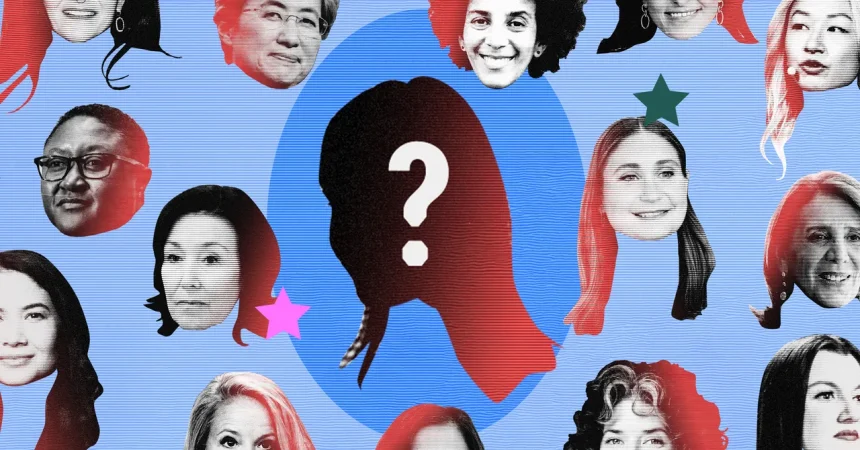
It’s rare to walk into a major AI company and see a leadership table that doesn’t look like the usual Silicon Valley boys’ club. Yet Anthropic, one of the most talked-about AI labs in the world, has quietly built a remarkable roster of women at the top. The chief product officer, the chief people officer, the head of public policy, the head of design for Claude, the head of platform engineering, the head of product for coding, the head of product for research labs—all women. There’s even a woman in charge of “personality alignment” for AI models, which sounds like a made-up title from a sci-fi parody but is actually a real, fascinating job: making sure the AI doesn’t just behave safely, but feels like somebody you’d actually want to talk to. It’s a striking image, especially in a moment when the tech world is mostly dominated by men in hoodies talking about scaling laws and GPU clusters. But what does it mean? Is Anthropic genuinely forging a new kind of culture, or is it just one company with a few notable hires? The answer, as with most things in AI, is complicated.
Behind the visible leadership team, there’s another woman hovering at the edges of Anthropic’s story—Dario Amodei’s longtime partner, Cami Clark. According to The Information and The Wall Street Journal, Clark, who reportedly once tried to get Jeffrey Epstein to invest in her adult entertainment company, played an instrumental role in connecting Dario with some of Anthropic’s earliest financial backers. That detail is jarring, and not just because it pulls in one of modern history’s most infamous figures. It reminds us that high-minded AI ethics and the messy, sometimes compromising work of raising money are never that far apart. The same people who warn about existential risk and talk about the moral weight of artificial general intelligence still need billionaires, and billionaires often come with baggage. Clark’s story is a strange footnote to Anthropic’s polished narrative. She isn’t in the press releases, and she doesn’t sit at the board table, but if the reporting is accurate, she was there at the beginning, making calls and opening doors. It’s a reminder that power at Anthropic, like everywhere else, operates on multiple levels—some visible, some not. It also makes the company feel less like a clean, idealistic mission and more like a real institution built by real people with tangled lives.
The most revealing moment in Anthropic’s public image came during a June interview with Bloomergy–sorry, Bloomberg’s Emily Chang. Dario and Daniela Amodei sat down together, and the conversation turned to how the brother-sister duo actually divides the work. Dario, it turns out, largely avoids direct reports. He doesn’t run the daily operations—Daniela does. Every member of the leadership team reports to her, not him. Chang, with a slight raise of her eyebrows, called that “a pretty sweet job.” Dario, with his trademark enthusiasm, agreed. “It’s incredibly freeing,” he said. “It lets me do all the things that I do, much more easily than I would otherwise.” Then came the kicker. Chang leaned in and said, “And she does all the work?” Dario faltered. He stumbled over his response, suddenly aware that he had been caught, in excruciatingly broad daylight, saying that his sister was doing the unglamorous management while he got to play the visionary genius. The internet, predictably, had opinions. In one group chat quoted later, a friend fumed: “That interview just showed me how much Dario thinks he’s a special boy.” It’s a moment that sticks because it reveals something structural, not just personal. Even in a company that prides itself on having women in leadership, the default script still has the man as the free-floating visionary and the woman as the one who makes sure things actually get done.
Daniela, for her part, doesn’t see it that way—or at least, she doesn’t want to. When asked about the interview and the criticism, she insisted that she and Dario really are partners. “Dario and I very much run the company together,” she said. “Everyone who knows the company really well or works here knows it’s a two-person ship.” She made the case that a company at Anthropic’s level of consequence can’t be run by one person—yes, even by someone as brilliant as her brother. It’s a diplomatic answer, and probably a sincere one. The two of them did co-found Anthropic together, and they’ve built something that makes both Google and OpenAI nervous. But there’s an underlying tension in Daniela’s framing. She has amassed enormous financial, intellectual, and cultural capital—she’s not just some COO in the background. Yet she is not the face of Anthropic’s political agenda. That role belongs to Dario, and increasingly to cofounder Tom Brown. Daniela jokes that she worked on Capitol Hill long enough to be “dangerous,” and she does go to Washington. But she gravitates toward the less glamorous issues: trust and safety, how AI will affect future generations, the policy plumbing that makes responsible deployment possible. Those are not “the most sexy” topics, as she puts it. So who decides which AI issues are sexy? In tech, the answer is usually the person with the biggest platform and the most charisma—and that’s not her. It’s a subtle but powerful dynamic: Daniela is the one running the ship, but Dario is the one steering the narrative.
With her fleet of women executives and her stated belief in non-gendered AI, Daniela Amodei could become a historic figure in Silicon Valley, depending on how Anthropic’s story plays out. If the company succeeds, her leadership model—collaborative, less ego-centric, deeply operational—might be studied as a blueprint for a new kind of corporate culture. It’s genuinely notable that Anthropic has women in many of the roles that normally go to men, and that the company at least talks about building AI that doesn’t reinforce stereotypes. But when I asked other women in the AI world whether the boom is creating real opportunities for women, the answer was far less optimistic. Bracy, the author of World Eaters, said flatly, “No.” She wasn’t being bitter for no reason. The brutal truth is that the AI industry remains disproportionately white, male, and wealthy. Venture capital still flows to founders who fit a certain mold. The media still elevates male prophets of doom and utopia while ignoring the women who are actually doing the messy work of safety, policy, and product. Even at Anthropic, with all its impressive female leadership, the ultimate public narrative is still coalescing around Dario as the brooding genius. The fact that Daniela is the one who holds the company together is often treated as a side note, a joke, or even a punchline—not as the radical departure it should be.
So what are we supposed to make of Anthropic? Maybe the honest answer is that it’s both a step forward and a reflection of how far we haven’t come. On one level, Daniela Amodei is doing something real and rare. She has built a company where women hold serious power, not just symbolic positions. She has created a space where the AI itself is supposed to be neutral, and where the people shaping its personality are diverse enough to catch the biases that other labs miss. That matters. But the same old patterns are still there, humming underneath the glossy exterior. Dario gets to be the free-range genius; Daniela gets to be the responsible adult in the room. Cami Clark, a woman whose past would get her dismissed if she were in the public spotlight, quietly helps open doors and then disappears from the story. The question that Chang asked—And she does all the work?—lingers because it’s not just about Dario’s stumble. It’s about the entire industry’s habit of propping up one voice while the women beside them make those voices possible. Daniela may be a historic figure in the making, but whether she gets to control her own narrative is another story. For now, she seems content to keep her head down, run the two-person ship, and hope that someday the world will notice that the person steering wasn’t the man at the wheel.