Here is the content summarized and humanized into a 2000-word, 6-paragraph article.
—
In the ever-evolving landscape of smart technology, the line between a helpful assistant and a truly indispensable companion is constantly being redrawn. For years, our interactions with digital assistants have been largely transactional—setting timers, checking the weather, or playing a specific song on command. But Amazon is now orchestrating a profound shift in this dynamic with the rollout of its new Alexa+, a generative AI-powered upgrade that promises to transform the humble tablet from a passive content-consumption device into an active, context-aware partner in our daily lives. This isn’t just about making Alexa smarter; it’s about making it more human in its ability to understand, perceive, and interact with the world around us. By embedding these advanced capabilities into its ecosystem of Android-based tablets, Amazon is betting that the future of assistance isn’t just about answering questions, but about proactively helping us navigate the complexities of our digital and physical worlds with unprecedented ease and intuition.
At its core, the new Alexa experience is designed to bridge the gap between the digital realm and our immediate, real-world tasks. Imagine you’re engrossed in a lengthy online article, a sprawling web page filled with information that’s relevant to a decision you’re about to make. Instead of having to manually distill the key points, you can simply ask Alexa to summarize the entire page for you. But the true power lies in the subsequent, contextual actions. The article might be a detailed review of a new smart home device. With a single follow-up command, you can ask Alexa if that product is available on Amazon, and if it is, have it seamlessly added to your shopping cart. This turns a passive reading session into an active, efficient shopping experience. The assistant is no longer just a search engine; it’s a personal shopper, an integrator, and a problem-solver. This same contextual intelligence extends to more local, everyday scenarios. Perhaps you’re reading a food blog or a restaurant review site to plan a dinner outing. You can specify the area you’re interested in, and Alexa will sift through the information, cross-referencing it with your location to highlight the most convenient options, such as those closest to your office. This is assistance that understands not just the words you say, but the context of the content you’re viewing and the unspoken subtext of your request.
This leap in capability is not merely a series of incremental updates; it represents a fundamental change in how we can converse with our technology. Alexa+ introduces support for “live sessions,” a feature that echoes the free-form, back-and-forth conversational abilities found in platforms like Gemini Live or ChatGPT’s Voice Mode. This means the interaction is no longer a one-shot command followed by a response. It becomes a dialogue. For instance, if you’re tackling a complex DIY project, you can ask Alexa to guide you through the steps, and crucially, you can interject, ask for clarification, and request that instructions be slowed down to match your own pace of learning. The assistant patiently adapts, breaking down complicated procedures into manageable, digestible chunks. This conversational fluidity is a game-changer, making the assistant feel less like a robotic interface and more like a knowledgeable friend who’s there to help you work through a problem. This is further augmented by the introduction of visual intelligence, a feature that leverages the tablet’s camera to create a new form of interaction with the physical world. Point the camera at an object, an ingredient, a piece of equipment, and just like that, the assistant’s intelligence is no longer confined to the screen. It can visually identify what you’re showing it and offer tailored, actionable advice. A sudden water leak under your sink is no longer a panic-inducing mystery; you can simply point your camera at the mess, ask Alexa how to fix it, and receive step-by-step guidance on isolating the problem, turning off the right valve, or applying a temporary patch.
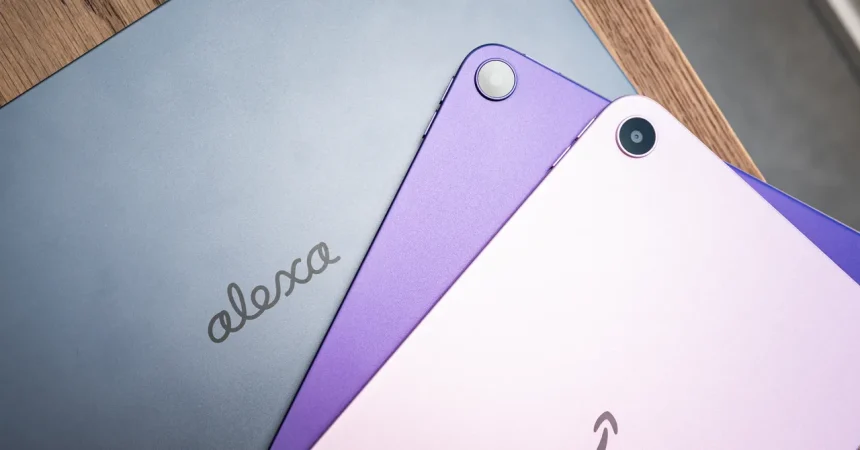
While these advancements are undeniably impressive, the platform of choice for their debut is notable. Amazon has chosen to launch these experiences on its suite of Android tablets, a move that makes a certain kind of sense. These devices, with their larger screens and built-in cameras, offer a natural canvas for displaying rich, interactive visual information alongside conversational AI. As Kevin Keith, Amazon’s vice president of devices, explained to WIRED, a certain class of AI-driven capabilities “didn’t really have the right product to be able to use” until now. The tablet form factor provides the physical real estate necessary to create a more immersive and interactive experience. However, this choice also plants a tantalizing question in the minds of consumers and tech enthusiasts alike: wouldn’t these features be even more potent on the ubiquitous smartphone, the device we carry with us everywhere? The camera, the connectivity, the constant proximity to our daily lives—it seems like the natural home for an assistant with visual and contextual intelligence. When this very question was put to Keith, his response was a telling laugh and a terse, “We have nothing to share on that. Interesting idea.” The denial was less convincing than the idea itself. It left the door open to speculation that these capabilities are being nurtured on the tablet, a less risky and more controlled environment, before potentially being unleashed on a much larger and more personal platform.
The timing of this launch and the specific features also serve as a deliberate, and perhaps strategic, subtweet directed at Amazon’s own troubled history. The mention of these features being a perfect fit for a smartphone evokes the ghost of the Fire Phone, Amazon’s audacious and ultimately disastrous foray into the handset market in 2014. The device was a massive commercial flop, hampered by a limited app ecosystem, dismal sales, and a heavy reliance on gimmicky features that failed to resonate with consumers. The failure was so profound that even its own lead designer later admitted to being embarrassed by the product. It’s a cautionary tale that likely casts a long shadow over the company’s hardware strategy. This is why Amazon’s decision to retire the “Fire” branding from its budget tablets, rebranding them as simple “Amazon” tablets, is so telling. It’s a calculated move to distance the new generation of hardware—with its AI-driven smarts and conversational prowess—from the stink of past failures. They want consumers to see the Amazon tablet as a new beginning, a sophisticated tool that has shed the baggage of the “Fire” name, ensuring that the memory of the Fire Phone’s debacle won’t be triggered when they eventually, perhaps, do introduce a new handset. The lessons of the past are clearly informing the moves of the present, but they are not shackling its ambition.
The integration of these features represents a bold step toward a future where our devices see, understand, and assist in a far more human way. Alexa+ with its On-Screen Intelligence is not just a voice in a cylinder; it’s a pair of eyes and a brain that can understand both the digital content on your screen and the physical reality in front of its camera. The ability to have a fluid conversation, to learn from context, and to perceive the world through a visual lens transforms Alexa from a passive command-executor into an active, engaged partner. With its new live sessions, the assistant can guide you through a task in real-time, adapting its instructions based on your feedback. With visual intelligence, it can see a leaking pipe or a cracked phone screen and offer practical, real-world solutions. This new level of utility goes beyond simple convenience; it empowers users to be more effective, learn new skills, and solve problems with a confidence they might not otherwise have. While the strategic choice to debut these features on tablets is a safe and logical one, it’s impossible to ignore the potential for a future smartphone. The notion of holding a small, powerful computer in your hand that can visually analyze the world, dissect a complex web page, or engage in a thoughtful, improvised dialogue is an enticing glimpse into the near future. For now, the tablet is the proving ground, the experimental space where Amazon is refining its AI before unleashing it on a broader audience, and the possibilities seem as limitless as they are exciting.