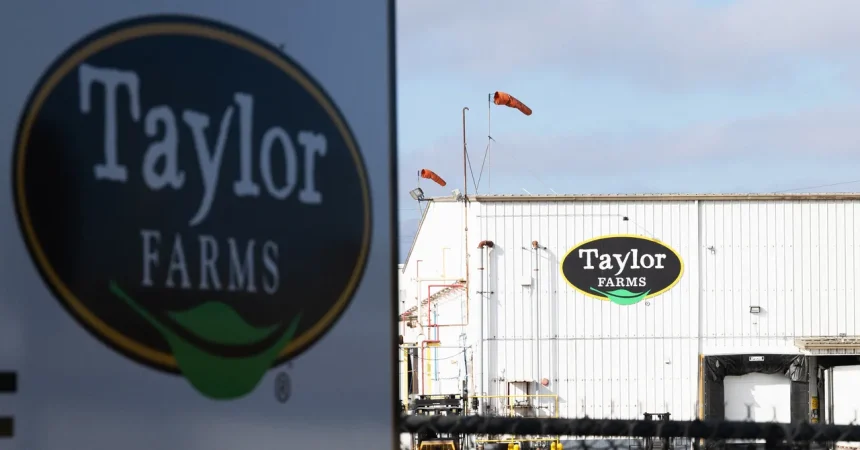
The ongoing public health crisis involving a widespread outbreak of cyclosporiasis—a parasitic infection notorious for causing severe and explosive gastrointestinal distress—has morphed into an uncomfortable, high-stakes standoff between the FDA and one of America’s largest produce suppliers, Taylor Farms. While thousands of Americans have fallen ill since May, the focus of the news cycle has shifted toward a bizarre, performative conflict between the regulators and the industry giant. What began as a standard public health recall has devolved into a dispute over technicalities, semantics, and the credibility of the government agencies tasked with keeping our food supply safe.
The friction reached a fever pitch in mid-July when, following a voluntary recall of iceberg lettuce sourced from Central Mexico, a flurry of contradictory statements emerged. The FDA announced it had identified the parasite in a batch of Taylor Farms lettuce not included in the original recall. Within 24 hours, both parties pivoted, claiming that the finding was a false positive. Taylor Farms immediately took to the social media platform X to announce that the FDA had apologized for the error. The government, however, quickly fired back, stating they had merely provided “factual information” regarding the inherent difficulty of testing for such parasites, effectively throwing the company’s interpretation of an apology into question.
This tug-of-war highlights the messy reality of foodborne illness investigations, where the technical limitations of science often collide with the high-pressure environment of corporate liability. The FDA has been careful to emphasize that, regardless of the retracted lab result, the recall—which affects major retailers like Walmart and fast-food chains like Taco Bell across nearly 30 states—remains firmly in place. They argue that the recall is based on overwhelming epidemiological evidence—such as interviewing infected patients and tracing their specific consumption patterns—rather than relying solely on the rare, difficult, and sometimes inconclusive physical testing of individual produce samples.
Taylor Farms, for its part, has dug in its heels, pointing to the lack of a “positive product test result” as a primary defense. By highlighting that no specific sample of their produce was ever definitively proven to be the source of the parasite under laboratory conditions, they are attempting to exploit the gap between statistical probability and clinical proof. It is a calculated move that pits the company’s need to protect its brand against the FDA’s reliance on observational data, putting the public in the middle of a confusing debate where “not proven” is being confused with “innocent.”
The internal climate of these high-level discussions appears just as tense as the public back-and-forth would suggest. Reports indicate that Taylor Farms executives have held meetings with White House and FDA officials, during which they reportedly challenged the competence of the government’s investigative processes. By labeling the CDC and FDA’s response as having “shortfalls,” the company is shifting the narrative from a question of public health to a question of bureaucratic reliability. This defensive posture, occurring just a day before their own recall was announced, suggests a desire to discredit the government’s findings before the full weight of the investigation could fully impact their market position.
Ultimately, the human cost of this squabble is far too high to be ignored. With health officials in states like Michigan reporting thousands of individual cases, and the likely nationwide infection count reaching significantly higher, the debate over who said what on social media feels jarringly out of touch with the reality of the sickness. While the FDA and Taylor Farms remain trapped in a passive-aggressive battle over optics and testing protocols, the public is left with a fractured supply chain and a dangerous amount of uncertainty as investigators continue the difficult work of tracing an invisible, debilitating parasite.